After a record year for insured damages in 2024, Canada was relatively spared in 2025. However, extreme weather events and earthquakes continued to wreak havoc around the world.
Early in the spring, several regions in Quebec and Ontario were hit by an ice storm. The first estimate, reported a month later, reached $342 million in insured damages. On September 30, Catastrophe Indices and Quantification (CatIQ) raised that estimate to $490 million.
In mid-July, torrential rain caused nearly $120 million in damage in Montreal. About 81 mm of rain fell in less than 24 hours.
Insurers told Insurance Portal that the lessons learned from Storm Debby in August 2024 were helpful in processing claims resulting from this event.
Wildfires
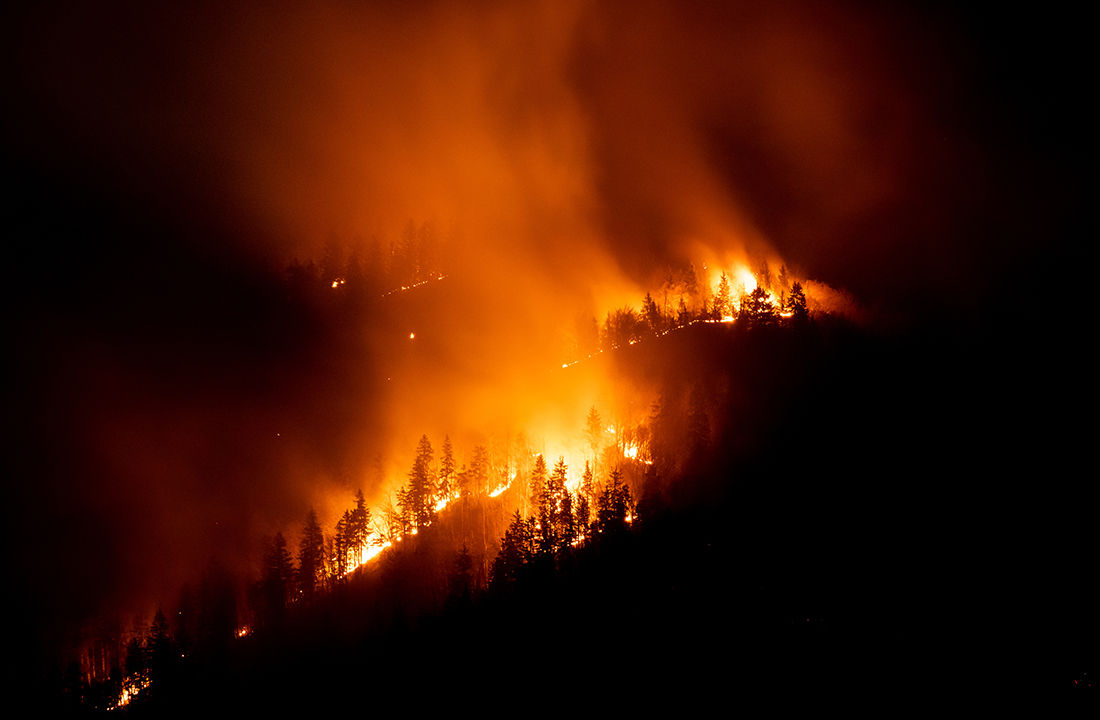
The size of wildfire-affected areas in Canada were again significant in 2025—the second worst of the century after 2023. About 8.9 million hectares were scorched by the blazes, according to a federal government estimate released in mid-November.
As early as the end of May, northern Manitoba and Saskatchewan were particularly affected last summer, forcing the evacuation of several Indigenous communities. More than 5 million hectares burned in these two provinces. The Insurance Bureau of Canada (IBC)estimated insured damages at about $300 million.
Including the fires of 2024, about 30 million hectares have burned over three years—an unprecedented situation, says researcher Yan Boulanger, who states that Canada has entered the era of the Pyrocene. This phenomenon is also contributing to the rise in home insurance premiums in the country.
Wildfires caused the most significant damage of the year as early as January in the Los Angeles region of California. Fires in Eaton and Pacific Palisades counties caused losses of at least US$65 billion, including US$40 billion in insured losses.
There were also major wildfires in Chile in February, in South Korea at the end of March, and in several European countries in July and August, including Portugal, Spain, Italy and Turkey. In Spain, damages exceeded US$1.1 billion, according to Gallagher Re.
Earthquakes
The earthquake that struck Myanmar on March 28, 2025, remains the deadliest disaster of the year, with death toll estimates ranging from 4,521 to 5,500 depending on reports from specialized firms. Tremors were felt in neighbouring Thailand. Another major earthquake struck Afghanistan on August 31, causing about 2,217 deaths, according to Gallagher Re.
Concerns over the systemic risk associated with a major earthquake have worried the Canadian property and casualty insurance industry for several years. The discovery of a fault line in Yukon was mentioned in a report by AM Best on the Canadian P&C insurance industry.
Canadian authorities have taken steps in recent months to better prepare. In its first budget tabled last November, Prime Minister Mark Carney’s government announced its intention to improve the resilience of Canada’s insurance sector in the event of a major catastrophe.
The federal government had already taken an initial step in this direction by announcing on July 21 the creation of a backstop insurer in the event of a property and casualty insurance company’s insolvency.
Moreover, on November 27, the Canadian government announced that the early earthquake warning system, already operational in British Columbia, was now activated in Quebec and Ontario.
Heatwaves and drought
Climate warming is also causing new episodes of heatwaves and drought, which can lead to wildfires. However, heatwaves also have an impact on human health. Public health researchers underlined this at the beginning of 2025.
Another report published by Swiss Re reached the same conclusion at the beginning of last summer and confirmed that extreme heat causes more deaths than other perils associated with weather events.
A report by a life insurance company echoed the same view, highlighting the impact of heatwaves on workplace productivity and group benefits costs.
Floods and tropical storms
Seasonal floods that hit the Republic of China between June and September are believed to have caused at least 12,000 deaths, according to Gallagher Re, and 11,700 deaths according to Aon.
At the end of November, major tropical storms caused extensive damage in Thailand, Malaysia, Indonesia, Vietnam, Sri Lanka and India. Cyclone Senyar brought 630 mm of rain in three days to southern Thailand, with a severity recurrence of 300 years. Damage estimates reported by Aon on December 5 reached US$15.6 billion. At least 1,269 people lost their lives. Typhoon Koto hit the Philippines that same week.
The Atlantic basin produced its usual number of tropical storms, some of which became hurricanes, but none made landfall in the United States. However, several Caribbean islands, notably western Jamaica, were severely impacted by Hurricane Melissa.
On October 26, in less than 24 hours, Melissa intensified from Category 1 to Category 5 on the Saffir-Simpson scale. A barometric low of 892 kilopascals was recorded on October 28, with winds reaching nearly 300 km/h. In its weekly report of November 7, Aon reported at least 79 deaths and economic losses of several billion U.S. dollars.
The Jamaican government will be able to use US$150 million in catastrophe bonds it subscribed to in 2024 to finance recovery costs. These bonds may gain popularity, according to speakers who gathered in Toronto last fall at the invitation of Morningstar DBRS.
Prevention
Even if greenhouse gas emission reduction targets are met by 2050—which seems increasingly unlikely according to the Canadian Climate Institute—governments are realizing the need to invest in prevention, mitigation and resilience to climate change. The insurance industry is also urging governments to better coordinate their efforts.
At the beginning of the year, the Canadian government announced an investment in satellite monitoring of forest fires.
In addition, in September, the creation of the Canadian Centre for Recovery and Resilience (CCFRR) was announced through a partnership between Public Safety Canada and the Institute for Catastrophic Loss Reduction (ICLR).
In July, Insurance Portal provided an update on the long-awaited national flood insurance program. A Member of Parliament from the Liberal Party of Canada tabled Bill C-241 in the House of Commons on September 22, 2025, to urge the government to adopt a national flood and drought forecasting strategy.
Until governments and the industry formalize this partnership, researchers remain concerned about this peril, which is the most costly for the property and casualty insurance industry.
The former director of a mutual insurance company submitted a doctoral thesis on the role of municipalities in flood risk mitigation. Efforts to adapt to climate change were also the focus of a seminar at Laval University at the end of October.