
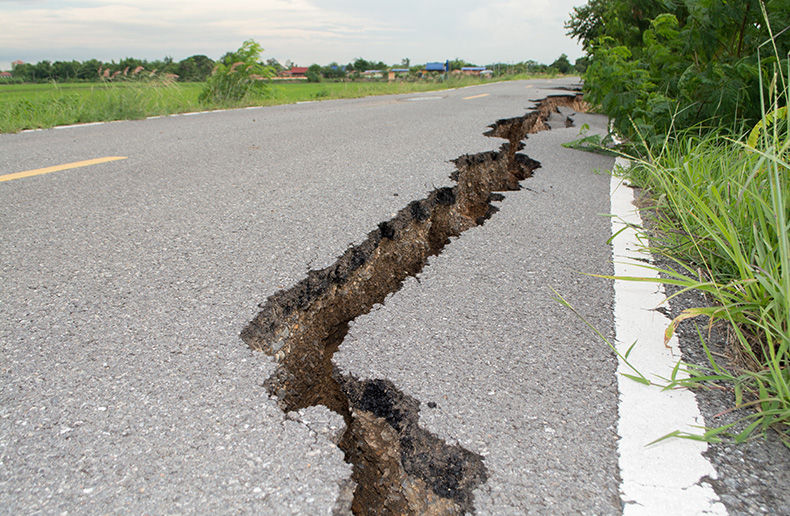
A new report from the International Association of Insurance Supervisors (IAIS) exploring the potential financial stability implications of natural catastrophe (NatCat) protection gaps notes that a one-in-500 year earthquake event is one that the non-life industry in Canada would be able to withstand. A one-in-700 year event, however, would lead to notable industry failures.
The case study is part of the IAIS’ Global Insurance Market Report, Potential financial stability implications of natural catastrophe insurance protection gaps. The IAIS is a membership organization of insurance supervisors and regulators from more than 200 jurisdictions.
Systemic risk
“Widening protection gaps (e.g. through a reduction in the insurability of assets due to the increasing frequency and severity of weather-related events) could increase systemic risk,” they write, noting that gaps arise from a combination of factors including the uninsurability of certain risks, affordability issues and lack of risk awareness.
“The case studies in this report provide insight into the potential for systemic risks, particularly in jurisdictions with concentrated exposures. For example, in the future, a reduction in the insurability of assets linked to bank lending could lead to systemic risk and financial instability.”
Ripple effect
They warn that NatCat protection gaps could further widen in the coming years if growth in insurance coverage does not match the growth in exposures. The report goes on to look at the impacts of NatCat events on the financial sector and on insurers. It looks at amplification effects, potential company downgrades, the ripple effect on investor portfolios and on financial institutions’ balance sheets, in real estate markets and in equity prices.
In the Canadian case study, the IAIS examines flooding and earthquake risk.
“Flooding is Canada’s most costly and frequent hazard,” they write, “with residential property owners covering approximately 75 per cent of uninsured losses.”
They continue saying the Bank of Canada and the Office of Superintendent of Financial Institutions (OSFI) have both conducted recent stress tests that included comprehensive analysis of flood risk: “The economic impacts of flooding can be severe for affected communities but they do not pose a systemic shock to the broader financial system. However, the losses from a very large earthquake, particularly in British Columbia or Quebec, could create a financial stability risk,” they write.
Socioeconomic consequences
They add that the socioeconomic consequences of a future earthquake event in a metropolitan area would be comparable to all other natural hazard events, combined.
Vancouver is noted for having taken steps to manage the risk, including seismic provisions in their building bylaws, while Montreal and other communities have not.
“Many damaged homes will not have earthquake insurance. The earthquake penetration rate is 50 per cent to 70 per cent in British Columbia and less than five per cent in Quebec. Likely causes for low earthquake insurance take-up rates include high price, risk perception, unattractive policy structures (e.g. high deductible), low risk awareness, misunderstanding of the policy terms and optimistic expectations of government assistance or compensation after major natural disasters,” they write.
Large deductibles
“For those who have purchased earthquake insurance, the large deductibles imposed in current policies in British Columbia will result in no payment at all for many damaged homes. And the exclusions for tsunami and liquefaction of soil mean that many customers who thought they were insured, will not be,” they warn. “The problems for strata/condominium corporations will be a magnified version of this.”
The case study concludes by noting that a one-in-700 year event, with no government backstop, could cause total losses exceeding $35-billion (figures in Canadian dollars). This, they say, could bring systemic failure to the Canadian property and casualty industry. “This, in turn, could lead to losses in the rest of the financial system and housing market.”