According to Catastrophe Indices and Quantification (CatIQ), the severe storms that swept across the Prairie provinces and Quebec last June have already caused more than $1 billion in insured losses in Canada. The independent Toronto-based organization compiles claims data submitted by insurers.
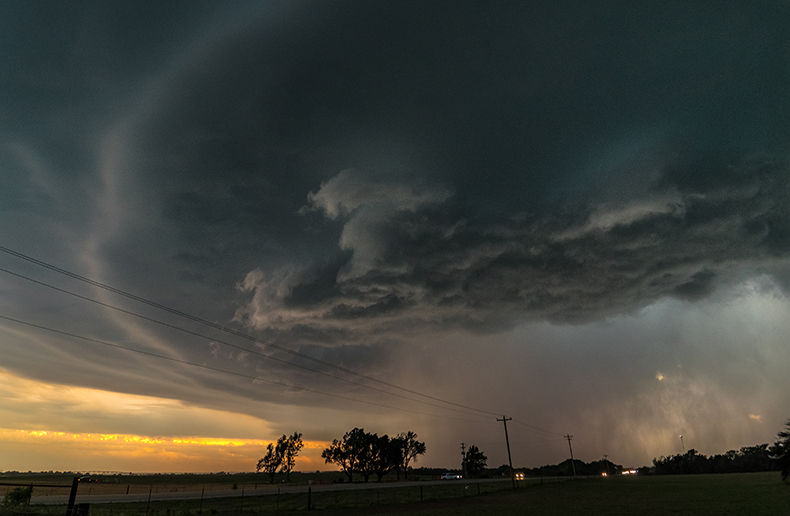
On June 9 and 10, a severe storm struck Saskatchewan and southern Manitoba, bringing tornadoes, large hail and heavy rainfall. CatIQ’s preliminary estimate already places insured losses at $728 million. The damage spans personal and commercial property insurance as well as automobile insurance.
The torrential rainfall that hit the Montreal region on June 20 and 21, 2026, triggered significant overland flooding and sewer backups, particularly in the western part of the island. CatIQ’s initial estimate of insured losses stands at $409 million. An updated loss estimate for this event will be released on August 5.
“The second quarter of 2026 started with well above-average catastrophe activity for Canada, with numerous events affecting different regions of the country. Unusually, we saw multiple events make direct hits on population centres, which drove a flurry of activity for the insurance industry,” says Laura Twidle, president and chief executive officer of CatIQ, in a statement released on July 15, 2026.
Ottawa rainfall
In a statement released on July 16 citing CatIQ estimates, the Insurance Bureau of Canada (IBC) notes that the current estimate does not include losses from the flooding that affected the Ottawa region on July 1. Those losses are expected to be significant, although it is still too early to provide an estimate.
The storm that brought exceptional rainfall and high winds also forced the cancellation of the Canada Day celebrations on Parliament Hill in Ottawa. The storm caused flooding, damaged numerous homes, prompted evacuations and triggered power outages. Roads were also closed. The IBC’s Mobile Assistance Centre was still on site on July 16 to help affected residents.
Over the past 20 years, the average annual cost of insured losses resulting from flooding and water damage has increased by 300 per cent compared with the 1986–2005 period. Since 2009, this peril has generated average insured losses of more than $2 billion annually.
“These recent and past catastrophes are a reminder that flood risk is no longer a future challenge—it’s a current reality affecting Canadians from coast to coast,” says Liam McGuinty, vice-president, federal affairs, at the IBC.
The property and casualty insurance industry association is once again urging governments at all levels to move more quickly in implementing the changes needed to reduce losses and keep insurance premiums affordable. Among its recommendations, the IBC is calling for an end to building the new housing Canadians need in flood-prone areas.
“Flooding is Canada’s costliest and most pervasive climate risk. Over the last decade, insurers have significantly expanded the availability of overland flood insurance and continue to help homeowners recover and rebuild after disasters. But insurance alone cannot solve Canada’s flood problem,” McGuinty adds.
Two years later
According to CatIQ, the episode of torrential rainfall that struck Montreal a few weeks ago, with more than 100 mm of rain falling in barely four hours, resembles a similar event that affected Toronto two years earlier, on July 15 and 16, 2024.
CatIQ has completed its final revision of that first flooding event in Toronto in July 2024. A second, less severe event occurred in the Greater Toronto Area in August 2024. The final estimate for the July 2024 event now stands at $890 million.
That disaster was the first in a series of four climate catastrophes that struck Canada during the summer of 2024, generating hundreds of thousands of claims and more than $8 billion in insured losses. With more than $9.2 billion in insured losses related to natural catastrophes, 2024 was the costliest year in history for insurers.