Acknowledging the growing threat that natural disasters pose to Canadians, the Insurance Bureau of Canada (IBC) is once again urging the federal government to create a national emergency management agency to improve preparedness and recovery measures.
This recommendation comes from a resilience plan put forward by the IBC in a report on the Canadian home insurance market recently submitted to policymakers. Entitled Healthy but pressure is building, the report identifies three priorities that public decision-makers must address to better protect communities:
- Improve how and where we build.
- Invest in resilience and risk mitigation.
- Address market gaps.
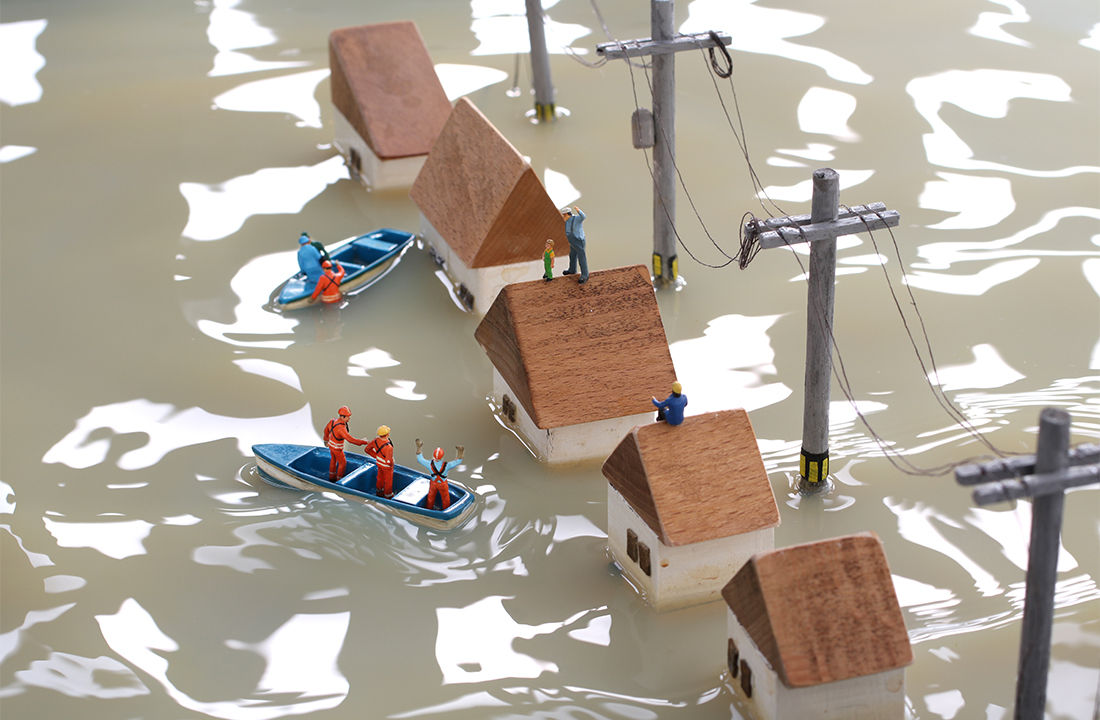
Last summer, when commenting on insured losses tied to various natural disasters, the IBC emphasized the need for such a national agency. While flood insurance has long been a concern in the industry, the impact of the 2023 and 2025 wildfires across several provinces confirms that communities must take significant steps to mitigate the effects of such disasters.
Emerging trends
The report highlights several trends adding significant pressure on the cost of property insurance for Canadian households. The first observation relates to the increasing frequency and severity of natural disasters.
These extreme weather events are driving insured loss costs sky-high. Compared to the 2005–2014 decade, the average annual bill nearly tripled from 2015 to 2024, reaching $3.5 billion. This average includes all events where insured losses exceeded $30 million.
From 2019 to 2024, still within personal property insurance, there was a 119 per cent increase in claims related to natural disasters. IBC reports a “staggering 580 per cent increase in insured losses related to the repair or replacement of damaged property.”
The cost of inputs rising faster than inflation, along with a labour shortage in key trades, are also contributing to higher claims costs. In a report published in March 2024, the construction industry projected the retirement of 25,000 to 28,000 workers annually in Canada through 2033.
Reinsurance helps insurers protect themselves from large-scale disasters. Reinsurance premiums rose significantly in 2023. Reinsurers are becoming more selective in risk allocation. “The rising cost of reinsurance is creating a ripple effect that is influencing the affordability and availability of coverage, particularly in areas at high-risk for natural disasters,” the report’s authors note.
Another worrying trend, according to IBC: the imposition of tariffs by the U.S. administration and the resulting trade war have caused major disruption to the supply chains of both countries. The construction sector and the transportation equipment manufacturing industry are two affected sectors where rising costs will have an impact on claims expenditures.
These findings led the IBC to propose its Three-point plan for policymakers to make Canada a world leader in resilience.
Construction and land-use planning
The first recommendation of the plan is to rethink building methods and land-use planning. In this respect, IBC proposes three actions:
- Create a more adaptable building code framework and more stringent building code standards that account for the heightened risk of severe weather.
- Modernize land-use rules to ensure the anticipated surge in new housing developments does not worsen Canada’s risk profile.
- Reinforce the existing housing stock by incentivizing homeowners to retrofit their homes to better withstand severe weather events.
Resilience and risk mitigation
The second pillar of the plan is investment in resilience and support for communities to reduce their exposure to risk. Four areas of action are proposed to achieve this:
- Make Canada as a world leader in natural catastrophe mapping and early detection. IBC recommends prioritizing prevention of major severe convective storms (SCS).
- Ensure that Canada’s public infrastructure fosters resilience. Nature-based solutions (wetlands, retention ponds, green roofs, permeable surfaces, etc.) should be prioritized.
- Increase municipal capacity to plan for resilience, especially in communities at high risk of wildfires.
- Increase investment in disaster recovery. “The slow pace of Jasper, Alberta, and Lytton, British Columbia, rebuilds highlight the need for a more coordinated and efficient recovery process,” says IBC.
Market gaps
In Canada, the gap between natural disaster protection and available insurance coverage is widening. IBC is calling for targeted government intervention to address these gaps.
More than 1.5 million households are located in known high-risk flood zones. Roughly 300,000 homes account for 50 per cent of all flood-related losses.
“The federal government should fully fund the core operations of CMHC’s reinsurance subsidiary, which is needed to govern and implement a low-cost, high-risk national flood insurance program for those at the highest risk of flooding. This program should be scoped appropriately to complement – rather than compete with – the regular market,” proposes IBC.
Earthquake coverage is another major gap. Exposure to this peril is high in British Columbia and Quebec. The federal and provincial governments in these regions should work with insurers to create a public-private partnership solution.
IBC recommends maintaining regulatory frameworks that support risk-based pricing. The insurance crisis in California became clear in January 2025 following catastrophic fires in the Los Angeles area.
The state government imposed regulatory constraints that prevented insurers from pricing this risk adequately. For over a decade, insurers incurred financial losses and eventually withdrew from the California home insurance market.
IBC believes it is essential that Canadian policymakers avoid implementing pricing restrictions that interfere with risk-based pricing.