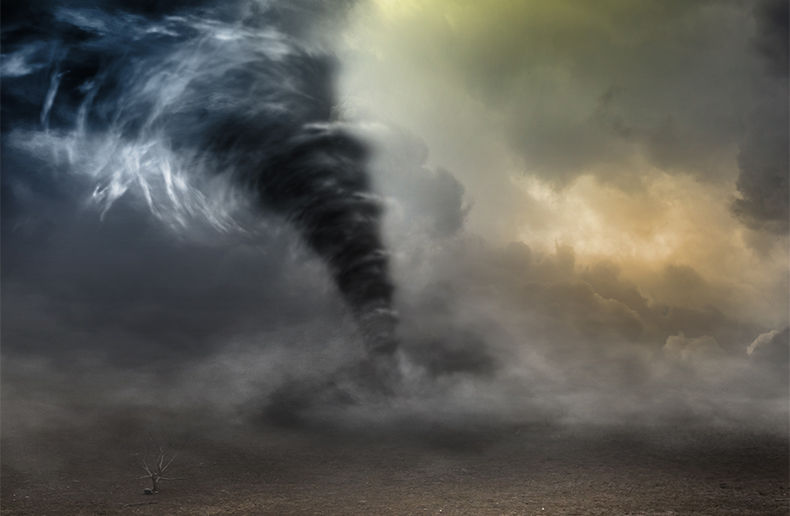
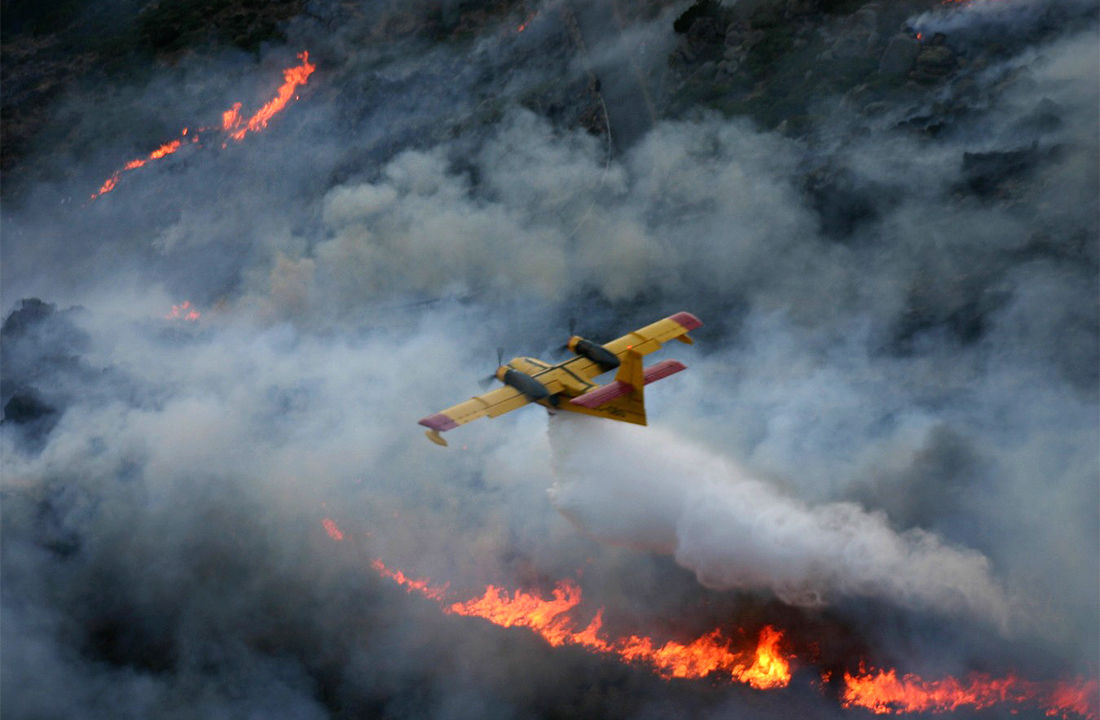
Pyrocene: A neologism coined by Stephen J. Pyne, a professor at Arizona State University, to describe a new era in which wildfires are intensified by climate change. After Europe, Australia, and the western United States, Canada has now joined the circle of countries and continents where wildfires are becoming more frequent and more intense and are affecting even distant populations.
The numbers show that the entire country has now entered the Pyrocene, says Yan Boulanger, who holds a PhD in biology and is a forest ecology researcher with the Canadian Forest Service. He made the statement during a webinar held on October 15 by the research group Ouranos.
Fueled by increasingly dry vegetation that becomes extremely flammable, wildfires destroyed 30 million hectares of forest across Canada between 2023 and 2025. Although fire activity has been increasing since the 1950s, the phenomenon has accelerated over the past five years.
Wildfires have significantly impacted western Quebec in the James Bay region, British Columbia, as well as Manitoba, Alberta, Ontario, and the Maritimes, which have all experienced major fire events.
On average, 2 to 2.5 million hectares of forest burn each year in Canada. The record was shattered in 2023 when 15 million hectares were devastated in a single year—twice the previous peak set in 2019. In Quebec alone, fires burned 4.3 million hectares in 2023, including 1.5 million hectares of commercial forests.
The past two years were also exceptional: nearly 5 million hectares burned in 2024 and, so far in 2025, 8.8 million hectares have suffered the same fate. In total, nearly 30 million hectares of forest have been destroyed in just three years, an unprecedented incidence.
Drivers of fire activity
These natural disasters are being driven by abnormal climatic conditions that have increased significantly across the country since 2023.
“All regions of Canada are affected in some way by drought,” says Boulanger.
Studies have shown that climate change has increased the likelihood of wildfire-favourable conditions by a factor of 16, the researcher explains. Weather index values used to assess fire danger are reaching extreme levels. Some regions already affected will experience even more fire activity, and others that have not yet been impacted will likely be affected in the future.
Some fires have become so intense that they no longer go out with the arrival of winter. These are called “zombie fires.” They remain dormant in the ground and reignite the following year. Wildfires that broke out in British Columbia in 2023 were still active in 2025.
The Maritimes also affected
The Maritime provinces were not spared in 2025.
“Even though these fires in the Maritime provinces don’t cover the same large areas as in the West, mid-sized wildfires can still have very significant consequences because there are people and infrastructure everywhere,” Boulanger points out. “They are more likely to affect communities.”
One of his colleagues adds that the province of Newfoundland and Labrador was fortunate not to experience more lightning-caused ignitions this year, as drought conditions in the soil were similar to those found in British Columbia.
Impacts of these wildfires
These wildfires have forced massive population displacements. In 2023 alone, 240,000 Canadians were evacuated.
They also had consequences for the energy sector: several transmission lines running through high-risk regions were damaged, affecting people living thousands of kilometres from the fires.
Smoke plumes from these massive blazes travel thousands of kilometres, moving from one province to another and even into several U.S. states. They affect the quality of life for people far from the fire zones. In Quebec, during the summer of 2025, residents with heart or lung conditions were advised not to go outdoors on days when wildfire smoke from Ontario was thick.
Air quality impacts are becoming a major concern for public health authorities. And the more fires there are, Boulanger says, the more significant these smoke events will become. It is currently impossible to determine which regions of the country will be most affected in the future. That will depend on the origin, intensity, and movement of the smoke in the atmosphere.
A longer fire season
Another worrisome sign, the researcher reports, is that the wildfire season is getting longer. Now, many fires are breaking out in May and June rather than in July or August.
“One more month of wildfire season in Quebec is huge,” says Boulanger.
The annual burned area has more than doubled since the late 1950s. This increase is significant in many regions, even though the number of human-caused fires is declining.
Flammability indices are becoming increasingly severe and frequent, and these current trends are expected to continue. The number of days with extreme values will rise significantly, and the wildfire season is projected to keep increasing in severity and duration, the expert explains.
Over the coming decades, a significant increase in the areas burned is expected. According to Boulanger, some regions of Canada could see two, three, four, or even five times more wildfires than over the past 30 years.
Fire-guarding satellites… in 2029
How can we respond to the growing frequency and intensity of these disasters?
Earlier in 2025, Ottawa announced a $72 million contract for the WildFireSat mission. The project will include seven microsatellites to monitor active wildfires in Canada daily and provide critical data to help authorities identify fires that pose a high risk to communities.
The government indicated that the WildFireSat mission “is slated to be launched in 2029.”