
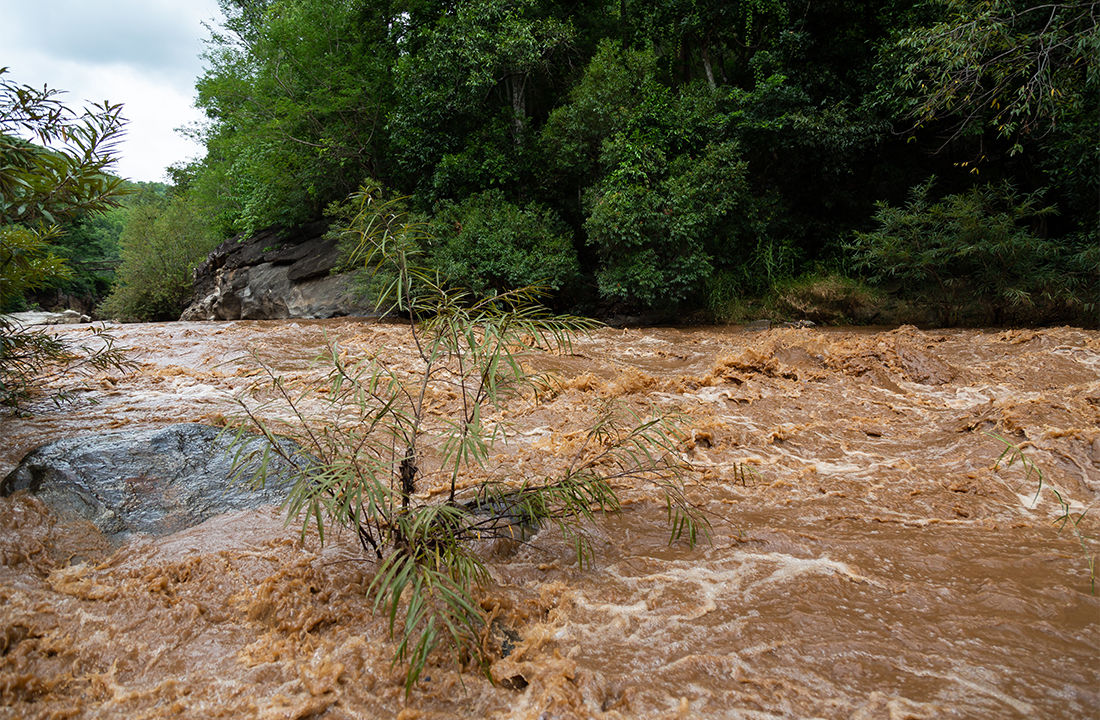
After the first nine months of 2025, at least 86 per cent of insurer payouts for natural catastrophe-related damages were recorded in the United States. Two recent reports point to an unusual lull in economic losses related to such events in the third quarter of the year.
These findings appear in the Q3 2025 Global Catastrophe Recap published by Aon, as well as in Gallagher Re’s Natural Catastrophe and Climate Report: Preliminary Overview.
According to Aon, economic losses for the third quarter are estimated at US$34 billion. This amount is 76 per cent lower than the annual average recorded so far this century.
Insured damages of US$12 billion in the third quarter of 2025 (all figures below are in US dollars) are also 72 per cent lower than the average over the past 25 years, and represent the lowest amount since 2006.
According to Aon, the following events caused economic losses exceeding US$1 billion during the third quarter:
- Summer floods in China (over US$8 billion);
- Tropical Storm Wipha in East and Southeast Asia;
- Floods in Pakistan’s Punjab province and the Indian state of Punjab, between August 27 and September 5, which forced the evacuation of 1.5 million people;
- Floods in Central Texas in July;
- Two severe convective storm (SCS) events in the U.S. Midwest in August.
In the last quarter, some 88 per cent of insured losses were linked to SCS events, also according to Aon, and approximately 82 per cent of all insured losses were recorded in the United States.
Gallagher adds to this list of billion-dollar events:
- Floods in Japan from August 8 to 11;
- Typhoon Ragasa, which struck Southeast Asia in late September, with estimated losses exceeding US$1 billion and reportedly causing at least 29 deaths;
- Wildfires in Spain in August.
Gallagher Re also includes losses related to droughts that persisted through most of the year in Europe, notably in Spain, Italy and Russia, with estimated losses of over US$8 billion, as well as in the United States (US$3 billion) and Brazil (US$2 billion).
The deadliest event of the last quarter remains the earthquake that struck Afghanistan on August 31. Aon reports more than 3,000 deaths. Gallagher Re’s estimate for the same quake is lower, at 2,217 deaths.
Numerous heatwaves across several European countries during the summer were responsible for at least 3,317 deaths, according to Gallagher Re. In its report, Aon provides a similar estimate but breaks it down into two major heatwaves that hit Europe.
The first, from June 23 to July 2, was blamed for 2,308 deaths, while the second, from August 8 to 17, reportedly caused more than 1,100 deaths.
Wildfires in Canada
Aon notes that wildfires remain a significant peril in Canada. While the area burned in 2025 was not as extensive as two years earlier, it was still the second-worst year on record, with 8.9 million hectares burned, compared with 17.3 million hectares in 2023.
Insured damages were estimated at US$350 million, or C$480 million, more than half of which were related to the fire near Flin Flon, Manitoba. Gallagher Re estimates economic losses from this fire at US$375 million.
According to data from the Canadian Interagency Forest Fire Centre (CIFFC), the national preparedness level is rated on a scale from 1 to 5. Level 5 indicates that all human and material firefighting resources are being used across all Canadian jurisdictions and that international assistance is required. The index reached level 5 for 89 days in 2025, compared to 120 days in 2023.
As of October 22, the Insurance Portal notes from the CIFFC website that Nova Scotia remains at level 3, meaning the province still requires some external assistance.
Gallagher Re researchers point out that drought especially affected Atlantic Canada in the third quarter. They note the unusual drought that hit Prince Edward Island in August, and also mention the 200 buildings and structures burned in the Kingston fire in Newfoundland and Labrador, also in August.
Nine-month review
After the first nine months of the year, Gallagher Re estimates economic losses at US$214 billion, with US$105 billion in insured damages. The U.S. market accounts for 86 per cent of these insured losses. The firm reports 37 events that each exceeded US$1 billion in economic losses—the lowest number since 2015 (35 events). Sixteen of these events exceeded the US$1 billion mark in insured damages, also the lowest number since 2017 (16 events).
For its part, Aon estimates catastrophe-related economic losses at US$203 billion, with US$114 billion insured. The average for the first nine months of the year since the beginning of the century is US$298 billion. Of these insured losses, 88 per cent are associated with events in the United States.
As previously observed after the first six months, the two major wildfires that struck the municipalities of Pacific Palisades and Eaton in the Los Angeles area in January 2025 remain the most costly disasters in terms of both economic and insured losses.
At the top of its list of the 10 worst events of 2025, Gallagher Re estimates the combined damages from these two fires at US$65 billion, including US$40 billion in insured losses. Aon’s estimate for these events is slightly lower at US$57 billion.
Aon notes that, in July, the California Department of Insurance reported approximately 49,500 insurance claims related to these fires across auto, home and commercial lines. Nearly 92 per cent of these claims had been settled, totalling US$20.6 billion.
At least 18,000 people lost their lives due to natural disasters during the first nine months of 2025, which is below the 25-year average of 53,100 deaths.
The earthquake in Myanmar on March 28, 2025, reportedly caused 4,521 deaths, according to Gallagher Re. Aon, however, estimates the death toll at 5,456 for this earthquake, which also affected Thailand.
Gallagher Re adds that capital dedicated to reinsurance reached US$804 billion as of June 30, 2025, a 4.8 per cent increase compared to year-end 2024. The fourth quarter is typically the least costly in terms of economic and insured losses, which should help expand reinsurance capacity.
The report’s authors note that only a single disaster causing insured damages exceeding US$115 billion before December 31 would result in a significant impact on the reinsurance industry.