
Reimbursements for medications used to treat anxiety disorders have doubled over the past decade, while claims for psychological support services have also increased over the same period. Data from group insurance providers illustrate how the needs of young plan members and their families are evolving.
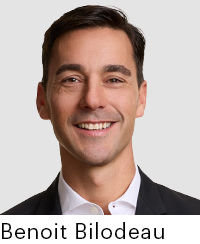
“As an insurer, we have observed an acceleration in anxiety disorders among this group,” says Benoît Bilodeau, Vice-President, Brokerage and Consulting, Quebec, at Beneva. “Over the past 10 years, claims for medications associated with anxiety disorders and mental health conditions have increased by 200 per cent. The use of specialists providing mental health services has increased by 250 per cent over the same period.”
As with adults, prescription drugs account for the largest share of claims submitted for dependent minors.

“As a general rule, regardless of the population, prescription drugs account for between 65 and 70 per cent of all health insurance claims paid,” says Andrée-Anne Bourgeois, Vice-President, Underwriting, Actuarial and Destination, at Desjardins Insurance.
At Beneva, prescription drugs account for 60 per cent of reimbursed claims for dependent minors, a figure that has remained stable over the past five years, Bilodeau confirms. “When we look specifically at reimbursed medications used to treat mental health conditions such as anxiety, the proportion has historically been stable at around 7 per cent,” he says. “It increased in 2020 and 2021 to about 8 or 9 per cent, and it has remained at that level ever since.”
In dollar terms, medications used to treat cystic fibrosis rank first because of their high cost, both at Desjardins and Beneva.
The second-largest category of reimbursed medications includes treatments for attention deficit hyperactivity disorder (ADHD). At Beneva, these represented 15 per cent of all prescription drug claims for children in 2025.
That figure comes as no surprise to Bourgeois. “We have observed an increase in diagnoses for several years,” she notes, adding that the trend is reflected in claims data.
Medications used to treat bacterial infections or allergies—relatively inexpensive drugs prescribed in large volumes—rank third.
A greater need to talk
Claims for supplementary health services—such as psychologists, psychotherapists and social workers—have also increased since the pandemic.
Among health professionals whose fees are reimbursed, psychological services account for the largest share in dollar value.
At Desjardins Insurance, the proportion of claims for supplementary health services submitted for dependent minors has risen from 15 to 28 per cent. “Once again, claims for psychological services rank first in Quebec but second in Ontario,” Bourgeois points out. “Speech-language pathology services are also among our most frequent claims, but that is not the case in Ontario.”
At Beneva, excluding prescription drug and dental claims—which account for the largest share of claims for dependent minors—these health services represented 26 per cent of the remaining claims in 2025. “That figure rose from 21 per cent in 2020 to 24 per cent during the first year of COVID,” Bilodeau adds, highlighting the growth.
Within this category of claims, however, he notes that psychologists accounted for 88 per cent in 2020, compared with 78 per cent in 2025.
Meanwhile, consultations with social workers and career counsellors, among others, gained ground over the same period, with each increasing from 5 to 9 per cent of supplementary health service claims. “I think this demonstrates better referrals to specialists providing more specialized services,” Bilodeau says, adding that younger people show a clear preference for virtual consultations.
However, as with adult plan members, an increase in claims for medications or mental health-related services among minors does not necessarily mean they are doing worse.
Part of the increase in service use may indicate that more parents are seeking help and making use of the resources available to them, or that they are taking a more preventive approach.
“There is certainly a broader reduction in the stigma surrounding mental health issues, both among adults and children,” Bourgeois says.
Focusing on prevention
Insurers have already begun adapting their products to the realities of young plan members, their families and future insureds. Some are making virtual consultations easier to access. Others are promoting health spending accounts that allow plan members to choose the services that best meet their needs.

Above all, insurers can play a role in raising awareness among parents. “We are fortunate to have the support of Manulife, Sun Life, Beneva and iA Financial Group, among others, for our activities,” says Mélanie Boucher, Executive Director of the Fondation Jeunes en Tête. “We can see that young people’s mental health is a major concern for them. They see the impact on their claims.”
But insurers could do more, she argues. “It would be important for insurers to share more information about youth mental health and the resources available,” says Boucher. “Parents often feel helpless and do not know where to find reliable information. If they could access it through their group insurance portals, it would benefit everyone.”
“We need to help young people build resilience and recognize the signs when they are struggling,” Boucher adds. “But the adults around them also need to know how to respond appropriately and inspire confidence.”
Sun Life and Manulife, both contacted for this story, declined Insurance Portal’s interview requests. GreenShield did not respond.