When an employee's mental and physical health allows them to integrate effectively into a team that is properly supported by an attentive manager, the impact on productivity and the value of the organization to which they belong is immediate.
This is the conclusion reached by three experts, each with distinct approaches and backgrounds, who shared their knowledge and observations at a conference session entitled Employee Health and Well-being at Work: Understanding to Act Better. The event was held as part of the recent Congrès collectif (Group insurance conference), organized by the Insurance Journal Publishing Group, in Montreal on February 26, 2026.
Russian Dolls
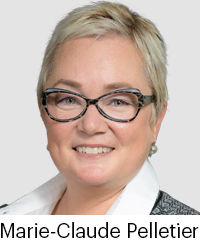
According to Marie-Claude Pelletier, president and founder of the Global-Watch expertise centre, mental health and well-being at work are determined by a series of interlocking elements, much like a Russian doll. On an individual level, everyone brings their own beliefs and concerns to the workplace. Pelletier cites, in particular, people aged 45 to 55, who are caught between the needs of their teenagers and the support they must provide to their aging parents.
This individual is part of a work team led by a manager. This manager is part of an organization that adopts policies and procedures that impact the health of its members. Finally, this organization is part of a society where pressures affecting health are experienced, whether economic, political, or environmental.
“This means we have new elements to work on in our workplace mental health and prevention strategies. It means that prevention now requires a truly holistic approach,” says Pelletier. Even if the employer makes efforts at the individual level, it must review its management practices and company policies within the broader societal context, she continues. In a world of multiple crises, instability is present on the geopolitical, economic, climatic, and technological levels, she emphasizes. Demographic aging is another factor to consider among those affecting the health of the organization.
"This context of instability leads to many changes in governance and priorities," says Pelletier. Management seems to be driven by a shorter-term vision, which can be anxiety-inducing. At the same time, the company must remain agile to navigate these crises. "All of this leads to a lot of incivility, a lot of anxiety, a deterioration of the work environment, more harassment problems, and more violence," she adds.
The company must therefore develop new indicators of the well-being of its workforce. “In a company, we need people who are physically present at work and not on disability leave, who are engaged and resilient, and who will be able to innovate” in the face of the challenges the company is currently facing, explains Pelletier.
“There has never been so much documentation and economic data demonstrating the power of mental health in the workplace and well-being as a driver of organizational performance,” she says. However, there are concerns regarding managers.
Since the beginning of the COVID-19 pandemic, they have been asked to do a great deal, according to Pelletier: “It’s worrying because if we want to perform well, we need managers who are good at communicating and mobilizing teams.” These are the managers who are being asked to develop new empathy and listening skills to initiate potentially difficult conversations with employees.
Generalized anxiety has an impact on individual health. Life expectancy is increasing, “but health problems are appearing earlier in our lives,” she says. All of this puts pressure on preventive healthcare in group plans. “Employees need to have an experience related to their work relationship” if the organization wants to achieve its objectives, she emphasizes.
Later in the discussion, Pelletier stressed the need to “break down silos within the organization,” particularly when addressing the issue of workload. “Regardless of the size of the company, it’s a general observation: everyone is overwhelmed,” she says.
Pelletier also notes that customer service managers tell her that “people are short-tempered” and that they are more frequently in contact with expressions of distress. The caring manager doesn’t have to act as a therapist. But he must be alert to the signs he receives and intervene to direct his colleagues to available resources.
Work is too hard.
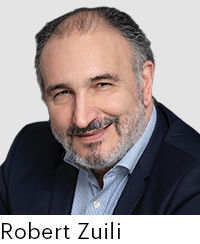
Robert Zuili is a clinical psychologist and co-founder of Be Well Together. He mentions that, until the 1950s, the relationship to work involved very different emotions. “We thought it was normal for work to be arduous. We weren’t shocked to suffer at work. And then one day, we realized that the hardship was no longer acceptable. We implemented tools that allowed us to carry lighter loads and to have ergonomic workstations,” he explains.
In France, during the first decade of this century, employers discovered that the high number of suicides in their organizations revealed significant psychological and moral suffering. “It was a taboo subject, because no one wants to talk about their suffering.”
“The manager asked to be skilled at acknowledging a colleague’s expression of suffering rightly wonders: ‘Wait, I’m not trained for this, I’m not paid for this. And besides, it’s personal, I’ll be intrusive. What do I need to do to overcome these barriers and develop this skill?’” Zuili continues.
To help openly discuss suffering in the workplace and avoid stigmatization, the Zuili began to focus on emotion and the feelings associated with its expression. Through his research, he concluded that “emotion is a powerful tool for understanding and modifying our rules for regulating suffering and mental health.” The emotional system “is a true barometer of our mental health. Why is this important? Because today, we operate within a framework of primary, secondary, and tertiary prevention. And then we have to react to crises and cope with sometimes dramatic situations.”
But couldn't we shift to a more proactive approach to prevention? This would allow us to detect mental health deterioration in advance,” explains Zuili.
Emotion is the lifeblood of relationships. If it's toxic, the person feels suffocated, confined, and this can negatively impact their performance at work. “That's where we need to consider that each of us can be a resource for others,” he adds. “If I get along well with a manager and I'm suffering, it will be easier for me to talk to them.”
Employees also have a moral responsibility to initiate this dialogue; otherwise, they may isolate themselves, withdraw, and feel ashamed. “We must combat this,” insists Zuili. In Quebec, since October 2025, the requirements of the Act to modernize the occupational health and safety regime (Bill 27), has mandated that employers maintain a work environment that does not negatively impact the mental health of their employees.
According to Zuili, the temptation might be strong, when a company already has an Employee Assistance Program (EAP), to simply check the box on the government form and think: it's done. “When you've lost your way, you look for a compass. This corresponds to the assistance programs we already have in place. But we need to shift our paradigm and move from the compass to a GPS,” he underlines.
GPS technology indicates an easy path. “Such a predictive health management (GPS) system would allow us to know where to go in our emotional and relational landscapes,” he says.
He observes a structural paradox that creates a double bind for the industry. “Insurers want to reduce risk without reducing the need for insurance.” The broker wants to reduce the premium, but without lowering their own compensation. "Essentially, it's as if you're trapped in a situation where you're asked to address the root causes while living with the consequences," says Zuili.
"To feel emotions, you have to be alive, so rejoice in feeling them. And it's a gift you give yourself by sharing them," he adds later in the discussion. A manager who doesn't like to talk about their feelings won't necessarily appreciate their colleague sharing theirs. "This emotional disconnect can create misunderstandings and tensions that can be resolved if you understand how the person functions and what their relationship with emotions is," he says.
"You have to welcome the feelings, even if it means saying you have a different point of view. This preserves the dialogue. It allows you to build something that makes the other person feel valued," he concludes.
The reality on the ground
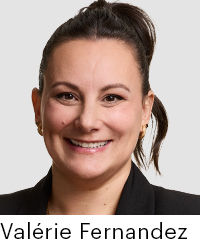
“We see in our daily work the need to consider the increase in disabilities, particularly in mental health, and the rise in medication use,” says Valérie Fernandez, Workplace Health Senior Advisor at Beneva. We must address issues related to mental health and human resources advisors are at the forefront in this regard, she says.
Regarding the GPS concept that Zuili mentioned, Fernandez points out that technology sometimes offers more than one path to reach a destination. “I believe there isn’t a single magic formula that will suit all organizations. Every organization is different, and the realities are different.”
Concerning the implementation of the rules imposed by Bill 27, she underlines that Quebec employers are required to prevent psychosocial risks. Fernandez also emphasizes the danger of thinking that enough is already being done and that the matter is settled. “This should be seen as an opportunity, not a legal obligation to be met.”
As an insurer, Beneva has ambitions across Canada, and companies operating facilities in multiple provinces could benefit from the processes created in Quebec to comply with the law’s requirements. “There are more and more organizations implementing tools to help them identify psychosocial risks,” she notes.
An increasing number of experts are offering prevention methods to combat incivility in the workplace. Benefits providers can support each other in this regard to promote best practices. “It’s crucial to use the same language in our workplace when it comes to mental health,” she emphasizes.
The discussion must focus on workload, according to Fernandez. “Each employee is responsible just as much as their manager.” The distribution of responsibilities must also be adapted to the specific context where workers from different generations work together in the same organization. “We have very experienced people who have colleagues who finished their studies during COVID-19 and joined the company remotely. Now we’re asking them to come back to the office…It’s important to listen to the needs of all these people and adapt the programs,” she added.
“We need to remain attentive to be able to offer the relevant solution or know where to find the right resource that can provide it,” Fernandez emphasized.
Regarding the issue of office presence raised during a discussion with the conference session audience, she added that employers must be flexible. “If you force someone to come to the office and they spend the day in Teams meetings with colleagues located in other company locations, it doesn’t make sense,” she said. Managers must find a balance between collaborative group activities and tasks requiring concentration and working alone.