Access to affordable insurance coverage is becoming increasingly problematic in several regions of North America. Researcher Keith Porter, PhD, says Canada will need to invest significant sums in the coming years to improve the resilience of buildings against catastrophic losses.
During a webinar held by the Institute for Catastrophic Loss Reduction (ICLR) last March, Porter, presented a summary of the Institute’s work on the history of catastrophic losses in Canada.
In an article entitled Societal Loss from Historic Natural Catastrophes in Canada, published in November 2025 and co-authored by Porter, ICLR researchers estimate that the economic losses from catastrophic events amount to $9.2 billion annually.
“This represents 3 per cent of the country’s construction spending each year. That means climate disasters wipe out the equivalent of two weeks of construction work every year,” Porter notes. In recent years, the average increase in economic losses has been 9.4 per cent. At that pace, total losses will double every eight years.
This increase in losses related to major events is nine times faster than population growth, five times higher than real gross domestic product (GDP) growth, and three times greater than the increase in construction spending, Porter summarizes.
The insurance protection gap—that is, the proportion of these losses not covered by insurance—continues to widen. Since 2008, it was estimated that 50 per cent of damages from these events were insured. Recent trends show that insured losses now represent one-third of total economic losses, says Porter.
Between 2008 and 2025, the provinces most affected by major catastrophic events were Alberta and Ontario, followed distantly by New Brunswick in third place. These are also the regions where the largest gaps between total losses and insured damages are observed.
For the 2015–2024 decade, researchers estimate insured losses in Canada related to these catastrophic events at US$24.3 billion. Swiss Re’s estimate for the same period is US$25 billion.
15 years later
At ICLR, the organization’s mission is to improve the resilience of Canadian communities to major losses. Research conducted by Paul Kovacs, founder of the Institute, led to the conclusion that economic losses related to catastrophic events in Canada follow trends observed in the United States, with a lag of approximately 15 years.
A recent report from the U.S. Natural Resources Defense Council (NRDC) indicated that since 2020, more than 1.2 million homeowners have had to turn to public insurers to protect their homes. Between 7 per cent and 13 per cent of homes are no longer insured or insurable in that country. According to Porter, more than one-third of these properties are owned by lower-income households living in buildings constructed under standards dating back several decades, making them more vulnerable to current climate hazards.
Combined data over 30 years allow for a significant revision of building codes every 10 years. The building stock grows by about 1 per cent annually. It will take approximately 40 years to modernize 50 per cent of buildings, Porter notes.
ICLR has, for several years, advocated for the need to revise building codes and construction methods. Modernizing buildings and making them more resilient to climate hazards and other catastrophes would require between $1 trillion and $10 trillion, according to U.S. estimates. Based on this, Porter suggests that the required investment in Canada would range from $100 billion to $1 trillion.
Study limitations
Porter highlights the limitations of the study published in November 2025, as its estimates of economic losses do not account for the impact of disasters on the most vulnerable populations. Certain impacts of these events are not captured by insurers. He cites psychological health effects on victims, domestic violence, smoke and fine particulate matter associated with wildfires, productivity losses, and more.
Speaking at the webinar, Laura Twidle, CEO of Catastrophe Indices and Quantification (CatIQ)—the organization mandated by insurers to track losses associated with major events—and Adam Smith, a meteorologist at Climate Central, note that the data analysis conducted by ICLR researchers provides valuable support in better estimating the insurance protection gap.
“Communities and policyholders need to be better informed about climate change and its impact on their risk exposure and vulnerability,” Smith emphasizes.
Twidle points out that loss compilation remains an incomplete exercise, as insured damages must exceed the $30 million threshold. “We saw this with wildfires that have affected northern communities in recent years, where people had to be evacuated,” she says. “If the insurance gap is large in an area where there’s been an impactful event, we might not capture that,” she adds.
For the largest catastrophes, such as the California wildfires in January 2025 or the hurricanes of fall 2024, both webinar guests note that insurers need more time to quantify losses.
Twidle adds that when insurers provide estimates of insured damages, the event itself is known, but claims may be associated with different perils. For example, a power outage may have been caused by freezing rain or strong winds, while water damage may result from heavy rainfall or sewer backup.
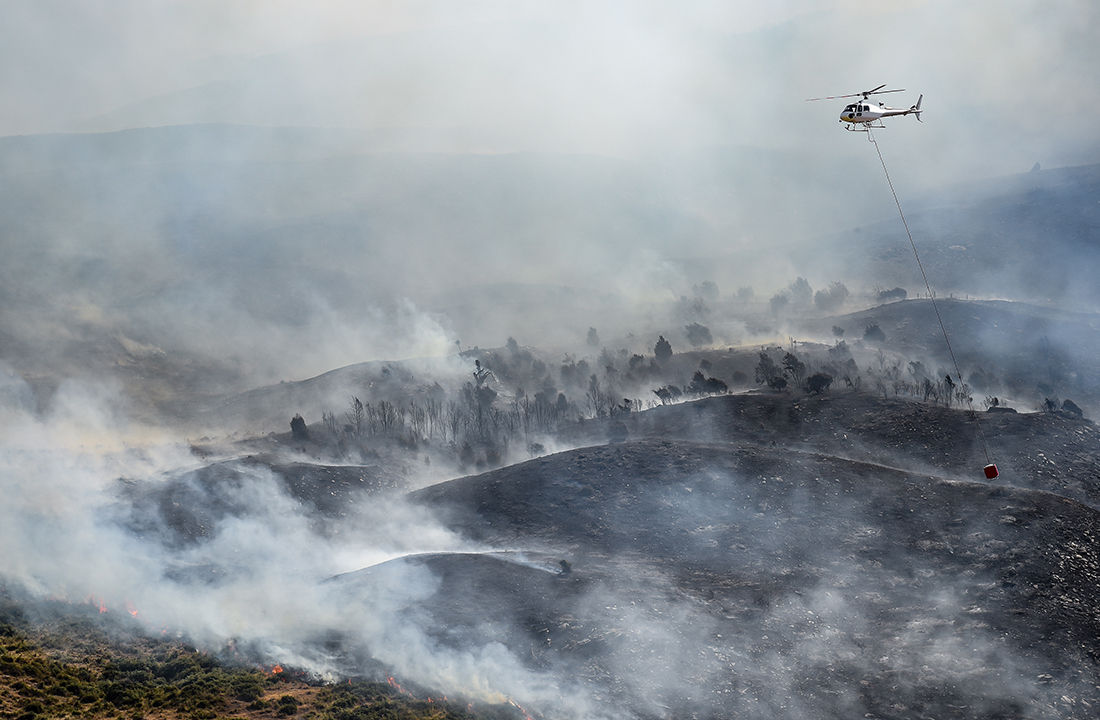
The January 2025 fires in Los Angeles were driven by two distinct weather phenomena, Smith explains: several months of drought followed by a system of strong winds that carried embers from vegetation fires on public lands into urbanized areas.
Reinsurers are particularly concerned about the impact of major events such as hurricanes or large-scale wildfires. Smith observes that in recent years, so-called secondary perils such as severe convective storms or hailstorms have caused tens of billions of dollars in damage in the United States. This was notable in 2025, as no Atlantic hurricane made landfall in the country.
Both countries cover vast territories exposed to extreme weather events, though of different types. Hurricanes primarily affect the United States, while wildfires are more frequent in Canada. Porter notes that construction practices and safety regulations are fairly similar in both countries, which partly explains the similar trends in damage to residential properties.