The 2025 National Model Codes, recommended for construction across Canada, are drawing criticism. The Insurance Bureau of Canada (IBC) is disappointed by the lack of adaptation and resilience measures, while the Canadian Home Builders' Association (CHBA) is calling for their suspension.
Under the Constitution of Canada, the design and construction of homes and buildings in the country are regulated by the provinces. National codes are issued by the Canadian Board for Harmonized Construction Codes (CBHCC) based on recommendations from volunteer expert committees. These codes are updated every five years. The 2025 edition has just been released, and work on the 2030 edition is already underway.
The home builders' association, for its part, fears an impact on housing costs. These national codes are recommended for all of Canada, but they are not binding and the CBHCC cannot enforce them. Their implementation is the responsibility of each province. Building standards therefore vary from one province to another.
In an agreement reached in 2019, the provinces committed to reducing or eliminating interprovincial variations, but this objective has not yet been achieved, and the CBHCC has made national harmonization one of its priorities.
The 2025 edition of the codes
The updated set of National Model Codes includes:
- the National Building Code of Canada 2025;
- the National Fire Code of Canada;
- the National Plumbing Code of Canada;
- and the National Energy Code of Canada for Buildings 2025.
In preparation for the 2025 edition, the CBHCC focused on code harmonization, health and safety, accessibility, existing building alterations, and climate change mitigation and adaptation.
Among the key elements of the 2025 codes is the introduction of a requirement for a passive vertical radon stack in dwelling units and home-type care occupancies to reduce exposure to radon, a radioactive gas that comes from the natural decay of uranium in soil and rock.
In addition, the roof emergency drainage system must be independent of the main drainage system to reduce the risk of overloading the stormwater drainage system during heavy rainfall.
They also include projected data that anticipates climate trends over the next 50 years to ensure buildings are better prepared for future climate conditions, including temperature, precipitation, wind, and snow.
The IBC expresses disappointment
In response to the code content, the IBC expressed disappointment that the 2025 update did not include more adaptation or resilience measures.
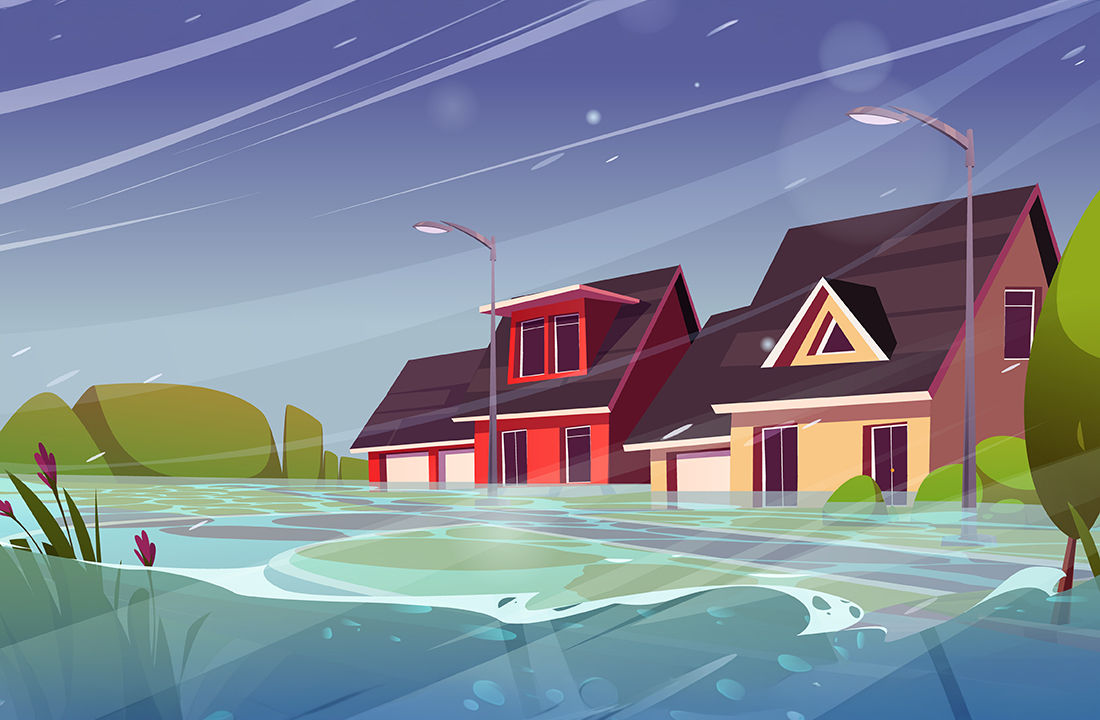
“For the Bureau and its members,” the association commented in an email to the Insurance Portal, “it is essential that building codes—both national and provincial—include measures to make homes more resilient so they can effectively protect citizens and communities from flooding, wildfires, hail, and high winds…The IBC therefore urges the federal government to make resilience a central objective in the next review scheduled for 2030.”
The IBC also says it is important to include requirements in the codes that are specific to each region and the natural disasters to which they are exposed.
The IBC also hopes that the code update cycle will be accelerated so that they can address the frequency and severity of the events to which the provinces are now subject.
Serious reservations from builders
The Canadian Home Builders Association has supported the code development system for several years but says its voice was marginalized in the last cycle. Decisions regarding low-rise residential buildings are now divided among 13 committees where its concerns about high construction costs or constructability are often misunderstood and dismissed by experts in high-rise building construction, according to the association.
In response to questions from the Insurance Portal, the association stated that it has serious reservations about the 2025 codes, to the point where it is asking the federal and provincial governments to suspend the adoption and implementation process in order to evaluate them and propose only changes that do not impact housing costs.
The CHBA is concerned that changes related to greenhouse gas emissions, radon, and wind/seismic loads will add significant costs and complexity to the construction of new homes. The association points out that, according to Health Canada, across the country, “an average of 7% of homes have radon concentrations that exceed the guideline.”
That said, this percentage varies considerably from one region to another in Canada, the federal department specifies. “Long-term exposure to high radon levels is the leading cause of lung cancer after smoking, and accounts for more than 3,000 lung cancer deaths in Canada,” Health Canada also points out on its website.
Another major concern for the CHBA is that the 2025 building codes include structural code updates aimed at ensuring the resistance of walls in homes across Canada to high winds and seismic forces. In the past, these requirements only applied to homes located in areas in high-risk zones.
If these 2025 standards are adopted, says the CHBA, they will lead to very significant cost increases across the country, on top of the phased implementation of the higher energy efficiency levels introduced in the 2020 codes. This could result in increases of tens or even hundreds of thousands of dollars in some cases.
2030 code priorities
The 2025 codes have just been released, yet the process of developing the next update is already underway. The CBHCC has already established its strategic priorities for the 2030 edition. These include:
- Work on climate change adaptation, with a focus on sustainability and the design of buildings that are resistant to flooding, high winds, and fire hazards in suburban areas.
- Increasing the housing supply by allowing for new options, such as tiny homes, building relocation, modular construction, and single-exit buildings in certain circumstances.
- Work to reduce and eliminate differences and discrepancies between national and provincial codes in the areas targeted by the CBHCC.
- Make changes that could include fire safety and electric vehicle charging safety risks, the fire behavior of floors in homes, and the increased use of encapsulated mass timber construction.