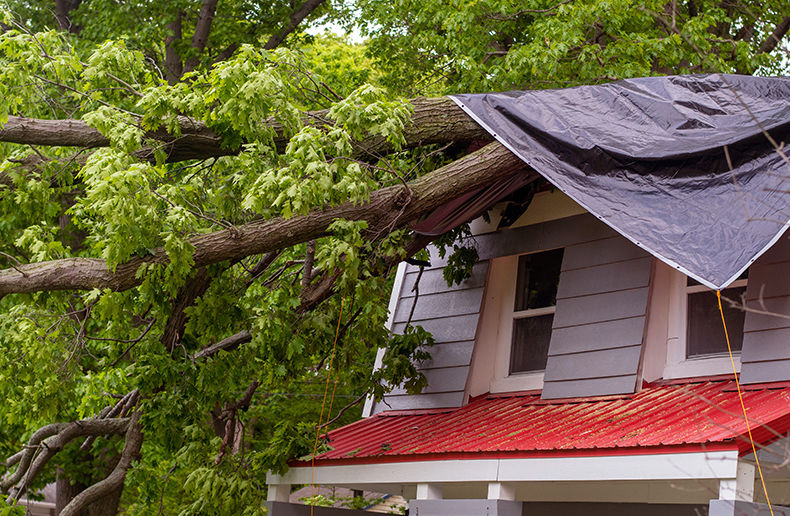
A report issued by the C.D. Howe Institute has called for the creation of a federal backstop for property and casualty insurers to address massive financial losses that have roiled the industry as the result of an increasing frequency of natural disasters in Canada.
“Insurance markets face two main challenges when insuring against natural disasters,” said the recently published report, Preparing for the ‘Big One’: Designing a Federal Backstop for Natural Disaster Risk.
“First, repeated large losses can strain underwriting capacity, driving up prices and reducing insurance availability; and second, extreme ‘peak perils’ (such as major earthquakes) can threaten the solvency of the entire property and casualty (P&C) industry,” it elaborated.
Citing data provided jointly by the Insurance Bureau of Canada (IBC) and Catastrophe Indices and Quantification Inc. (CatIQ), the report illustrated the near steady rise in the frequency of natural disaster events in Canada, from an average of less than 10 per year in the first decade of the 21st century, to an average of closer to 20 so far in the 2020s, with forecasts for that number to double again to about 40 annual events by 2040.
It also noted that the uninsured loss or protection gap in the Canadian market is currently estimated at about 37 per cent – leaving a high percentage of homeowners and businesses without insurance protection and therefore exposed to uninsured loss in the event of a natural disaster.

Author Thorsten Koeppl, a professor of economics at Queen’s University in Kingston, Ont., and a fellow-in-residence at the C.D. Howe Institute, an independent not-for-profit research institute, told Insurance Journal that the government is the “only true institution” capable of dealing with aggregate risk shocks to the economy.
Although both the federal and provincial governments have the ability to step in and provide support in the face of a catastrophe, such as an earthquake or other natural disaster, the federal government has the advantage of being able to diversify the risk across Canada, and to diversify it over a period of time. For example, a federal backstop could, to a certain degree, smooth out the higher insurance risk that an earthquake will occur in British Columbia, with the lower risk of a such an event happening in Quebec, he explained.
Public-private cooperation
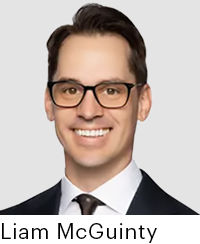
Liam McGuinty, vice-president of federal affairs with the IBC in Toronto, said the industry is “very encouraged” that the issue of systemic risk arising from an extreme earthquake event is being addressed.
He noted that in the federal budget tabled in November 2025, the government committed to launching a consultation with P&C insurers about the potential impacts of an extreme earthquake event on the sector, as well as on the broader financial services industry, and the Canadian economy.
That consultation, “with our industry and other stakeholders” has been ongoing over the past several months, he added.
McGuinty said insolvencies are inevitable in the event of an extreme earthquake event in Canada, but that “the job of the federal government is not to protect every single company from insolvency. It's to protect the resilience of the Canadian economy to ensure that we will be there as an industry to pay out policyholders in a timely and orderly fashion.”
In December 2024, the IBC issued a report entitled The Big One: Is Canada Prepared for an Earthquake Catastrophe, which also called for the establishment of a “federal backstop…program designed to support both the insurance industry and individual policyholders in the wake of a disaster.”
The IBC report said this program should build off of the Canadian government’s national flood insurance program for high-risk households, to establish a reinsurance entry housed at a subsidiary of the Canada Mortgage and Housing Corporation, with the program delivered through a public-private partnership with the Canadian P&C industry.
Similar frameworks in Japan and New Zealand have illustrated that such a solution “can work effectively, distributing costs and ensuring a quicker, more equitable recovery,” said the IBC.
Working with the market
Koeppl said that a national backstop should rely on market mechanisms as much as possible in order to allocate the cost of insurance to the source of the risk.
“The market mechanism will say this is expensive in terms of the insurer to build there,” he elaborated. “So, people will think twice, or they [will] make their houses more flood proof, because then in a competitive insurance sector that would mean the premiums for these people are going to go down.”
“But market mechanisms are important, because otherwise we're just going to end up with implicit subsidies,” Koeppl stressed.
The C.D. Howe report said a national backstop that transfers tail risk to the government can address both the lack of high-quality insurance against peak perils and also possible fluctuations in underwriting capacity. It added that minimizing costs for taxpayers should take the form of a fully priced reinsurance arrangement that leverages the government’s ability to spread aggregate risk over time.
Koeppl used the example of widespread business cycle shocks to illustrate that point, noting that the government might choose to go into deficit mode during bad times to fund stimulus programs and other such tools, and then ideally take measures to pay that back when economic times have improved.
This proposal would operate the same way, by basically saying it is okay to go into debt if a big disaster strikes, and then recover the costs exposed, he explained. Furthermore, by being able to estimate the costs and consequences of a possible impending disaster, such an event can be prepared for ahead of time by building up a financial buffer.
Whereas a pure backstop would bail out the insurance companies after an event, and then recover costs ex-post through, for example, levies on the insurance sector, the ideal way to deal with a possible disaster would be to also have a “reinsurance scheme to levy the up-front costs onto the people that originate the risk. So, you smooth out before the fact, and after the fact,” Koeppl added.
The C. D. Howe report proposed two layers for the mandated reinsurance scheme –a Disaster Risk Layer to smooth cyclical shocks, and a Catastrophe Risk Layer to cover extreme events that threaten industry insolvency.
The Disaster Risk Layer would transfer cyclical disaster risk to the federal government and address the tendency for insurance markets to tighten after a series of large, but not extreme, losses stemming from natural disasters. The Catastrophe Risk Layer would allow reserves to build up over a long horizon, transferring the risk of a systemic crisis in the insurance sector to the federal government, and substituting private capital provided upfront by contingent public capital.
Catching up
McGuinty said any solution the federal government brings in must “ensure there will be timely and orderly payment to policyholders in the event of an extreme earthquake that results in capacity constraints for the P&C insurance industry.”
It must also be workable from a political perspective, able to successfully navigate the legislative process.
“Our focus has been on a politically palatable, thoughtful, comprehensive solution that wouldn't kick in until there are extreme losses within the P&C industry. We’re confident that is a thoughtful way to address earthquake risk in Canada,” McGuinty elaborated.
“Our industry is flexible in terms of what that solution might look like. We're just looking for a timely solution that actually addresses systemic risk,” he reiterated.
McGuinty noted that Canada is currently the only G-7 country with significant earthquake risk that lacks some form of public-private partnership to ensure the stability of the insurance industry, or the broader economy in the event of an extreme earthquake.
But, he acknowledged, the federal government has shown recognition of the risks and interest in promoting the resilience of Canada’s economy, including ensuring the stability of the insurance industry after the event.
“So [while] we are behind other G-7 countries, we finally have a federal government that recognizes this issue and is working with our industry and other partners, including provincial governments and provincial regulators and the federal regulator to come to a solution relatively quickly,” McGuinty stressed.