Geopolitical tensions, fueled in particular by US President Donald Trump, are redefining the world order. Or at the very least, profoundly altering its parameters, especially from an economic perspective. No industry is immune, including the insurance industry.
This is one of the key findings that emerged from the panel discussion: Geopolitics has now become a major driver of uncertainty. What are the impacts on businesses? This event was organized as part of Journée de l’assurance de dommages (P&C Insurance Day) by the Insurance Journal Publishing Group on March 31 at the Palais des congrès in Montreal.
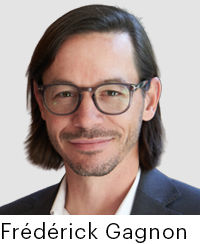
Uncertainty on the world stage is partly attributable to the unpredictability of the United States, whose actions vary according to the whims of its president, Donald Trump, explains Frédérick Gagnon, holder of the Raoul-Dandurand Chair in Strategic and Diplomatic Studies at the Department of Political Science at the Université du Québec à Montréal (UQAM).
“He says it himself in his book, The Art of the Deal: He boasts of making decisions with his gut and his instinct,” Gagnon points out. “He’s someone who governs like that: He might arrive in the morning with a rough idea of what he’s going to do, but he can change his mind during the day. It’s therefore difficult to predict, even for those close to him, who don’t agree on what should be done in foreign policy.”
An integrated economy under pressure
This may partly explain the hesitations and numerous twists and turns that have marked the war in Iran since the beginning of the year.
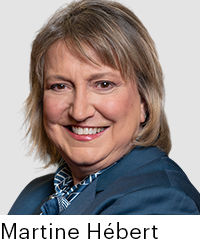
“We’re nowhere near a solution,” notes Senator Martine Hébert, economist and former Quebec delegate to Chicago and New York. “And there are extremely significant consequences for the global economy that are likely to be long-lasting.” Rising energy prices, persistent inflation, tariff policies, and increased caution from central banks are creating an uncertain environment. As a result, many businesses are hesitant to invest, fearing that political decisions will jeopardize their strategies. “Businesspeople are worried and concerned about the current situation,” says Hébert.
However, the agreements enshrined in the Canada-United States-Mexico Agreement (CUSMA) cannot be dismantled overnight, she says. Furthermore, the continental economy has been integrated for decades.
“Industries have been developing within the framework [of a free trade agreement] for years,” she points out. In many industries, manufactured products are designed in the United States, parts are made in Canada, and then assembled in Mexico. The finished product then returns to the American market. “It’s not true that you can change a production line overnight and it won’t cost anything,” she added.
Nevertheless, she says Canada should reassess its dependence on its powerful neighbor by diversifying its international markets. Increasing demand for Canadian products and services abroad would put pressure on the Americans, who need our resources, she adds.
“We have critical minerals, natural resources, drinking water,” she listed. “We also have expertise, such as in energy, defense, and maritime affairs.”
Aside from the dominance of the American market, the labor shortage is what is hindering Canadian economic growth, according to Hébert. For her, immigration must be aligned with market needs, and governments should not reduce the number of newcomers at the expense of national economic activity.
Investing in a volatile environment
On the investment front, market volatility poses a major challenge. Insurers, who manage large portfolios, must adjust their strategies.
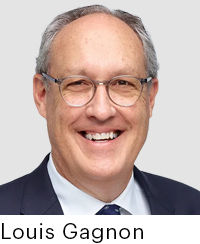
When it comes to investing to guarantee policyholder compensation while minimizing financial losses, insurers and actuaries are taking a pragmatic approach. “We simply have to adapt,” says Louis Gagnon, CEO, Canada, at Intact Financial Corporation. “The return on investment has to be higher because the risk is higher.”
“We’re looking at potential investment locations,” he continued. “We’re currently in Canada, the United States, and Europe…It’s true that right now, in the United States, the cost of capital is higher. We saw it with the [One], Big, Beautiful Bill; the temptation for Americans to exert more control over their markets is very real.” Caution is therefore advised. “This isn’t a time to talk about opportunities. We need to remain calm and fully understand the impacts on our sector,” he stated.
Climate and long-term risks
While 2025 was relatively mild in terms of natural disasters, 2024 set a record with over $9.2 billion in insurable losses.
However, despite these signs, several governments have slowed their efforts to combat climate change, the panelists pointed out.
“The United States set the tone in this radical shift,” stated Martine Hébert. “They abolished the billions earmarked for investment in the energy transition, in climate-friendly transportation… and we're seeing the consequences.”
This slackening of efforts could have significant repercussions on claims and the compensation paid by insurers.
"We have to be prepared to deal with it," says Louis Gagnon.