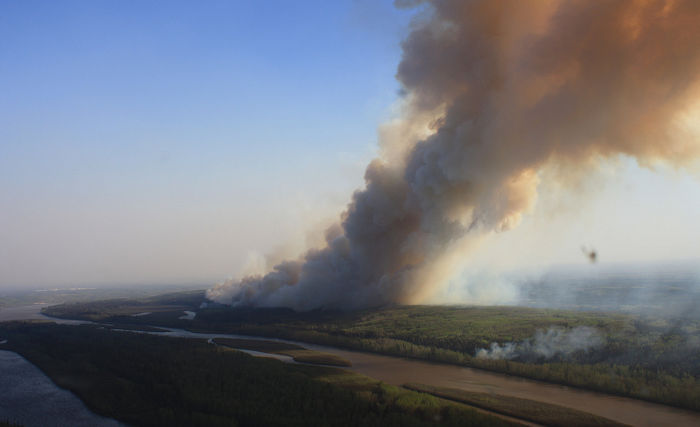
The industry is recognizing and noting an anniversary of sorts: 10 years ago this month, the Fort McMurray wildfire ripped through the Regional Municipality of Wood Buffalo in Alberta, forcing the evacuation of more than 80,000 residents.
The event resulted in the industry receiving over 60,000 insurance claims in just a matter of days. Total insured damages ultimately totalled more than $3.8-billion or $4.8-billion in 2025 dollars.
The Fort McMurray wildfire remains the costliest insured natural disaster in Canadian history.
In a look back at what worked and what needs to change still, across the board, industry representatives who spoke with the Insurance Portal about the event and lessons learned from it, say the same thing: The industry’s players need to become more proactive risk managers than they have been in the past. (Notably, several companies we spoke with have taken a number of concrete steps in that direction since the Fort McMurray fire.)
At the same time, across the board they also say that catastrophe planning and response is not an industry-only problem. The solutions, both in the emergency response, the rebuilding after a catastrophe and also in the resilience and emergency planning which occurs ahead of time, needs to be a whole-of-society approach. Whole-of-society, meaning insurance companies, all levels of government, investors, researchers, advocates for disaster preparedness and communities themselves are all needed to address the resilience question effectively.
“We need to continue to think about the role we play in being proactive risk managers. It’s not just about being there to pay claims when they happen, it’s about being proactive and helping our customers understand the risks facing them and also what tools or resources they have to be able to do something about (those risks),” says Scott Kirby, manager of sustainability, enablement and engagement with TD Insurance. “Nobody wants to have an insurance claim or face a crisis like this.”
Fort McMurray: The industry’s response
This time 10 years ago, insurers were just beginning to get a look at the devastation caused by the Fort McMurray fire. Some, with satellite imaging technology (Intact) were perhaps more prepared than others. All, however, say the approach to handling the sudden influx of claims was a matter of calling in all hands and resources available to manage the calls, emails and in-person inquiries at the various company’s mobile response unit locations.
“We got people on the ground at evacuation centres and in the townsite, but we were very deliberate about not getting in the way of the recovery effort,” says Intact Financial Corporation’s deputy senior vice president, claims, West, Albert Pol. To that end, the company even bussed in food and resources so as not to be a drain on local resources.
He adds that the company’s large national team made a major difference, as it was able to pull claims professionals in from across the country. The effort was so successful that Intact was able to handle all personal claims internally, relying on independent adjusters for commercial claims only.
“Before the town reopened (nearly a month later by some accounts), we had satellite images of Fort McMurray and had already identified every Intact property that was damaged or destroyed. Our teams knew exactly what we were walking into,” he says. “We quickly set up e-transfers to get funds directly into people’s accounts. That made a real difference for families who needed money right away for living expenses and replacing basic belongings.”
TD Insurance meanwhile, says the unprecedented catastrophe and the significant number of claims underscored the importance of being nimble and able to respond quickly. It became important to have staff available. They also say their mobile response unit was instrumental in taking some pressure off of the company’s phone lines.
“When customers are in a moment of need, a moment of crisis, it’s really important that we are prioritizing their immediate needs. When you’re balancing total losses and fast payments, you really have to assess what the customers needs right now,” says Kirby. “The home is really important but under evacuation, that’s not what they need in that moment. Living expenses need to be prioritized.”
He adds that catastrophic events like and including the Fort McMurray fire also underscore the importance of being able to triage claims effectively.
Similarly, over at the Co-operators, the surge in claims was met with staff from across the country who were mobilized to respond to the influx of inquiries. Shawna Peddle, associate vice president of sustainability at the Co-operators, says clients were very understanding that their claims wouldn’t be handled overnight. “We were focused on keeping them up to date on next steps, keeping them up to date on their settlement options and really being as transparent and helpful as we could be throughout the process,” she says. “We threw as much staff on it as we could.”
On rotating shifts, she says employees went above and beyond in the six months and more which followed the fire. The company is also another which had an on-site presence. To set up that presence, she says required ongoing dialogue with local authorities.
“The challenges were there for sure, but everyone involved was doing the best they could in a very challenging time. The challenges were overcome through collaboration,” she says. “If we are able to do anything differently, it would be to really understand going into this what it takes to be able to strike something like this up.”
One main challenge, perhaps not surprisingly in hindsight, was the town’s location, causing the rebuilding effort to take some time. “That is the nature of an event of that size, that magnitude, in a community as far removed as they were,” Peddle adds. “There was definitely a challenge making sure that materials and contractors could get in there and get the work done quickly.”
Intact did this by working directly with local builders to lock in contractor capacity and move the bid process along as quickly as possible.
Co-operators’ Peddle says some condominiums took close to two years to rebuild in some cases, some taking even longer, because of the necessary collaboration with condo corporations and their insurance companies.
“Recovery is a very long process. Once the wildfire is out, that's when the real work on recovery begins and that recovery work goes on for years,” says Rob de Pruis, national director of consumer and industry relations with the Insurance Bureau of Canada (IBC). “I don't think a lot of people realize how long recovery takes.”
Fire inspires operational changes
At Intact, Pol says the fire completely changed how the company thinks about evacuation risk. “Before this event, we’d typically see evacuations last a couple of days. Fort McMurray lasted weeks. That was unprecedented,” he says. “It’s something we now plan and prepare for as a matter of course.”
Additionally Intact and others, including TD and the Co-operators say the companies are more focused on ensuring that coverage keeps pace with inflation – namely rising construction costs – a challenge that Pol says has only grown more acute in the years since, particularly following the COVID-19 pandemic. “It’s why we’ve invested in better tools and calculators to keep limits current. It’s why we continue to work closely with our brokers to make sure customers truly understand their coverage before disaster strikes, not after.”
TD’s Kirby says the company today is consistently reassessing rebuilding values for homes to make sure coverages keep up with inflationary changes. “That is something that has changed,” he agrees.
Back at Intact, meanwhile, the company has also moved to secure elements of its supply chain, acquiring On Side Restoration in 2019. The property restoration company today supports around 50 per cent of the company’s property claims.
Although the company has become much faster about getting money to customers and contractors on site, Pol adds that the company still loses time to elements outside of its control, including permit approvals, labour shortages, housing availability and bylaw changes. “Those are systemic issues. They need a coordinated response from industry and government together. That work needs to move faster.”
Similarly, the IBC is another strong advocate for changing where people build. “We need to stop putting people in harm’s way,” de Pruis says. “We need to start building new homes that are not in areas of high risk, whether that’s flood or fire. And we really need to invest in resilience and reduce community risk. There is simply not enough time and money spent on building community resilience.”
Triage capacity is a focus at TD Insurance. The company has also invested in enhanced modelling to identify areas which are more prone to risk from certain types of events.
Operationally at Co-operators, Peddle says the company’s emergency response plans were built out following the on-the-ground learning that the Fort McMurray event afforded.
“We had an established process for responding to major disasters before Fort McMurray – it wasn’t the first, it just happened to be the biggest. Using that plan helped us to respond more effectively, but we also learned what worked from our clients and teams in real time. We were learning and adapting as we went, before building out those processes.”
de Pruis says a lot of companies have since codified and formalized their internal response plans in a similar fashion. “They’re able to better manage these major influxes of catastrophic losses in a very short period of time,” he says.
Also operationally, the Co-operators divided its teams such that dedicated personnel were assigned to handle total loss claims while separate teams handled partial and small content-only claims. This, Peddle says, provided consistency, both in direction and in service levels.
The company has also updated its policy and claims information to provide better detail about the policy types being reported. “We didn’t have set processes at that time for homeowner versus tenant, versus condo owner,” she says. “Now we can triage faster and assess claims earlier and faster during an event.” Product wise too, the company has also built in mental health supports which clients can access after an event. It has additionally created a build-back-better endorsement embedded within all qualifying home policies, called Tomorrow Strong.
Communication and technology developments
Industry representatives also say that the fire taught them a lot about keeping customers informed, even when all the answers are not immediately apparent or available yet.
To disseminate information, Intact says they used mass email, updated the company’s website regularly and also began using social media channels actively. Brokers were also a critical part of the chain, Pol says, adding that providing them with accurate and timely information multiplied the company’s reach significantly.
TD’s Kirby notes that large scale events tend to backlog phone systems. In 2016 the company’s mobile and in-person efforts took the pressure off of contact centres. Today, digital apps take up some of the slack as well, freeing up resources for those who want to discuss their claims with a representative.
Peddle, meanwhile says the cooperative company provided as much information as possible, including evacuation guidance and information about handling claims.
“We had boots on the ground because we wanted to make sure that we were helping clients through those first steps of recovery. There weren’t a lot of digital tools available to us at the time.” The company used Facebook for the first time during the Fort McMurray response. It was also the first time the company managed client claims and communications entirely by email – not phone. (Today the company answers communications through most social media channels and has the ability to proactively send notifications to clients and customers in specific geographies.) “We are definitely learning that there are ways to target people through social media that meets then where they’re at in the time that they’re in,” Peddle says.
At the IBC, de Pruis says the organization also worked with the municipality on joint information sessions and statements. “There was a significant amount of communication from everywhere that was coming at the residents, for sure.”
Today, among the features that the various companies have included in their respective mobile applications, clients can report and track their claims online and access their full policy information through the company’s app and client centre at Intact. They can similarly start a claim on the company’s app at TD Insurance. (Incidentally that company also allows clients to sign up for notifications about severe weather.)
Preparation, resilience and adaptation
TD and the others are also working to promote risk reduction. “Insurance companies really need to play a role in risk management for customers and be there to help customers become more resilient. To do this, it’s really important that we’re finding effective ways to communicate with customers and provide them with the tools to better protect themselves before something does happen,” Kirby states.
Although some companies like Co-operators utilize programs like Firesmart Canada which provide checklists for homeowners’ own risk reduction efforts (clean gutters, remove mulch and make sure fences are made of metal and not wood), both TD Insurance and Intact have taken such services further, by hiring a company which enters the communities when others may be evacuating, to undertake those activities on behalf of the insurance company and homeowners. (In TD’s case the company involved is called Wildfire Defense Systems. At Intact the company similarly offers a branded Wildfire Protection Service, also powered by Wildfire Defense Systems.)
“The feedback from local authorities and customers has been outstanding because it represents a fundamental shift from responding to losses, to helping prevent them,” Pol states. He adds that preparation before a disaster hits is another conversation which needs to be had more urgently. “This is not a future problem,” he says. “The evidence is clear that every dollar invested in adaptation prevents up to $10 in losses.”
Despite this, he adds that federal spending on emissions reduction eclipses adaptation by 24 to 1. “That gap needs to close. Intact has been investing in climate adaptation for over a decade. We’re calling on governments to bring that same urgency to updating building codes, establishing no-build zones in high-risk areas and making real investments in community resilience. The most affordable home is one that only needs to be built once,” he says.
As for why companies are investing more in resilience while they and the IBC encourage governments and stakeholders to focus on resilience and adaptation, Peddle puts it plainly: “Risks are higher, costs are rising. We want to be able to continue to offer coverage.”
She adds that the future for the company in this matter is very much focused on partnerships. “We know we need to achieve resilience and prevent losses before they occur. We can’t only focus on indemnity and cost recovery.”
To that end, the Co-operators in 2025 launched a Resilience Acceleration Lab to explore ways to leverage private capital to bridge adaptation funding gaps. It is also piloting a wildfire management demonstration project. At TD the company has partnered with the Institute for Catastrophic Loss Reduction (ICLR) to build a resilient homes pilot project in Fernie, BC.
“All of these are partners that are coming together with a shared goal,” Peddle says about the accelerator. “We want to unlock investment that can help to protect communities, local economies and the environment from the accelerating impact of wildfire.”
She adds that a new approach is needed to managing wildfire risk in Canada because the risk has escalated and systems are not able to keep pace. “We need new, economically viable, scalable approaches but we can’t focus solely on public funding. The government does not have the capacity to do this on their own, but we can, as private investors, we can play a role to help finance some of those solutions to build stronger communities,” she says.
Consumer education efforts also needed
The final piece of the puzzle, then, may be consumer education. Reflecting on the Fort McMurray fire, de Pruis notes that most who had disagreements with insurers’ actions were generally misunderstanding their policies – a situation which hasn’t changed dramatically in the years since.
Businesses often did not carry sufficient interruption insurance. In another unfortunate scenario he recalls one gentleman confusing mortgage and property insurance, who had cancelled his property policy after paying off his mortgage, thinking this was the right thing to do. Others, tenants, made conscious choices to not have insurance. Other homeowner policies were based on the home’s value when it was purchased and not on current rebuilding costs.
“Some homeowners had to make difficult decisions. They either had to get a second mortgage to replace what they already had, or they had to shrink their footprint,” he says. “The biggest thing is most people do not realize the replacement value of all their stuff.”