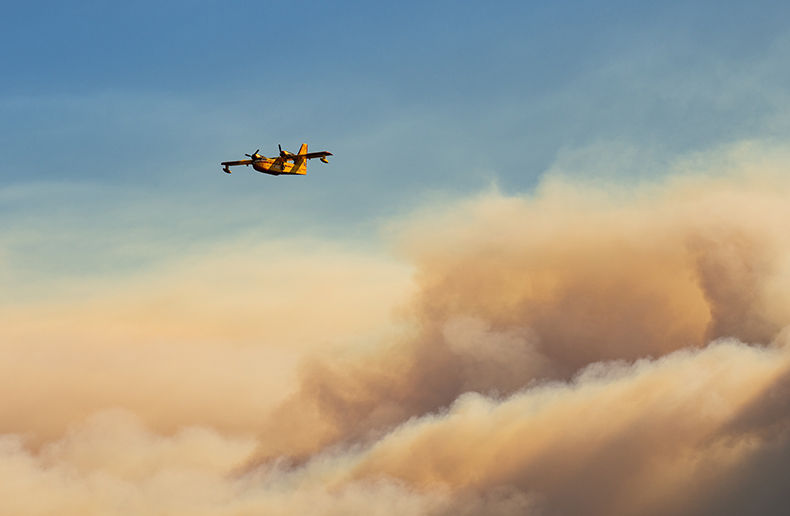
New estimates from Catastrophe Indices and Quantification Inc. (CatIQ) suggest insured losses from the August 2025 wildfire in Kingston, Newfoundland and Labrador will come in over $70-million.
The Insurance Bureau of Canada (IBC), in an announcement about the new estimates, describes the prolonged hot and dry conditions which left much of Newfoundland and Labrador susceptible to wildfires in August. At the beginning of the month, “the Kingston wildfire rapidly expanded in the Conception Bay North region, impacting at least nine communities on the western side of the bay. Upwards of 3,000 residents were forced to evacuate,” they write.
Environment and Climate Change Canada, meanwhile, says the prolonged heat and longer fire seasons are major contributors to more frequent and intense wildfires across Canada. Their scientists say these heatwaves are generally made worse because of human-caused climate change.
The same day the CatIQ estimate was released, Environment and Climate Change Canada announced the results of its July and August analysis using the Rapid Extreme Weather Event Attribution system. The system uses climate models comparing today’s climate to a pre-industrial one to demonstrate how CO2 and other emissions from human activities increase the chances of some extreme weather events occurring.
Analysis of the 10 hottest heatwaves
Their analysis of the 10 hottest heatwaves impacting the country in July and August 2025 suggests that nine were made much more likely because of climate change. “This means human influence on the climate made heat waves at least two to 10 times more likely to occur,” they write. “The system shows that the heat waves experienced in these regions during July and August would have been rare in a pre-industrial climate.”
More practically speaking, given this change, the IBC is calling for governments to create more adaptable building code frameworks, more stringent building code standards that account for the increasing risk and to support communities in developing wildfire plans.
Although the government announced in early September that it had created a Canadian Centre for Recovery and Resilience (CCFRR) in partnership with the Institute for Catastrophic Loss Reduction (ICLR), designed to help communities recover from disasters more effectively, the IBC says the effort falls short of the federal emergency management agency it has been calling for. “Canada should take a proactive approach to emergency management so that communities across the country don’t have to create a unique playbook after each catastrophic event.”
The IBC announcement also calls for measures which incentivize homeowners and businesses to make their homes and businesses more resilient. It finally calls for the prioritization of nature-based solutions for fire prevention, including controlled burns and “fire-smart” forestry and agricultural practices.
More news on weather-related damage in 2025
- Resilient rebuilding is one focus of new federal disaster recovery centre
- Ontario and Quebec ice storm caused at least $342-million in insured damage
- July 2025’s torrential rains in Quebec: insured losses estimated
- Wildfires in Saskatchewan and Manitoba: insured losses estimated
- Insured damage from Calgary’s July 13 hailstorm now pegged at $164-million