
A recent Quebec regulation requires syndicates of co-owners to maintain building maintenance logs. Has condominium management improved as a result? Some are sceptical.
It has long been established that many condominium properties have inadequately funded contingency funds, both for routine maintenance and emergencies.

Has the new Regulation establishing various rules concerning divided co-ownership, in force since August 2025, changed the situation? Not for a large proportion of condominium properties, especially smaller ones with six units or fewer, according to Yves Joli-Coeur, a lawyer specializing in condominium law. He denounces the widespread lack of awareness among condo owners of the regulatory framework, a problem that has long been recognized.
Small buildings account for most of the condominium housing in the province. Quebec has approximately 35,000 condominium buildings with 20 units or fewer, representing 90% of the province's condominium building stock.
In fact, there is a world of difference between large buildings, which are administered by professional property managers hired by the syndicate of co-owners, and smaller buildings, which rely entirely on volunteers. Across the board, however, members of syndicates' boards of directors have very limited knowledge of property management and its strategic aspects, such as building systems maintenance and construction techniques. The more fortunate condominium properties have board members who are also engineers, technologists, architects or builders.
A requirement
The new regulation introduces a requirement to obtain a maintenance log prepared by a professional, such as an architect, engineer or technologist. The document lists all major work required to maintain the building and its systems, including heating and air conditioning, over the next 25 years, along with a schedule for each project. The maintenance log must be updated at least once a year.
Another document, the contingency fund study, specifies the costs and even the monthly contributions needed to fund future work. The contingency fund study must be conducted every five years.
The regulation gives small condominium properties until 2028 to obtain these documents.
“These documents provide a health assessment of condominium governance, and for the majority of small buildings, the picture is not very encouraging,” says Joli-Coeur. “I've noticed that the problem is more pronounced in small condominium properties with high claims experience. Generally, their board members don't know the law or don't want to pay to have these studies prepared.”
The studies cost anywhere from a few hundred to several thousand dollars, depending on the building's condition, age and complexity.
“Many people imagine that when they buy a condo, they'll just pay the equivalent of rent,” he continues. “Over a 25- to 30-year cycle, every building will require major work. Many condo owners can't afford to pay for it. It's not uncommon for some, who are used to paying monthly condo fees of $223.25, to suddenly face a special assessment of $15,000, payable within 60 days, for urgent repairs.”
Joli-Coeur denounces a deficient culture of asset maintenance and widespread lack of awareness of these issues among most condo owners.
Self-insurance fund
Quebec's Civil Code also requires every condominium property to establish a self-insurance fund, used to pay insurance deductibles and, in certain circumstances, to repair damage not covered by insurance compensation.
In the event of a covered loss, the syndicate's insurer compensates for damage to the building in accordance with the coverage provided under the policy, even if the loss originates in an individual owner's private unit. The insurer may subsequently seek recovery from the responsible co-owner or their liability insurer, where legally permitted. The co-owner's liability must first be established.
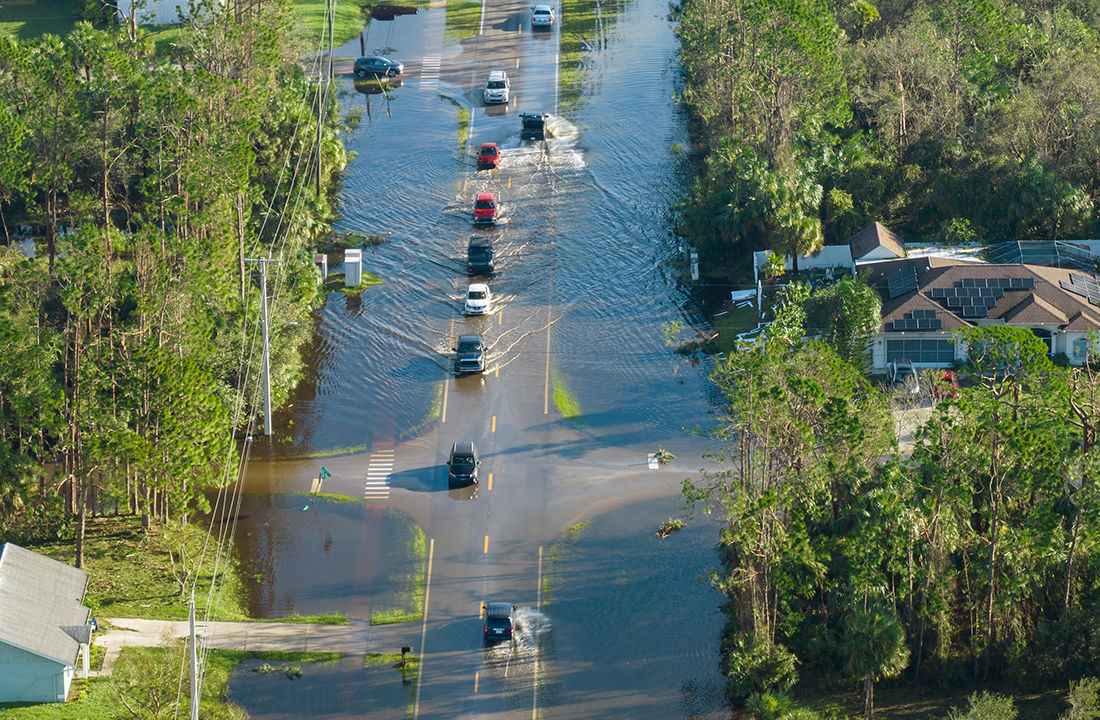
“With climate change, the lack of preparedness has become a major issue, as many condominium properties are experiencing repeated losses,” Joli-Coeur explains. “Condo owners draw on the contingency fund to carry out repairs after a loss and pay the deductible. But by the second or third incident, the contingency fund is depleted. As a result, some condominium properties have no insurance coverage for water damage. I frequently see syndicates concealing losses from their insurers. Elsewhere, condo owners disagree about the urgency of undertaking repairs.”
Things are changing

“Since the regulatory changes, there has been a great deal of awareness-raising among condo owners,” observes Vincent Gaudreau, president of Fort Insurance & Group Benefits. “The years from 2016 to 2022 were very difficult for condominium properties in general. Premiums and deductibles rose sharply. Desperate cases piled up. Today, the situation is different.”
Nevertheless, he notes that some problematic condominium properties remain, with significant maintenance deficiencies, and insurers refuse to cover them.
Gaudreau adds that insurers are using increasingly sophisticated underwriting techniques. “Well-managed condominium properties pay less,” he explains. “Insurers are paying more attention to how buildings are managed internally. Their reasoning is simple: management problems increase risk. Those with poor management, inadequate contingency funds, obvious maintenance deficiencies and mounting claims face high insurance rates.” Consequently, some insurers refuse to insure these condominium properties.
However, Gaudreau does not consider the problems to be universal, since not all condominium properties are alike. For example, some consist solely of land and outbuildings, others of an underground garage beneath buildings that are not condominiums, while still others have only recently been built.
He acknowledges that the regulations require condo owners to try and open their wallets. “We commonly see buildings with four to eight units where the roof needs to be replaced at a cost of $80,000, and half the condo owners can't afford it. The others have to cover their neighbours' special assessments and register a legal hypothec or sue them to recover their money, with all the legal expenses that entails.”
These condominium properties are not large enough to hire professional managers but are often too large to be managed by volunteers. This situation frequently results in inadequate maintenance.

Julien Gobeil Simard, president and CEO of Hoodi, is seeking to address precisely this problem. “We've created a generative AI virtual agent that reads and understands a user's declaration of co-ownership and answers their questions based on the laws in force,” he explains. “Our technology makes it possible to track the maintenance log.”
Condo owners order a report online, which is then supplemented by a report from a building inspector who visits the property a few weeks later. The final report provides all the technical and financial information. Costs range from $2,500 to $3,400, depending on the number of units.
So far, the small business has worked with 1,000 condominium properties with 20 units or fewer, as well as some managers of larger buildings. Several clients contacted the company after their insurer demanded that they produce a maintenance log and contingency fund study within two or three weeks.
Some condo owners discover this obligation when their insurer requests these documents. Others are outright denied any insurance coverage because they cannot produce them within the required timeframe, he confirms.
“Insurers are now sensitive to this issue because, for years, condominium claims experience was poor and buildings were inadequately maintained,” he comments. “I draw a parallel with telematics in automobile insurance, which rewards good drivers. Here, those who perform well are the ones who take the necessary steps to maintain their buildings properly.”
Widespread underfunding
Gobeil Simard reveals that, of the 2,500 reports his company has produced over the years, the majority concern buildings whose contingency funds are severely underfunded.
“They were far from sufficient to finance future work,” he says. “I would say that fewer than 5% of condominium properties are adequately funded, meaning the others are not contributing enough to their contingency funds or have not made the financial adjustments necessary to comply with the law.”
Some nevertheless devote substantial amounts to catching up, but these efforts are insufficient to address the challenges of the next five years, he adds. That said, buildings less than 30 years old face lower risks. But most condominium buildings are more than 30 years old.
“These older properties will have to make a major effort to replace doors, windows, roofs, foundations and guardrails,” he continues. “Some have practically nothing in their contingency funds and no borrowing capacity. The longer condo owners delay this work, the more expensive it becomes. That's why lenders and insurers will increasingly make documents such as maintenance logs and contingency fund studies a standard requirement.”
Lack of knowledge
Is there a lack of awareness of laws and regulations among condo owners? It is widespread, maintains Gobeil Simard, who points out that new laws do not arrive in people's mailboxes. Many condo owners also do not know what they are getting into when they buy a condo.
“No one in the real estate chain is responsible for educating people about the responsibilities of condominium ownership,” he says. “Some are shocked when they learn they must contribute to a contingency fund every month. I'm not surprised: for years, condominium ownership was marketed as an affordable, hassle-free way to become a property owner. People were led to believe they could manage with condo fees that were, in reality, insufficient to maintain their building. For ages, buyers have been shopping for buildings with the lowest fees. Yet it's in condo owners' best interests to ensure their asset remains in good condition. And the money accumulated in the contingency fund earns interest.”
In February 2022, the Canadian Institute of Actuaries (CIA) published a study concluding that a very large majority of syndicates of co-owners collect insufficient contributions to their contingency funds. Widespread maintenance deficits are passed on to subsequent buyers, creating intergenerational inequity and inflating the market value of condos.
In response, lenders are increasingly requiring maintenance logs and contingency fund studies to be submitted to them. Real estate brokers must also take these documents into account when conducting their due diligence and advising clients. And what about insurers?
“Each insurer is responsible for determining what information and documents are required to assess the risk and offer insurance coverage to a condominium property. However, we have not observed that the items mentioned above are systematically required. Furthermore, most condominium properties in Quebec remain insured,” says Mélanie Fontaine, spokesperson for the Insurance Bureau of Canada (IBC).
Desjardins does not systematically require these documents. “We discuss these matters and place our trust in our clients,” explains spokesperson Véronique Breton. “At Desjardins Insurance, every insurance application submitted by a syndicate of co-owners is assessed according to its particular circumstances.”
The insurer nevertheless considers sound building management essential. This means keeping the maintenance log up to date and ensuring that the contingency fund is adequately funded.
“When underwriting insurance for a syndicate of co-owners in Quebec, Intact requires, among other things, a maintenance log and the existence of a contingency fund,” says Caroline Audet, spokesperson for the insurer. She believes an insurance broker is best placed to obtain the necessary information and coverage tailored to the specific needs of a condominium building.
Joli-Coeur maintains that the majority of insurance brokers do a good job of raising awareness among syndicates about these issues.
“Some are extremely professional, but in my experience, many are incompetent,” he stresses. “I have claims files that should have been settled within days but end up taking several months, or even a year. Some brokers shouldn't be allowed to sell condominium insurance. Many insurance company executives, underwriters and claims adjusters don't know what they're doing! There is still a training problem in the industry when it comes to condominium properties: the level of expertise varies from one insurer and one individual to another, even though the majority do their jobs well. I see it every week.”
The lawyer questions whether regulators are adequately overseeing training. He says buildings with inadequate insurance coverage that does little or nothing to meet their needs are not an exception. This situation is nothing new, as the Insurance Portal pointed out back in... 2012.
“Yet members of syndicates' boards of directors depend on the knowledge of brokers and other insurance intermediaries because they have significant knowledge gaps, particularly in smaller condominium properties. Their level of vulnerability is high.”
Approximately 12% of Quebec's population and 15% of Canada's population live in condominiums.