For 16 of 17 years between 2009 and 2024, the average cost of climate change in Canada was $2.9 billion. According to the most recent update from Catastrophe indices and Quantification Inc. (CatIQ), severe weather caused more than $3.7 billion in insured losses in summer 2026 alone, the third costliest summer on record for severe weather damages (average losses in 2024 exceeded $9 billion).
“Four of the five costliest summers in Canadian history have occurred within the last six years,” the Insurance Bureau of Canada (IBC) stated in its announcement about CatIQ’s latest figures.
Dr. Blair Feltmate, head of the Intact Centre on Climate Adaptation within the Faculty of Environment at the University of Waterloo says Canadians should stop being surprised by record-breaking insured losses and should instead be focused on undertaking adaptation measures with some urgency.
Help homeowners help themselves
If governments, insurers and communities were on board, he says his number one instruction would be to help homeowners help themselves. “We could take a tremendous amount of risk out of the system, and also almost instantaneously, if people do engage with the direction to mitigate and protect their homes from flooding and wildfire,” he says.
“The biggest challenge we have in the country is complacency on this file. Lack of a sense of appreciation for the need to act with urgency. My big fear is that it’s going to take a heatwave, for example, which kills 30,000, or we’re going to have a flood event that shuts down the Port of Vancouver for a period of two months, or something like that. It’s almost like we’re waiting for a really giant disaster to hit.”
He emphasizes that the solutions in question are something that any homeowner capable of building a garden can undertake, for under a few hundred dollars, over the course of a long weekend, without any technical expertise.
“There’s a lack of appreciation for how easy it is to do a great deal of this, to take a great deal of risk out of the system for extremely little effort,” he says.
“Most of the attention, almost all of the attention is on lowering greenhouse gas emissions, which I’m in favour of but I’m not in favour of ignoring adaptation when we actually have the remedies in hand that are ready to be applied.”
He adds: “We know the problems and we know the solutions but we’re not applying known solutions to known problems nearly quickly enough.”
In discussing the file, Feltmate points out that between 2015 and 2024, the federal government’s figures indicate an investment, both directly and through tax subsidies, in greenhouse gas emission reduction efforts of $160 billion. During the same period the government’s investment in adaptation was just $6.7 billion.
He also says there are multiple lines of research done by his own unit, by the IBC and others which all show that a dollar spent on adaptation produces between $3 and $10 in avoided losses in the decade which follows.
The two most challenging perils
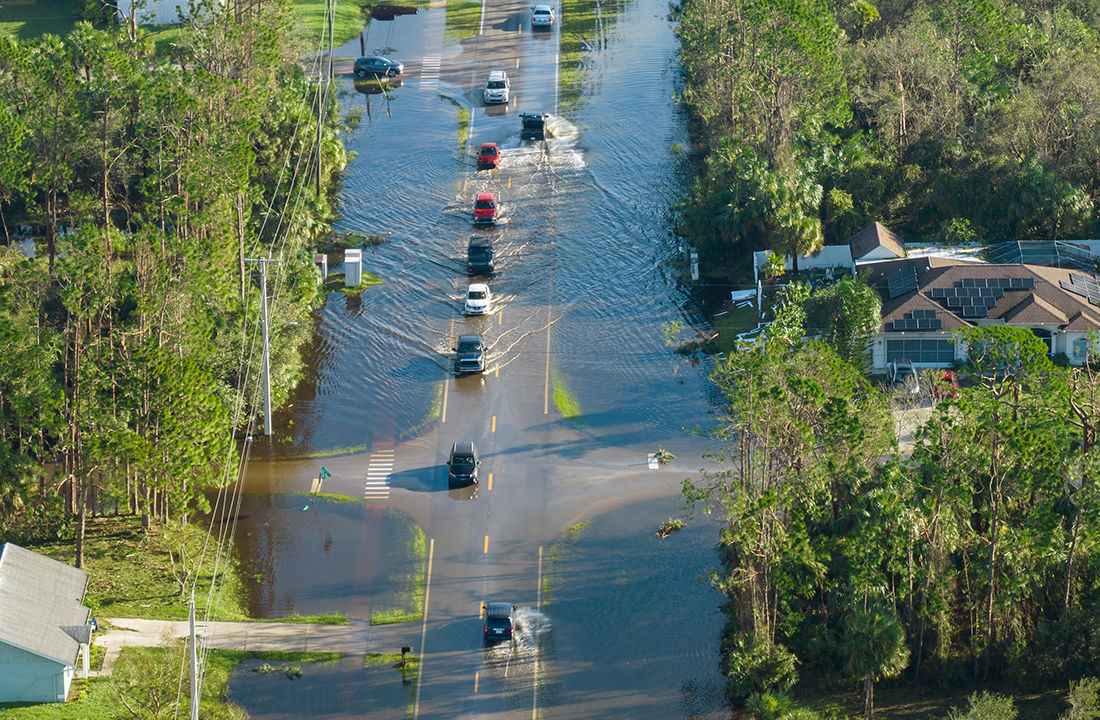
“The good news is, to a large extent, we know what the key perils are and where they’re going to manifest in the country. The two most challenging perils, I mean financially costly, at the top of the list is flooding. The most expensive climate change, extreme weather peril is flooding, and the specific expression of flooding is residential basement flooding,” he says. “The second most costly peril is wildfire.”
This summer, June storms in Manitoba, Saskatchewan and Montreal caused insured losses of $1.1 billion. July and August flooding in Ontario’s Niagara Region, late-June and early July storms across Ontario and Quebec, wildfires across British Columbia and multiple wind and hail events across the Prairies, all also contributed to the $3.7-billion figure.
In perspective, Feltmate points out that from 2009 until 2024, the annual average cost of climate change-driven losses was $2.9 billion. “The culprit driving about 60 per cent of the upward bend in the curve is too much water in the wrong place.”
He adds that things are getting worse more quickly, as well. “I’ve been working on this file for more or less 20 years. When we plot out the catastrophic loss claims data on charts and graphs, we’ve had to adjust the y-axis four times to allow bigger numbers to be plotted on the graph. That’s a bad problem,” he says.
Life and health insurers not immune
Interestingly, Feltmate’s research also points to the costs of climate change for life and health insurers, as well – group insurers, in particular.
Based on data from Manulife, the researchers looked at data from 15 cities over the last 15 years in Canada. The cities chosen were selected for having both areas which had experienced flooding due to microburst storms and those with areas which also remained unaffected.
The research, expected to be published in the first quarter of 2027, found in the 12 months following a flooding event, prescriptions for psychosocial and mental health stress spiked 10 per cent in flood-impacted areas. Use of mental health counseling services jumped 36 per cent and lost time from work claims jumped 75 per cent.
“It was the general perception, including within the insurance industry that extreme weather was basically a problem for property and casualty insurers,” he says. “It was thought that life and health insurers were off the hook.”
Feltmate credits Manulife for providing their support. “They want to look at the future of climate change, extreme weather risk, with their eyes wide open. In other words, they don’t want to pretend that the problem doesn’t exist.”