
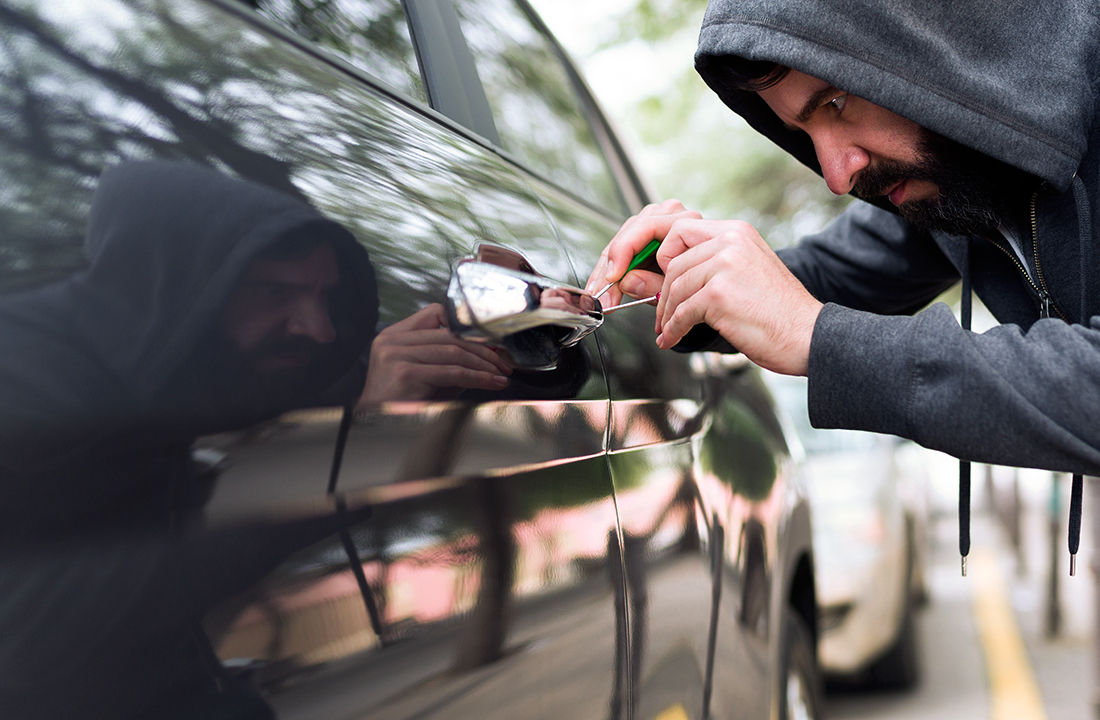
Police-reported auto theft incidents were down 16 per cent in 2024 and down another 16 per cent in 2025, according to a recent update from Public Safety and Emergency Preparedness Canada (PSEPC).
In its latest announcement providing an update about the National Action Plan on Combatting Auto Theft, the PSEPC notes recently-proposed updates to the Canada Motor Vehicle Safety Standards to modernize immobilization systems requirements – a measure welcomed by industry members.
“The government announced that they’ll be publishing amendments to the Canada Motor Vehicle Safety Standards in the Canada Gazette,” explains Hanna Beydoun, director of auto policy with the Insurance Bureau of Canada (IBC). “We’re really looking forward to that. It’s something the industry has been pushing for.”
She adds that the national action plan is robust and comprehensive, ranging from Canada Border Services Agency (CBSA) authority changes, through to enhanced bail provisions, plus the standards-setting commitment which should make cars harder to steal.
The IBC, in response to the PSEPC’s announcement, released a statement stating that progress against auto theft shows the value of sustained collaboration.
Declining rate of theft
It notes that auto theft has declined nationally by 24 per cent from 2024 to 2025 but adds that theft rates remain notably above historical levels.
“The one-year decline of 24 per cent in the last year is really encouraging, but the challenge is that auto theft, over the last decade, the number of insurance claims is 38 per cent higher than it was 10 years ago,” Beydoun told the Insurance Portal. “The value of those theft claims, the cost is almost 170 per cent higher.” She adds that the value of theft claims reached $724 million in 2025, up from $269 million, 10 years ago.
Among the many government investments being made into targeted community safety programs, the government is also funding three Canadian projects that they say are developing innovative vehicle anti-theft technologies.
“Insurers themselves work with consumers to make them aware of the different measures that they can take, including incorporating approved, anti-theft immobilizers in their vehicles,” Beydoun says. “They’ll encourage their consumers to install those in their cars. Some insurers will also offer incentives.”
The industry, she points out, has also been active in the fight against auto theft by sharing information and key trends with the public and those making decisions, to ensure that all know the magnitude of the issue.
Industry welcomes anti-theft standards
Most notable about the PSEPC’s announcement for industry watchers, was the proposed safety standards updates which would bring them in line with the latest international theft prevention standards.
“Ultimately, they’re looking to replace the outdated standards with the latest (international) standard,” Beydoun explains further. “This is an important milestone. It’s going to make sure that cars are better equipped to withstand modern theft techniques.”
She adds that the IBC commends Transport Canada for looking at the changes and for moving with speed to help address the current auto theft crisis. “We were supportive of the proposed amendments.”
She adds that making cars harder to steal is a critical part of the effort to bring down theft numbers. “The industry’s been long advocating for the federal government to replace the outdated vehicle immobilizer standards and align these with international requirements for theft protection,” she says. “The sooner we see those changes, the better for Canadians.”
Quick facts:
• The National Action Plan on Combatting Auto Theft was developed in collaboration with other levels of government, law enforcement and industry following the National Summit on Combatting Auto Theft with provincial, territorial and municipal government officials, industry leaders and law enforcement representatives in February 2024.
• Since early 2024, the Government of Canada has invested $15 million to bolster law enforcement efforts targeting auto theft and support a coordinated domestic and international response to this crime. The Canada Border Services Agency (CBSA) also received $28 million to increase its capacity to identify and search shipping containers for stolen vehicles, explore technological solutions, share intelligence and collaborate with domestic partners to recover stolen vehicles
• Project NoCargo, a collaborative pilot launched in June 2025 by the RCMP with the participation of the CBSA, INTERPOL Ottawa, FINTRAC and Canadian financial institutions, prevented the export of hundreds of vehicles obtained through fraudulent means. 392 vehicles were recovered with an estimated value of $28 million.
• The CBSA intercepted 1,590 stolen vehicles in railyards and ports in 2025 and 830 since the beginning of 2026.
Source: Public Safety and Emergency Preparedness Canada (PSEPC).