

Conflicts in the Middle East, tensions in the Strait of Hormuz, violence in Mexico, the energy crisis in Cuba, among others: the past few months have been marked by numerous geopolitical and economic upheavals, with significant repercussions for the travel industry. According to several stakeholders, the insurance sector, however, is holding its own.

“It’s true that the last eighteen months haven’t been easy!” says Claudia Baino, Director of Business Development for Quebec at Allianz Global Assistance Canada.
The 2020s have been a rollercoaster ride that doesn’t seem to be ending anytime soon. The sector had already been severely tested by the COVID-19 pandemic, when international travel was largely suspended for health reasons.
“The silver lining of this situation, if there is one, is that it demonstrated the importance of travel insurance,” says Nadia Goyette, Assistant Director, Insurance Products and Partnerships for CAA-Québec.
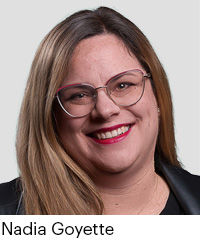
“It raised awareness among the general public about the importance of having good coverage.” Previously, travelers primarily considered medical protection in case of health problems abroad. Trip cancellation insurance has become increasingly popular.
“Many more clients are purchasing trip cancellation and interruption insurance,” notes Sylvain Lamanque, Vice-President of Operations for Securiglobe (Navacord). "They understand the need for insurance, especially when the trip is expensive."
Traveling despite everything
Canadians are still traveling, but they are choosing new destinations.
A survey conducted by Ipsos for Allianz at the beginning of the year indicated that Canadians were determined to travel: seven out of ten respondents had travel plans for 2026.
Among the preferred destinations were other Canadian provinces, Mexico and the Caribbean, as well as Europe. The United States, however, was less popular than the previous year.
"Right now, people are considering road trips in neighboring provinces or taking domestic flights to the Western provinces," explains Goyette.
"We are also seeing new destinations becoming more popular with Quebecers, such as Japan or Costa Rica, Brazil, Panama, or Indonesia," she adds. Securiglobe, acquired by Navacord, serves a large number of Canadians who travel to the United States in winter, the so-called "snowbirds." Many own property in Florida, Texas, California, or Arizona, explains Sylvain Lamanque.
This clientele is waiting longer before planning their next season, he notes. "People are shopping later. Before, a client returning [to Canada] in April was already ready to buy for the following winter; now, they're waiting a bit." This is partly because many are trying to sell their American properties. "With hurricanes and climate change in Florida, not everyone can afford to insure their condos anymore. The costs have doubled or tripled. If they haven't sold it, they'll still enjoy it, but their trip will be shorter," Lamanque points out.
Better-informed travelers
Above all, Canadian travelers are doing more research, both on the latest news about their destination and on their options in case of cancellation.
“We’re seeing more planning,” says Claudia Baino. “People are worried, they’re reading the news, and they’re asking more questions. We need to offer more consistent support in our customer service.” Recent events have made Canadians more inclined to purchase travel insurance, despite rising premiums. This increase is largely attributable to soaring airfares.
“We haven’t seen more trip cancellations per se, but we’re seeing that people are much more aware of the need to protect themselves and their investment,” notes Baino. A risk is not always predictable.
Some travelers don't feel the need to buy travel insurance because their credit card issuer covers certain expenses in case of an emergency, or because their group insurance offers this service.
"But few customers read the fine print and know the details of their coverage," notes Nadia Goyette.
As a result, some tourists may be in for unpleasant surprises if their existing coverage doesn't match their specific situation. "That's where it can be beneficial to purchase supplemental travel insurance to cover what isn't already covered," she adds.
In some cases, when a flight is canceled or delayed, it is the carrier's responsibility to compensate travelers. But this won't cover other losses incurred due to the new schedule, such as the cancellation of accommodations, activities, or car rentals that have been paid for in advance and are not always refundable.
The concept of foreseeable risk is also central to cancellation insurance, Goyette points out.
"The airline, for example, has an obligation to compensate its customers for situations that are within its control," she explains. "It's not always within their jurisdiction." And even then, this risk must be foreseeable to be covered. "Consider the current kerosene crisis in Europe," Nadia Goyette continues. "We know that some airlines have already been proactive in changing their flight schedules, canceling or combining flights to minimize the financial impact. One might think that a fuel shortage is foreseeable, but that's not the case. We don't know exactly when it will happen, if it even happens…Fear of unforeseen events and uncertainty in the destination country are also not covered. If a traveler decides to cancel their trip without any travel advisories, it’s their decision, and they won’t be reimbursed. Insurers don’t cover fear,” underlines Goyette.
However, the most fearful travelers can take out a “cancel for any reason” endorsement to be covered beyond the reasons listed by insurers. In the United States, global uncertainty has led to a 27% jump in subscriptions to this type of endorsement this spring.
Tour operators are adapting.
In anticipation of a potential fuel shortage, some carriers have revised their plans. For example, Air Canada has suspended 13 international routes between April and September. The airline has also reduced its flights to the United States and the Caribbean for the coming year.
Air Transat, for its part, has scaled back its offerings and paused its flights to Cuba, as has Sunwing, which prefers to avoid the region until the fall. WestJet is following suit, having also reduced the number of flights to Europe.
2026 is halfway through: will the second half be more peaceful? It's impossible to know. But Claudia Baino remains optimistic. “I’ve been in the travel industry for 40 years, and I’ve seen it all: the pandemic, the SARS epidemic (2002-2003), the attacks in New York (September 11, 2001), and many other things,” she lists. “Travel stopped for a period of time, but it’s a resilient market. People will always feel the need to travel.”