

A research project in actuarial science at the Université du Québec à Montréal (UQAM) has received approval from funding agencies. The Co-operators Chair in Actuarial Risk Analysis has been granted $850,000 for its project entitled Adaptability of Models in Property and Casualty Insurance (P&C).
Two-thirds of the funding, or $566,711, comes from the Alliance program of the Natural Sciences and Engineering Research Council of Canada (NSERC). Co-operators Group, partner of the Chair since its launch in spring 2018, is providing the remaining third, or $283,455.
The grant has been awarded to Jean-Philippe Boucher, Chairholder, and his colleague Mathieu Pigeon. “The mathematical models we develop will serve two main purposes. On the pricing side, we want the models to reflect risk accurately and remain stable over time,” says professor Boucher in a news release issued by UQAM.
“We also want to ensure that Co-operators always has the liquidity to pay for damage costs related to natural catastrophes, such as wildfires,” he adds.
In addition, Co-operators has contributed $500,000 to renew the Chair until 2029. The Chair’s mission is to advance UQAM’s actuarial programs, contribute to actuarial science, and train skilled professionals in the field.
The 2024–2029 research program focuses on three main areas: standardizing and replicating insurance data, streamlining pricing, and optimizing reserving—that is, the reserves insurers must set aside to pay claims.
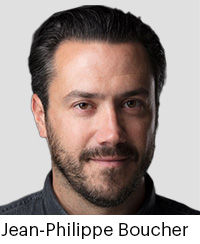
In an interview with Insurance Portal, Jean-Philippe Boucher confirmed that the funding agencies expressed their commitment at the end of last year. Administrative delays at UQAM meant the official announcement took some time.
The Chair’s renewal was delayed because the funds announced in 2018 had not been fully spent due to the pandemic. “Almost all the money we receive is used to fund projects, pay students involved, and support related activities,” Boucher explains.
As Chairholder, Boucher dedicates part of his time to securing funding from academic research grant programs. The NSERC-funded project falls within this mandate.
The professor notes that the research results are not reserved exclusively for the insurance company. Co-operators sits on the steering committee and helps identify research avenues. Students can conduct their research with support from professionals employed by the insurer. However, all scientific content, including master’s and doctoral theses, is made public and accessible to the broader industry.
For example, a paper on fire spread in farm buildings was published in 2021—of interest to a segment of the clientele served by Co-operators’ general insurance division. The paper’s authors were awarded a prize by the Casualty Actuarial Society (CAS).
Data use
In the research stream focused on data replication, one area of exploration is the development of systems to anonymize insurers’ data, enabling them to be shared safely with other actuarial researchers. “As researchers, we’ll be able to share more of this type of data with other researchers around the world, which really supports international collaboration,” he says.
On the pricing side, researchers will try to integrate multiple elements into a single pricing model, rather than using different models for different situations. Customer value is one of the factors insurers should consider, Boucher suggests.
“When a client leaves, it’s costly to replace them. Beyond the time an insurance agent will spend trying to retain the client, finding a new one comes with a higher cost to the insurer,” the professor explains.
Cross-subsidization among insured groups is normal within a portfolio, he notes, but that shouldn’t prevent insurers from recognizing the value of loyal clients in their pricing strategies. “If an insurer loses the group of insureds that was subsidizing another group, it becomes unprofitable. The problem is, it’s not always easy to identify which group is subsidizing the others. That’s part of the segmentation models we’re trying to build,” he says.
Practical application
The Chair team is particularly focused on producing results that are usable in actuaries’ day-to-day work. “We propose tools, but we also need to find ways to integrate them into insurers’ daily operations. That takes time,” says Boucher.
The dissemination of research findings remains a constant concern for the professor. “What we ultimately want is for this to be used, explained to policyholders, executives, insurance company board members, or even financial regulators,” Boucher explains. “It must not just sit in a scientific journal with no real-world application. We try to share the results to demonstrate and explain that they work,” he emphasizes.
Research or work?
The extension of the Chair’s mandate until 2029, along with the funding of the new project, comes at a time when recruiting researchers in a field like actuarial science remains a constant concern.
“People finishing their bachelor's degrees quickly find work, and employers offer excellent conditions. It was already a challenge when I graduated,” notes Boucher, who earned his actuarial degree from Université Laval in 1999. He later pursued graduate studies in France before becoming a professor in UQAM’s Department of Mathematics in 2007.
The goal of research in an innovation chair is to allow participation in projects closely aligned with industry needs. “Our students are integrated into the teams and can present the progress of their work to company executives,” Jean-Philippe Boucher points out. This can lead to job opportunities, or even promotions for actuaries looking to deepen their expertise.
Some researchers involved in the Chair’s work have also gone on to become actuarial professors themselves, in Quebec or abroad. “Some we trained are now established in Spain, Scotland, and so on,” he says.
Auto insurance
Jean-Philippe Boucher highlights other recent work focusing on vehicle theft risk. A student working on a master’s thesis “tried to find ways to identify issues more quickly in specific parts of the portfolio.”
By detecting claim frequency spikes earlier—rather than after three months—the insurer can adjust its actuarial models sooner. “That allows us to sound the alarm faster, and we developed statistical models for that,” he adds.
The use of telematics data in auto insurance is another active research topic of the Chair. This vehicle technology can alert drivers to potential dangers, reducing claim frequency. “However, severity has gone up significantly because a bumper full of electronic sensors is very expensive to repair when damaged,” he says.
In 2024, professors Boucher and Pigeon published an article in the CAS journal entitled Balancing Risk Assessment and Social Fairness: an Auto Telematics Case Study. In the executive summary, they explain that “synthetic data from a large Canadian insurer suggest that telematics technologies could reduce reliance on sensitive variables in auto insurance pricing models. Actuaries still frequently use factors like age, gender, marital status or location. But these variables are sometimes perceived as discriminatory, especially when correlated with data such as income or ethnicity.”
Telematics data—such as hard braking, sudden acceleration, mileage, or driving days—can better capture the actual risk based on driving behaviour. These data points may, “in some cases, replace sensitive variables while maintaining good predictive performance in models for claim frequency and severity.”
Several barriers are slowing the adoption of these technologies: implementation costs, privacy concerns, and the complexity of machine learning models, which are often difficult to explain to regulators. The study’s authors conclude that “testing the integration of telematics data could allow insurers to build fairer models that are better aligned with current societal expectations around algorithmic fairness.”