
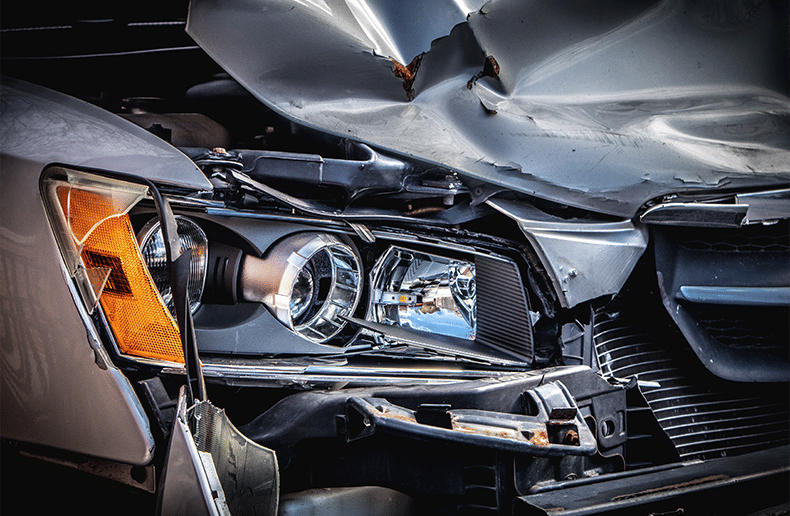
A Tesla is declared a total loss following a single-vehicle collision. After the accident, its owner purchases an electric vehicle from another manufacturer. Several months go by. The owner then receives an invoice linked to a Tesla account that was never closed. The bill concerns a vehicle registered in... Belarus. Yet Tesla has no presence in that country. How is that possible?
This case came to the Insurance Portal's attention several months ago, prompting us to investigate.
When an insurer declares a vehicle a total loss, ownership transfers to the insurer. The insurer indemnifies its policyholder under the insurance contract and then assigns the damaged vehicle one of two classifications established in Quebec by the Société de l'assurance automobile du Québec (SAAQ): seriously damaged vehicle (SDV) or irreparable vehicle.
In the case of an SDV, the vehicle may be rebuilt and returned to the road—but only after passing an inspection at an SAAQ-authorized facility. The reconstruction may be carried out by a repair shop, a specialized facility, an auto recycler or a private individual.
For an irreparable vehicle, the damage is considered too severe for it to be safely rebuilt and operated. Such vehicles are normally sold for parts by recyclers. Many flood-damaged vehicles fall into this category because of irreparable interior finishes or electronic components.
Electric vehicles
Many electric vehicles are also declared a total loss when the insurer believes the battery pack has been damaged or may have been damaged.
"Insurers are especially reluctant to deal with the battery in a crashed vehicle because many of them mistakenly believe the vehicle is beyond repair," says George Iny, president of the Automobile Protection Association (APA).
"What's more, many manufacturers have not established procedures for inspecting and repairing battery packs," he explains. "Very few repair shops have the expertise to inspect or repair damaged battery cells. In that context, these operations are expensive. Sometimes the cooling system has been damaged, and the insurer will declare the vehicle a total loss simply because it has lost its coolant, even though there has been no thermal event. The insurer simply doesn't want to take the risk."
Iny notes that a refurbishment market exists for electric vehicles in this situation. In Ontario, for example, one recycler specializes in early-generation Tesla vehicles because they came with lifetime access to the company's Supercharger network.
"The auto industry has put vehicles on the market that are expensive to repair, and repair shops haven't kept pace in terms of expertise, particularly for electric vehicles," says Matthieu Déborde, a lawyer with Option consommateurs.
"As a result," the lawyer continues, "insurers have an economic incentive to declare the vehicle a total loss, even when it is not dangerous. On top of that, for many models, the battery integrated into the chassis has to be removed and reinstalled. And when the battery is replaced, the entire pack is changed rather than just the damaged cells. There is far too much rigidity in the system."
Déborde believes insurers should put pressure on repair shops to increase the proportion of vehicles that can be repaired. He considers it absurd to dispose of a vehicle that is otherwise in good working order based on a probability rather than actual damage, simply because it is too costly or too time-consuming to verify its condition.
Insurers, however, say they pay close attention to the issue.
"In the case of electric vehicles, the presence of a high-voltage battery requires special attention," says Véronique Blais, senior public relations advisor at Desjardins. "Following a collision, a rigorous assessment is carried out in accordance with the manufacturer's recommendations, including verifying the condition of the battery. When inspections confirm that essential components remain intact, repair is the preferred option, provided it can be carried out safely. Our approach seeks to strike a balance between caution and rigor: ensuring safety while avoiding unnecessary replacements whenever repair is possible."
The process comes full circle when the insurer resells the vehicle to a recycler or a salvage operator specializing in damaged vehicles. The best-known company in Quebec is Copart, a multinational based in Dallas, Texas, which auctions damaged vehicles, either electronically or in person. Buyers then either dismantle the vehicles to resell the parts or rebuild them with the goal of eventually putting them back on the road.
In the case of the motorist who received a Tesla invoice, "it is the policyholder's responsibility to close their accounts with the vehicle manufacturer. Given the often-degraded condition of these vehicles (electronic issues, missing keys, etc.), it is difficult for insurers or their service providers to perform such actions," says Caroline Audet, director, media relations and public affairs at Intact.
The VIN
All vehicles have a Vehicle Identification Number (VIN). This number is permanent, even if the vehicle is taken off the road temporarily or permanently. It is embossed on a small metal plate mounted on the driver's side dashboard beneath the windshield. The VIN is also marked on several vehicle components, including the engine, as an anti-theft measure using methods specific to each manufacturer.
"VINs are often cloned, particularly for insurance fraud," says Freddy Marcantonio, co-founder and vice-president, business development and distribution, at Tag Tracking, a company that provides stolen vehicle recovery and theft prevention systems. "Fraudsters buy the shell of a vehicle from a recycler, resell some of the parts, then transfer the VIN to an identical vehicle registered in another province. They then sell it to an unsuspecting buyer."
Some fraudsters use reVINing machines to manufacture VIN plates. They simply visit recyclers or auction yards, record the VINs of damaged vehicles that match the models they have stolen, and produce counterfeit VIN plates accordingly. Others create a fictitious vehicle using a cloned VIN and then report it stolen to the insurer.
In Ontario alone, 372,000 vehicles are on the road with potentially cloned VINs, according to Carfax Canada. Last year, the company published a list of the vehicles most frequently targeted for VIN cloning: the Ford F-150, Ram 1500 Series, Jeep Wrangler, Ford Escape, Chevrolet Silverado, Ford F-350, GMC Sierra, Ford Edge, Ford F-250 and Ford Explorer.
In 2024, Radio-Canada reported that one-third of stolen vehicles in Canada were being resold with cloned VINs, as thieves exploit the absence of a national VIN database shared by Canada and the United States.
Identity theft
"The new cancer of auto theft is vehicles that are legally purchased or leased through synthetic identity fraud," explains Marcantonio.
The fraudster exports the vehicle shortly after leasing or purchasing it, makes a few payments, and then reports it stolen several months later. The insurance proceeds are deposited into temporary fraudulent bank accounts. "There's an epidemic of this in Ontario, and it's spreading to Quebec. And it's far from over," Marcantonio says.
According to him, fraudsters misrepresent their income to obtain financing from an automobile dealership to purchase or lease a high-end vehicle. They obtain a false identity by purchasing it from criminal organizations that scrape the internet and combine personal information from multiple sources, including the dark web.
They create the profile of a fictitious consumer and then approach multiple lenders. The lender that takes the bait finances the vehicle, which is then exported and later reported stolen. "I just came back from an auto theft summit in Ontario—everyone was talking about this," Marcantonio comments.
Nearly 80% of fraudulent credit applications involve some form of misrepresentation, according to Equifax. "The industry is not confronting a surge in car theft so much as a surge in credit-enabled asset extraction," Gary Schwartz, president of the Canadian Lenders Association, wrote in Canadian Finance News. He notes that while Canada has reduced traditional auto theft, organized crime has shifted toward financial crime. The nature of the risk has therefore changed.
Marcantonio cites the case of an Ontario consumer who purchased a used Mercedes on Facebook Marketplace for $150,000. The vehicle had originally been sold new by a Montreal dealership. Fraudsters had leased it under a false identity, quickly resold it on Marketplace after cloning its VIN and replacing the VIN plate on the dashboard. They made their lease payments for several months before disappearing—after also collecting the insurance payout.
Meanwhile, the dealership, still the legal owner of the vehicle, reported it stolen to police and retained a bailiff to seize the Mercedes after TAG Tracking located it in Peel Region, outside Toronto. It was parked in front of the home of its "legitimate" owner, who then learned from police that the vehicle carried a cloned VIN. Ironically, the VIN plate on the dashboard was itself legitimate, creating confusion for the officers.
"I had to send a team of technicians to locate the NANO-TAG transponders hidden throughout the vehicle in order to prove it had been stolen," Marcantonio recalls. "The Peel Police superintendent had to come personally to authorize the seizure. My recovery team later told me the gentleman was in tears when the vehicle was loaded onto a tow truck to be returned to Montreal. He lost his $150,000 because his insurer denied the claim, as provided for in his insurance policy."
ServiceOntario had nevertheless authorized both the sale and registration of the vehicle.
Export
Another way to dispose of a vehicle declared a total loss is to purchase it from an auction house or recycler and ship it overseas in maritime containers to countries with less stringent rules regarding a vehicle's origin or condition.
In many of these countries, specialized repair shops refurbish such vehicles. A quick internet search confirms that Belarus is a major hub for this type of trade because Western countries have largely stopped doing business there since Russia's illegal annexation of Crimea. Russia is also a major importer, George Iny confirms.
Stolen or damaged vehicles from wealthier countries also end up in the Middle East, Africa and former Soviet republics, where vehicle registration is easier. According to Équité Association, Canadian vehicles have been intercepted in Nigeria, the Democratic Republic of the Congo, Belgium, Morocco, Malta, Italy and the United Arab Emirates. They are often shipped through the Port of Montreal, and sometimes through the Port of Halifax.
In January 2024, the Journal de Montréal reported that more than 250 stolen vehicles had been seized by customs officials and were sitting in an Italian port. That same year, Atlanta News First reported that many luxury vehicles shipped from the Port of Savannah, Georgia, were ending up in Libya, Turkey and Jordan, helping to finance terrorist activities.