
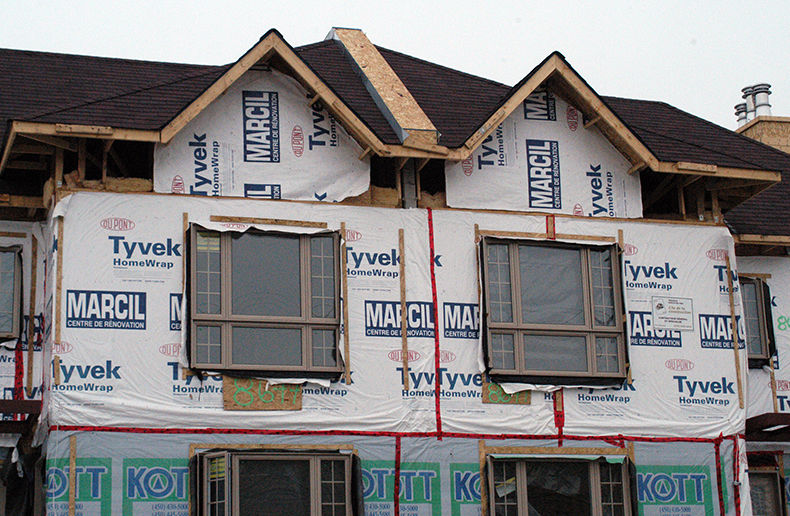
A recent report by the Conference Board of Canada (CBoC) confirms that the labour shortage in the construction industry is affecting insurance costs, particularly those related to post-claim reconstruction. The Insurance Bureau of Canada (IBC) has welcomed the findings.
Released on November 24, the CBoC report is entitled Building Under Pressure: Skilled Trades Shortage and Rising Building Costs. The shortage is expected to add 0.2 per cent annually to inflation in the residential construction sector over the next 20 years.
In their key findings, the authors note that job vacancies in the residential construction industry have grown at an average rate of 11 per cent per year since 2017. The shortage of skilled trades is expected to worsen in the coming years, with average annual increases of 13 per cent from 2026 to 2045. “This will put additional pressure on the cost of housing renovations”, says CBoC.
Three critical factors
Three critical factors could worsen the shortage on construction sites: climate-related risks, demographic challenges and policies aimed at boosting housing construction. The latter is part of IBC’s Three-point Resilience Plan to Better Protect Canada from Natural Disasters, proposed at the end of the summer.
According to the organization, land use planning must be rethought to avoid building new housing in high-risk areas. Building codes must also be updated to reflect the increased risk of extreme weather events.
Maximilien Roy, IBC’s Vice-President of Strategy, points out that the organization has “been raising concerns about labour shortages for years, as they have a significant impact on insurers’ ability to help Canadians recover in a timely manner after a natural catastrophe.”
In the absence of a coordinated workforce strategy, policies aimed at accelerating housing starts could put additional pressure on residential construction costs, the report states. The pool of new workers from immigration has been reduced, limiting the availability of personnel.
Furthermore, the authors note that productivity gains have been weak or non-existent over the past decades. They believe it is essential to increase on-site productivity by leveraging new technologies such as modular construction, digital design tools and robotics.
Significant savings
If the labour shortage is resolved, the total cost of residential renovations and repairs would be $7.9 billion lower each year from 2026 to 2045, according to the CBoC.
For example, a $100,000 home renovation project in 2025 would cost $150,060 in 2045, rather than $153,630, if there were no labour shortage. Conversely, if the number of job vacancies rises by another 20 per cent, the same renovation would cost $166,170—6.4 per cent more than the baseline.
The authors note that similar costs would be added if other construction subsectors (commercial real estate, industrial or infrastructure) were affected by shortages in the skilled trades they share.
“The increasing frequency and severity of natural catastrophes, as well as increasing demand for housing, is adding to the strain on the labour supply,” the IBC says, summarizing the report’s findings.
Impact on premiums
The CBoC notes that the rate of owner-occupied households has been declining since 2011, falling from 69 per cent to 66.5 per cent in 2021. The number of renter households rose by 21.5 per cent over the same decade. The Canada Housing and Mortgage Corporation notes that housing starts must double over the next decade if Canada is to restore pre-pandemic levels of housing affordability.
The skilled labour shortage may drive up insurance premiums in two ways, the report’s authors explain: by increasing costs in the construction market and by extending renovation or reconstruction timelines. Additional living expenses for disaster victims are among the inputs that determine premiums.
“When rebuild costs and living expenses become extreme, insurance carriers may fully exit specific markets and regions,” the report notes. Reduced competition is another factor that could push premiums higher.
Methodology
To assess the impacts, the CBoC developed an indicator of implicit labour demand, defined as the ratio of workers needed per dollar of investment in the residential construction sector. Comparing this demand to labour market supply provides a measure of implicit job vacancies.
By subtracting standard job vacancies from implicit ones, the authors derive an indicator of excess vacancies used to assess inflationary pressures. As a result, the residential construction labour shortage could reach 32,000 workers by 2045, driving a price increase of 2.3 per cent.