
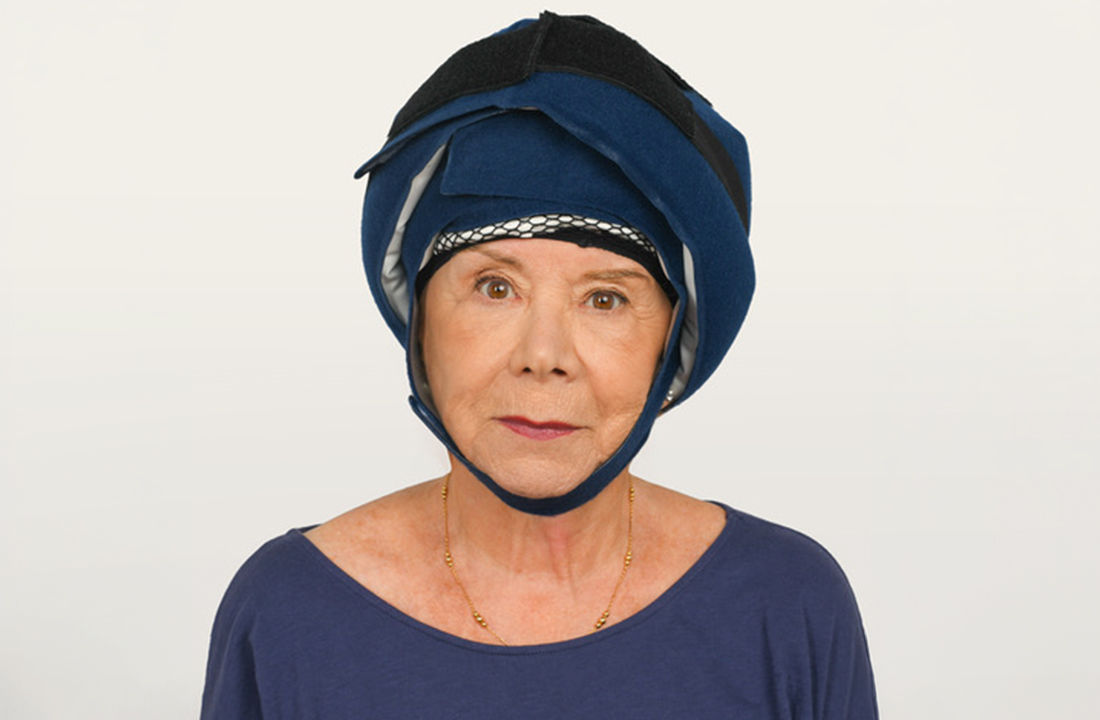
Covering scalp cooling caps (or cold caps) would represent only a minimal cost for group insurers. That is the argument put forward by Sophie Reis, an entrepreneur, speaker and author who has been in remission from breast cancer for years and also serves as vice-president of the Fondation Garde tes cheveux.

These caps allow people undergoing chemotherapy to keep their hair, a side effect that affects most patients.
The caps trigger a vasoconstriction mechanism that helps prevent chemotherapy drugs from damaging hair follicles, thereby reducing alopecia.
“We would like group insurers to cover 100 per cent of the costs, as they already do for wigs,” Reis said in an interview with the Insurance Portal. “We believe it is illogical not to offer a technology that prevents hair loss.”
She says scalp cooling caps have a major psychological impact on people living with cancer. “Seeing yourself in the mirror with a bald head takes a heavy toll on morale,” she adds. “When a person keeps their hair, they feel more confident.”
The effect is especially clear when it comes to returning to work, she says, because the person concerned can come back sooner and be more productive. That is reflected in insurance costs, since the disability period is shortened.
About 8 per cent of women refuse chemotherapy out of fear of losing their hair, according to the Fondation Garde tes cheveux, which significantly complicates their fight against cancer. The foundation also says that about 5 per cent of patients treated with Taxotere (docetaxel) may develop permanent alopecia.
Reis also presented these arguments during the conference session Cancer and Work: How Can Obstacles Be Overcome?, held as part of the most recent Congrès collectif (Group insurance conference) organized by Insurance Journal Publishing Group. The event took place in Montreal on February 26, 2026.
What about the cost?
After analyzing 14 months of use at Centre hospitalier de Lanaudière, located in Saint-Charles-Borromée, Quebec, starting on December 1, 2024, the Fondation Garde tes cheveux estimates that the average cost of such a program comes to $2,100 per person.
“We are talking about a minimal cost for insurers because, in 2020, only three people used these caps [in Quebec],” Reis adds. “In 2025, 365 patients used them across Quebec. Since July 2020, more than 1,000 Quebecers have used scalp cooling caps. They represent only a small share of the people undergoing chemotherapy.”
On November 1, 2025, Desjardins announced that it would cover the cost of scalp cooling caps, as well as dry ice, up to a maximum of $10,000. It is the first insurer in the country to do so.
Reis hopes other group insurers will follow Desjardins’ lead.
How does it work?
Several types of caps and methods are available. However, Centre hospitalier de Lanaudière is the only hospital in the country to offer the model preferred by the foundation. The service is free because it has been supported by the hospital’s foundation since December 2024.
As soon as a person receives a diagnosis and agrees to chemotherapy, the physician must inform them that they may be able to keep their hair by using the cap and provide them with a Fondation Garde tes cheveux card. The patient must then fill out an online form.
Once the application is approved, the foundation connects the hospital with the cap manufacturer, which issues a promotional code. The patient places the order online using that code and receives a kit within 24 to 48 hours. The kit includes three caps, which are kept at a temperature of -25 C to -32 C in a camping cooler using dry ice packs delivered the day before the first treatment.
On the day of treatment, while vital signs are being taken, the patient must wear the cap to begin a pre-cooling period. As chemotherapy treatment lasts from one hour to one hour and 30 minutes, patients are normally asked to leave the treatment room immediately afterward. But the effects of the drugs continue for three to five hours. The cap therefore has to remain on the patient’s head throughout that period.
Because the cap warms up over time, it must be switched out to maintain the cooling effect. The patient handles the equipment on their own; the care team has nothing to manage.
Treatments range from four to 16 sessions, spread over several weeks or several months. Costs vary accordingly, given that the kit rental costs $449 per month and is billed on a pro-rated basis. Once treatment is over, the patient returns the kit to the manufacturer.
The Foundation offers its services across Quebec. Outside this facility in Lanaudière, however, the treating hospital is not involved in the process, and the Foundation provides financial support. In all cases, patients can contact volunteers day or night, 365 days a year. A callback is guaranteed the same day.
A personal story
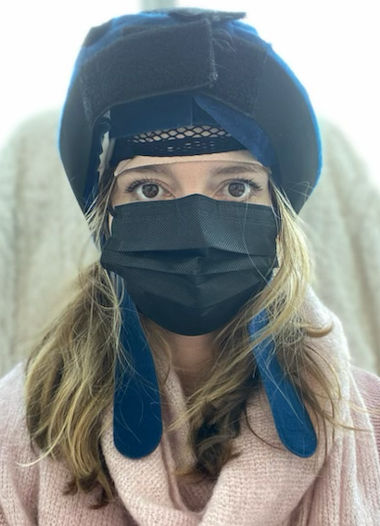
A few years ago, Reis was among the first women in Quebec to use the cap, paying for 25 days out of pocket, since the service is not covered by public health insurance. She was diagnosed at age 38, when she had two young children. At the time, she was leading the crowdfunding platform La Ruche.
She then met Sophie Truesdell-Ménard, a lawyer and the founder and president of the Fondation Garde tes cheveux. Reis turned access to this service into a personal mission.
“Using this technology gave me a measure of control over a journey that is usually seen as uncontrollable,” she says. “It gave me one more small victory. Above all, I was proud to keep my hair. It gave me the chance to preserve my privacy, to retain the right to tell whomever I wanted that I had cancer, to continue my activities without being questioned when I did not feel like it. And my children were able to continue at school without any stigma.”
Today, she works as a communications and strategic alliances consultant, notably for women entrepreneurs.
What studies say about the effectiveness of scalp cooling caps
(By Amélie Cléroux)
According to the Fondation Garde tes cheveux, overall satisfaction with scalp cooling caps varies depending on how they are used, but can reach about 80 per cent. For example, the foundation cites on its website an 85 per cent satisfaction rate among more than 50,000 users of the Penguin Cold Caps system, a certified supplier in Canada.
In a report published in January 2025, the Institut national d’excellence en santé et en services sociaux (INESSS) reviewed the scientific literature on the subject and concluded that scalp cooling caps “appear to reduce the risk [of chemotherapy-induced alopecia] and improve hair regrowth.”
“Hair preservation rates reported in the main studies available range from 26 per cent to 77 per cent,” INESSS states in its report, Efficacité et innocuité des casques réfrigérants pour prévenir l’alopécie induite par la chimiothérapie. “Systematic reviews reach similar effectiveness rates, namely a 46 per cent reduction in the risk of chemotherapy-induced alopecia.”
Coalition Priorité Cancer au Québec published a report in November 2025, Groupe de réflexion sur les casques réfrigérants, in which it cites the INESSS findings while adding that “this opinion did not take into account the patient experience or the impact on quality of life.” “According to testimony gathered from patients, the use of the caps had a significant and positive impact,” the coalition says, among other conclusions.
It also underscores the importance of usage protocols in explaining variations in outcomes. Centre hospitalier de Lanaudière, commonly known as Joliette hospital, “has implemented an innovative program that reflects the best conditions for success while freeing care staff from any handling,” the coalition states.