
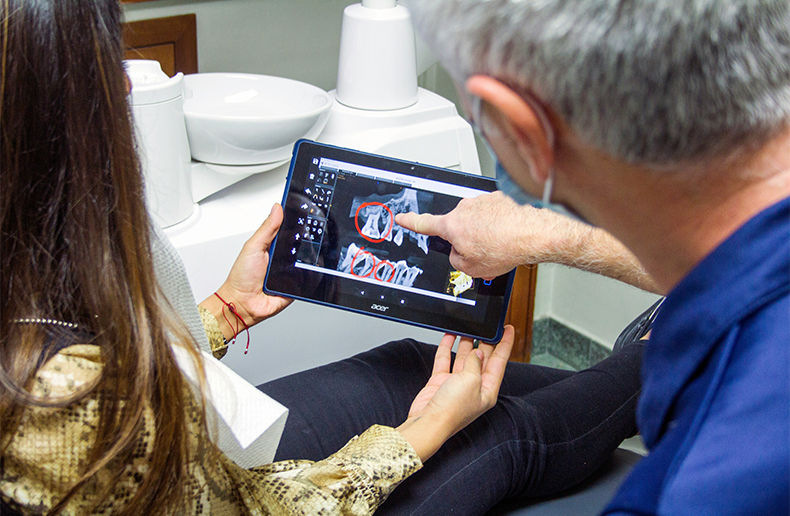
The use of artificial intelligence (AI) can “significantly impact” a dentist’s professional practice and patient care, the Royal College of Dental Surgeons of Ontario (RCDSO) told its members in recently released guidance.
AI can help diagnose and detect various conditions and diseases, develop treatment plans, predict outcomes, and monitor patients, among other attributes. But, “there is currently no clear body of research or established best practices to guide dentists’ ethical and professional conduct,” it warned.
The Canadian Life & Health Insurance Association (CLHIA) responded to ethical and other issues raised by the RCDSO when it conducted a public consultation on its AI draft guidance earlier this year.
“We appreciate the feedback submitted by CLHIA,” said Lesley Byrne, the Toronto-based director of communications for the RCDSO told Insurance Journal.
“All input received by the College is carefully reviewed, shared transparently with Council and other decision-makers, and used to inform revisions where appropriate,” she added.
Key principles laid out
CLHIA agreed with four proposed key principles. It concurred that responsible and ethical use of AI in dentistry must be guided by the best interests of patients. It said the responsible and ethical use of AI involved it being implemented in a safe, transparent, and unbiased way to safeguard patient privacy and confidentiality. It agreed AI has the potential to improve the delivery of safe, quality oral health care, along with patient outcomes. And CLHIA agreed AI should not act as a substitute for dentists’ own clinical or professional judgment, with dentists remaining responsible and accountable for their own decision-making and documentation.
Those principles are all covered in the final guidance.
However, CLHIA registered concern that the use of AI to diagnose and propose dental treatment could lead to work not medically necessary. As such, it is “extremely important for a dentist to validate any diagnosis and the appropriate treatment plan before recommending and proceeding with treatment,” CLHIA said.
CLHIA agreed with RCDSO’s recommendations, which were also included in the final guidance, that prior to adopting any AI product dentists should seek details about the legality and regulatory compliance of the AI tool, including the impact of applicable privacy legislation. Professionals should also assess the clinical validity, safety, accuracy and effectiveness of the AI tool, and underlying data used to train the AI tool. And they should determine whether anybody involved in the profession helped design, develop and test the AI tool.
CLHIA also concurred that dental professionals should understand the intended uses and known limitations with AI tools, including the associated risks and steps taken to mitigate such risk. Further, it agreed that professionals should know how to monitor the performance of AI tools used in their practice, including updates, and handling of errors and/or adverse events.
CLHIA further recommended that the dental profession should define a list of items that AI should not be used for, such as the manipulation of images.
Byrne said RCDSO’s draft principles in the final guidance were strengthened to “reinforce that AI does not enable dentists to provide care beyond their existing knowledge, skills, or judgment.”
Transparency paramount
CLHIA agreed with RCDSO’s recommendation that patients need to be informed when they are interacting with AI, such as a virtual assistant chatbot simulating a human response.
It agreed that patients should be informed about how AI can be used to directly impact their care, prior to the use of such tools, with those discussions documented. And it agreed with RCDSO that reasonable alternative accommodation be made, where possible, to patients who prefer either limited, or no AI involvement in their care.
Those recommendations were implemented in the final guidance. Enhanced guidance was also provided to assist dentists assess the appropriateness of AI tools, including considerations around data protection, security, storage, use, and retention, along with a new recommendation to document when AI is used, Byrne explained.
CLHIA said that in addition to informing patients about when AI will be used, they should also be informed why and how it will be used and what their dental professional’s responsibilities are, with such discussions, along with patient consent documented, if forthcoming. Furthermore, providers should inform individuals of situations where using AI tools could affect their eligible insurance coverage.
The final guidance includes a reference to informing patients how AI will be used, along with the benefits and limitations of such a tool.
CLHIA also recommended that consent be necessary to have AI tools communicate on behalf of a patient with a third party, such as an insurance company. It said any changes to fees for services involving AI tools should be disclosed to individuals and insurers.
Clear definition of AI
Byrne said RCDSO was “supportive of the draft guidance and unanimously approved it as a final document of the College.”
She acknowledged that the feedback received directly impacted certain revisions, such as the final guidance to the definition of AI.
CLHIA had advocated for a more narrow and specific definition of an AI system to the draft guidance. It said “A broad definition risks being interpreted as encompassing traditional statistical methods that have been long-established within the insurance sector.”
In contrast, a “more narrow and specific definition of AI-system…will help to avoid ambiguity, inconsistent interpretation, and unnecessary burden for companies and supervisors regarding existing statistical analysis and modelling,” the organization elaborated.
CLHIA recommended that the definition of an AI-system should refer to newer tools and techniques that use machine learning models that might present new risks. And, said CLHIA, that definition should specify that it “not include traditional statistical or mathematical models which follow pre-defined structures and do not possess the capacity to learn from the data.”
Risks to dentists
Insurance Journal inquired about potential downsides to the use of AI in dentistry.
“The key risks associated with dentists using AI depend on the nature and intended use of the tool. Generally, the greater the potential impact on patient care, the greater the need for caution and oversight,” said Byrne.
She noted that AI tools which directly influence clinical decision making, such as those used to assist in diagnosis or treatment planning, pose heightened risks, particularly in situations where they affect patient health or safety or involve the use of personal health information.
“Generative AI tools, in particular, present distinct risks due to their potential to produce inaccurate, misleading, or biased outputs. These risks can be amplified if the outputs are used without appropriate clinical judgment or verification,” said Byrne.
That is why RCDSO’s guidance advises dentists to remain vigilant and provide necessary oversight. It also helps ensure that any use of AI will support, rather than replace, clinical expertise while protecting patient privacy and safety, she explained.
RCDSO’s guidance will evolve and update as dentists become more familiar with AI tools, creating future opportunities to more fully incorporate some of the feedback, said Byrne.
College of Dental Surgeons of Alberta
The College of Dental Surgeons of Alberta (CDSA), based in Edmonton, which regulates dental professionals in Alberta, commented about its position on the use of AI in the profession.
“The CDSA is actively engaged in conversations about the responsible use of artificial intelligence (AI) in dentistry,” said Dr. Randall Croutze, CEO and registrar with CDSA.
“While formal guidelines have not yet been published, the CDSA has taken meaningful steps to initiate dialogue and explore future directions. Most notably, the CDSA hosted an AI in Dentistry Symposium on September 24, 2025, which brought together dentists working in AI, a legal expert, and a researcher to speak directly with the Council and Board members of Alberta's five oral health regulators and associations,” he elaborated.
Croutze noted that the recent Symposium focused on the current and future impact of AI on dental practice, including clinical applications, ethical considerations, and governance frameworks.
“The CDSA remains firmly committed to its core mandate of protecting the public. Any future guidelines related to AI will be developed with this mission at the forefront—ensuring that innovation in dental practice is balanced with safety, accountability, and the public’s trust,” he said.