

Have Quebecers been paying billions of dollars in excess pharmacy fees for years due to a regulatory loophole? Some insurers are convinced they have. While discussions aimed at regulating these fees are stalled, they believe that the cost of private drug insurance plans continues to grow year after year.
Data compiled by the Canadian Life and Health Insurance Association (CLHIA) indicates that Quebec pharmacists charged, on average, 12% higher fees than their Ontario counterparts. As a result, members of private group insurance plans collectively pay $450 million more each year than those in the neighbouring province, where pharmacy fees are regulated.
In Quebec, nothing in the Pharmacy Act, the Act respecting prescription drug insurance, or the Code of ethics of pharmacists regulates fees. Article 47 of the Code of Ethics stipulates that "Pharmacists must charge fair and reasonable fees for their pharmaceutical services," without specifying any price ranges.

"However, it's practically impossible to prove that the fees are unreasonable," laments Éric Trudel, Executive Vice-President and Leader, Group Insurance at Beneva.
In Ontario, he says, fees are capped at $250 per month or $3,000 per patient, per drug annually. “We have cases of billing up to $200,000 per patient, per drug,” he explained in an interview.
A “flaw” to fix
For Frédéric Leblanc, Strategic Leader, Drug Programs at iA Financial Group, the problem doesn’t lie with the Quebec drug insurance plan itself, but with a weakness inherent in the private market.

“Our plan is an excellent drug insurance system,” he emphasized from the outset in an interview with the Insurance Portal. “It’s a model in the world where we have universal coverage.”
“The flaw in the system is the way the private part of the plan is structured,” continued Leblanc, who is also a pharmacist. “[At a minimum], insurers must reimburse medications listed on the Régie de l’assurance maladie du Québec (RAMQ) list of covered drugs. It’s the dispensing fee that varies from one pharmacist to another.” But there's no way to negotiate this one: we have to pay it, whatever it is.”
Leblanc says that private insurers are thus left with dispensing fees “of tens of thousands of dollars for just a few prescriptions.”
Since the Regulation respecting the basic prescription drug insurance plan regulations cap the insured's annual contribution at $1,232, the insurers absorb the difference, he adds. This is all reflected in the premiums.
“In the end, everyone pays,” summarizes Éric Trudel. “Anyone who joins a group insurance plan pays between $20 and $30 too much annually just for the difference between what seems reasonable to us and what is actually billed.”
Furthermore, insurers are not allowed to suggest that their clients obtain their medications from a specific pharmacy where the fees charged are lower. The Act respecting prescription drug insurance is unequivocal on this point: beneficiaries are free to choose which pharmacist they deal with.
“Therefore, we cannot introduce a mechanism that would encourage competition between pharmacies,” summarizes Leblanc. “This facilitates overbilling and sometimes exorbitant fees.”
Specialty drugs in the spotlight
For several months, concerns have been raised regarding the fees charged by a handful of pharmacists for specialty drug services.
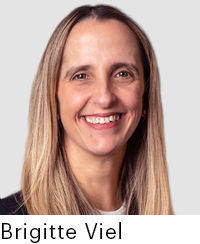
These pharmacists joined forces a few years ago under the umbrella of the Regroupement des pharmaciens de médicaments de spécialité du Québec (RPMSQ). “The idea behind this association is to constantly raise the standards in specialty drug services,” explains its executive director, Brigitte Viel.
All pharmacies in Quebec are authorized to dispense specialty medications, she adds. However, specialty medications may require “special handling”, or “strict adherence to cold chain requirements”. In some cases, additional federal regulatory requirements may also apply: “In certain specific cases, Health Canada may require a risk management plan, which can involve specific certification or training.”
Patients who require these less common and more costly medications may enrol in a Patient Support Program (PSP) to help them access these treatments.
It is in this context that, in a report in the Journal de Québec, the CLHIA highlighted that the president of the RPMSQ, Daniel Vermette, allegedly received an estimated $50 million in fees in a single year, of which $13.5 million was reimbursed by a single insurer.
Dissatisfied with what it considers unfair competition, the Association québécoise des pharmaciens propriétaires (AQPP) filed a class action lawsuit against the RPMSQ in 2024. It is still awaiting approval from the Superior Court of Québec.
“The AQPP calls it steering, but from our perspective, the patient has the right to choose their pharmacist and the services they want to receive,” argues Brigitte Viel, specifying that each patient’s consent is validated several times.
The RPMSQ underlines that its members do not have a monopoly on the market.
They dispense approximately 40% of specialty medications, while the province's roughly 1,900 other community pharmacies dispense the rest, explains Éric Trudel.
"I'm not aware of any other industry where a few companies have 223 times the market share of the other players," he remarks ironically, alleging that dispensing fees for specialty medications account for roughly half the difference in bills between Quebec and Ontario patients.
Referring to the $50 million in professional fees earned by Vermette from prescriptions filled for patients covered by private insurance, Éric Trudel drew several comparisons.
“In several provinces, insurers are allowed to cap the professional fees charged by a pharmacist, often at around $250 per prescription (or $3,000 per drug per year for patients receiving monthly refills),” he said. “Had such a cap been in place in Quebec, the total fees would have been approximately $25 million—about $25 million less per year.”
He added: “If those same patients had been covered under Quebec’s public drug plan, the professional fees would have totalled approximately $2.5 million—roughly $47.5 million less per year.”
A practice denounced and denied
In May 2022, a decision by the Ordre des pharmaciens du Québec (OPQ), following a more than 10-year investigation by the syndic, found that Daniel Vermette's company had paid Ontario-based wholesaler Innomar Strategies in exchange for the near-exclusive referral of patients to two of his pharmacies. Vermette pleaded guilty and was ordered to pay $140,500 in fines. Pharmacists, Marc Chabot and Jérôme Bergeron, who also faced disciplinary complaints, were likewise ordered to pay fines.
For similar reasons, the OPQ temporarily suspended Michael Assaraf for one year, effective July 11, 2025.
In an interview, the executive director of the RPMSQ indicated that this matter has been resolved through the appropriate channels and that the case is closed. She firmly denies that members of the association currently have "exclusive agreements" with certain pharmaceutical companies, particularly regarding patient lists. "That's simply not the case," she insisted. "We collaborate with pharmacy technicians, just as other traditional pharmacies do."
Brigitte Viel explains that companies that own specialty pharmacies in other Canadian provinces (outside Quebec) instead provide pharmacy management services. “A bit like the equivalent of a banner, which offers accounting or human resources services, for example,” she says. “Some of our members may choose to use those services.” The executive director emphasizes, however, that “each member of the RPMSQ operates under its own business model.”
Viel estimates that 70,000 patients are served by the four or five pharmacies that are members of the group. These businesses employ an average of fifteen pharmacists and forty pharmacy technicians, she says.
Upcoming hearings
Alleging injustice and the overreach of certain specialty pharmacists, Beneva, in turn, filed a complaint against pharmacists Daniel Vermette, Marc Chabot, Mayno Benoit Huynh, Gabriel Torani, Habib Haddad, Michael Assarafe, and Martin Gilbert with the OPQ and the Competition Bureau of Canada, denouncing what she considered to be anti-competitive practices and unreasonable fees, legitimized under the guise of an association.
It should be noted that Vermette, Gilbert, and Haddad were, respectively, president, secretary, and treasurer of the RPMSQ.
“To date, and to the best of my knowledge, neither the RPMSQ nor any of its members has received a call or a request for information from the Competition Bureau,” says Brigitte Viel.
The OPQ declined to comment on the matter. “All requests for investigation received by the Office of the Syndic are strictly confidential,” stated Nancy Marando, Senior Advisor, Communications and Public Affairs for the Order, in an email. In this case, we know that Beneva only filed a request for an investigation because the company itself made it public. Without this statement, we would not have been informed, and that is precisely how the process is designed.
The Insurance Portal has, however, learned that Vermette, Assaraf, and Chabot have been summoned to a hearing next November. The cases of the three pharmacists, as well as that of Jérôme Bergeron, will be heard together. The four professionals are accused of having “illegally accepted benefits related to the practice of [their] profession.”
The tripartite committee is stalled at the starting line
Insurance Portal’s French-language sister publication, the Portail de l’assurance, recently reported that three months after its creation was announced by the outgoing Minister of Labour, Jean Boulet, the tripartite committee, intended in particular to regulate pharmacists' fees, was slow to materialize.
And, this spring, Quebec backed down on its proposal to regulate the fees charged by pharmacists to private insurers.
This measure had been demanded by insurers and labor unions following the introduction of Bill 15, which argued that no regulatory mechanism existed to allow insurers to refuse to pay fees they deemed excessive.
For over 10 years, life insurers have been asking the Quebec government for mechanisms to regulate fees in private plans, on behalf of employers, unions, and employees who bear the full cost of group insurance plans, said the CLHIA in an open letter.
The RPMSQ is eager to secure a seat at the table.
“We want to be part of the discussions and contribute to finding solutions,” says Brigitte Viel, adding that a formal request to join the committee has been submitted. “We believe it’s important to get the perspective of our group, given that our practice is 100% dedicated to specialty medications. There’s the whole issue of access to medications and essential services.” She says that “the RPMSQ shares the concerns about rising costs in private drug insurance plans and the impact on patients.”
With the provincial election coming up this summer, Éric Trudel isn’t getting his hopes up. “We’ll have to wait for the formation of the next government, and we don’t know what will happen,” he says.
At the time of writing, the president of the AQPP, Benoit Morin, was unavailable for an interview.
For this report, Desjardins Insurance, Sun Life, Manulife, and Medavie Blue Cross declined interview requests from the Insurance Portal.