
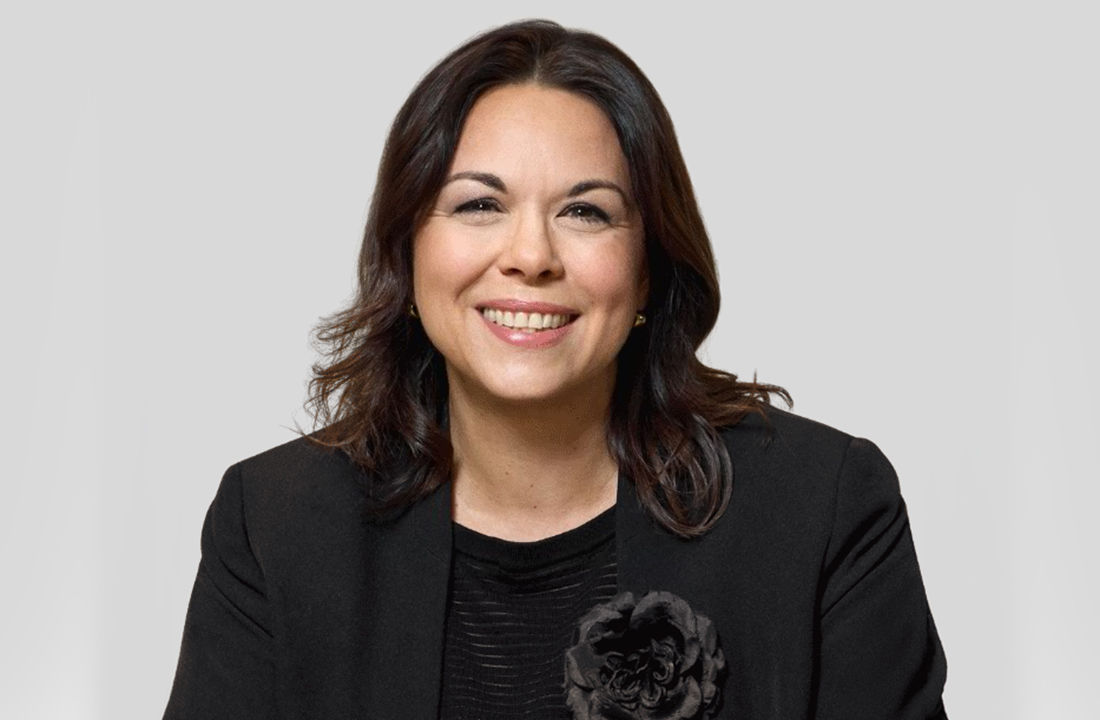
Appointed in June 2025 to lead the new Chambre de l’assurance, Chantal Lamoureux says she is very proud of the preliminary results of the organization's first 15 months of operations following the merger of the two insurance self-regulatory organizations.
In an interview with the Insurance Portal, the Chamber's CEO acknowledges that when she took office, the integration of the two organizations' operations was not very far along. "It all happened very quickly," she recalls.
Bill 92, which proposed merging the Chambre de l’assurance de dommages (ChAD) and the Chambre de la sécurité financière (CSF), was introduced on April 8, 2025, without the organizations concerned having been notified beforehand. Following brief parliamentary committee hearings during which both chambers expressed reservations about the merger, the bill was passed by the legislature on June 3, 2025, and received royal assent the following day.
Appointed on June 20, 2025, Lamoureux took office around the same time that the creation of a transition committee was announced on July 4, 2025. "There was a lot to do: establish governance at the board of directors, prepare the internal bylaws and numerous policies, plan the transition, review the organizational chart, and so on. But above all, we had to ensure continuity of operations and make sure that public protection was never compromised," she explains.
A united team
"Of course, there are still things to do. But the main concern I kept emphasizing to my teams was service to members and making sure there was no disruption in service," she continues.
Chantal Lamoureux was pleasantly surprised to find a strong, united team. "People wanted to build the Chambre de l’assurance, despite all the circumstances surrounding how it came about. So that was a very pleasant surprise. I thought I might face a little more resistance than I did," she says.
The two chambers had their own ways of operating and served different groups of professionals. Because they shared the same public protection mandate, Lamoureux believes their employees were able to quickly find common ground. "We don't always see things the same way, but so far, I've felt a great deal of openness and flexibility from the teams," she says.
Staff turnover
In fact, the original purpose of the Insurance Portal's interview request was to discuss staff stability. In November 2025, the Autorité des marchés financiers (AMF) published its inspection report on the CSF.
Among its high-priority recommendations, the AMF highlighted staff turnover issues within the organization, particularly in the Professional Conduct and Ethics Department, which oversees the syndic's office. The AMF had also made similar observations regarding high staff turnover at the ChAD.
However, as The Insurance Portal reported on October 27, three lawyers employed by the Chambre de l’assurance have left the organization in recent weeks. They include syndic Sébastien Tisserand, appointed in September 2025. He had been recruited by the ChAD in November 2024.
Regarding the AMF's inspection report, which she received a few months after joining the Chamber, Chantal Lamoureux says an action plan was proposed and accepted to address the recommendations. Among the measures implemented was the creation of a new organizational structure. According to Lamoureux, it provides greater flexibility and stability in maintaining investigative operations.
The syndic is now supported by three assistant syndics who also hold management responsibilities as assistant directors. "The team has about 30 people. It makes no sense for a single manager to be responsible for 30 people," the CEO explains.
Five other assistant syndics also have the authority to file complaints with the discipline committee. All eight assistant syndics were appointed by the board of directors.
"Since the merger, in terms of voluntary departures, we've had two investigators leave, along with one assistant syndic." In the latter case, Lamoureux specifies that Geneviève Breton was not one of the three individuals holding an assistant director position in the syndic's office.
Regarding the departure of Catherine Bazinet, she was responsible for disciplinary matters. Prosecutors report to the syndic's office, but some of the work is also performed by lawyers from external firms, according to Lamoureux. "There is no issue on that front."
"Staff turnover is a fact of life in any team. After a merger, some people aren't necessarily comfortable with it, but the team is doing well," she says.
As for the syndic's departure, "it was a mutual agreement with the board of directors," the Chamber stated in writing in response to a request for clarification from The Insurance Portal.
The board of directors will soon appoint an interim syndic and launch the process to find the next person to hold the position. "It's too early to say that it will necessarily be someone from outside the organization," Lamoureux emphasizes.
Processing times
In the meantime, the three managers are ensuring that case processing continues without interruption. In its inspection report, the AMF's recommendation No. 10 called on "the CSF to strengthen its ability to identify and monitor priority investigations."
Average investigation times were considered a concern. The AMF requested a status report on the backlog of investigation files, including their classification by risk level and priority.
Chantal Lamoureux reports progress in this area. In December 2025, the average investigation time was 12.3 months. By the end of August 2026, it had fallen to 10.8 months.
The average age of files in the backlog was eight months at the end of 2025 and currently stands at 6.6 months, she adds. There are still 62 files in the backlog that have been open for more than 12 months. She highlights Tisserand's efforts to review processes and reduce these delays. "It was something he cared deeply about, and we are grateful to him for it."
Recommendation No. 16 in the AMF's inspection report concerned the contract-awarding policy. The report noted a high volume of sole-source contracts for legal services awarded to external law firms.
On this subject, Chantal Lamoureux points out that Julie Piché is an assistant director responsible for disciplinary matters. This new structure is intended to reduce external legal fees. "Some cases are now being argued by in-house counsel, and we want to continue in that direction," the Chamber's CEO says.
Strategic plan
Lamoureux also praises the caliber, interest and commitment of the members of the transitional board of directors throughout the merger process. "We didn't know each other," she says, recalling that she was appointed by the government, not by the directors.
"We're preparing our strategic plan. Our challenge will be to make the Chamber better known among our members and raise awareness of everything we can do to support them in their professional practice."
The new Chamber had to manage the end of continuing education cycles in life and health insurance and mutual fund dealing, involving more than 30,000 licence holders in November 2025. The same process took place for licensed property and casualty insurance professionals in March 2026. "We have had a strong presence at all industry events," she notes.
The completion of these training cycles allowed the Chamber to observe an increase in compliance rates. The training team has added about 40 courses in 15 months, with another 10 or so in development. "Despite the merger and all the work it entails for the teams, we're there for our members," she concludes, emphasizing the importance of prevention in protecting the public.
Updated guides
The use of artificial intelligence (AI) tools, including generative AI platforms such as ChatGPT and Copilot, presents challenges for the protection of personal information. Chantal Lamoureux notes that, through the CSF website, the Chamber offers an interactive training course entitled Using AI: Towards Responsible Practice. The session lasts two hours, and achieving a passing grade of 60% on the test earns participants two continuing education units (CEUs).
The Chamber also recently published the guide Your Professional and Ethical Obligations in the Age of AI for all its members. It is available through the Toolbox section of the ChAD website.
The guide reiterates that the duty of confidentiality and protection of personal information is one of three ethical obligations common to all disciplines regulated by the Chamber. All three existing codes of ethics contain provisions concerning the protection of personal information.
"An artificial intelligence system is a tool to support you in your work, not to replace your expertise and judgment," the Chamber states in the guide's conclusion.
In life and health insurance and financial planning, ethical breaches related to financial needs analysis (FNA) frequently arise in disciplinary decisions. Are guides or templates available to help members comply with the rules in this area?
The Chamber has updated its guide Financial Needs Analysis — The Steps. The document is available in the toolbox section of the CSF website. In addition, a new training course has been available since September 2026, and another module will be introduced soon, Chantal Lamoureux promises.
"The Chamber's members are professionals. They must use their professional judgment. When we give them checklists and templates, we're treating them like technicians who just have to fill in boxes," she says.
Organizations can offer this kind of standardized tool. "But as a self-regulatory organization, if we rely too heavily on models, templates and checklists, I feel we're not treating our members as people who are expected to exercise their professional judgment," Lamoureux continues.