
In December 2024, fraud charges alleged against Daniel Moses, former president and chief executive officer (CEO) of managing general agent TruStar Underwriting, led to the company being placed under receivership by Ontario courts.
Nearly 18 months later, what lessons have MGAs drawn from this event? Before answering Insurance Portal’s question, Brett Boadway, Executive Director of the Canadian Association of Managing General Agents (CAMGA), pauses after noting that the subject is sensitive, as the TruStar case is before the courts in Ontario.
“CAMGA members want to signal their professionalism and legitimacy to the industry, brokers and regulators. It’s why they are supportive of working with regulators on their products. It’s why CAMGA is having a little bit of a reset and making sure that we’re projecting the right content, the right narrative, and working together to elevate professional standards across the entire network,” says Boadway.
Jean-François Raymond, CEO of Revau Advanced Underwriting, hopes that CAMGA will take this opportunity to help harmonize rules across Canada, in order to better oversee the activities of managing general agents. “It is a new association and it is doing good work. But it does not have the means to inspect everything. These rules rely heavily on trust,” he says.
In his view, industry oversight should be stricter. “We have private investors, and we are seeking investors internationally. The accounting firms that conduct audits ask many questions. We have a large compliance department and governance rules that are as strict as if we were a publicly listed company,” he says.
However, Revau is not representative of all intermediaries in the industry. “There needs to be a course correction, because a lot of money passes through the hands of MGAs. The TruStar case is shockingly simple. No one saw anything.”
At Revau, for a fraud similar to the one alleged against TruStar’s former CEO to occur, “it would have to happen on a large scale, with several people involved,” he adds. The firm was a CAMGA member and stated that it complied with its code of ethics.
“These rules are sound; they are the minimum standard. Everyone expects a company to manage its contracts rigorously. I was among the first MGAs to support the creation of the association. It comes from a good intention and is moving in the right direction,” says Raymond. He adds that he would be willing to pay a special assessment so that CAMGA can equip itself with the necessary means to better verify its members’ compliance.
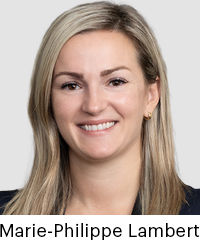
Marie-Philippe Lambert, Revau’s chief marketing officer, confirms that the largest firms in the rest of Canada are requesting more information than before from Revau’s underwriters. “They want to know whether we are an MGA they can trust.” In Quebec, MGAs are overseen by the Autorité des marchés financiers (AMF), which reassures the brokerage network.
According to Raymond, the main impact is that the TruStar case has enabled standard and specialty insurers to approach brokers and say: “You see how risky it is to do business with an MGA? Bring your volume to us.”
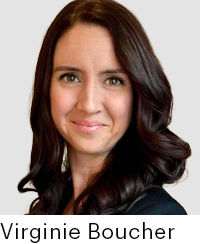
Virginie Boucher, senior vice-president, Quebec, at CHES Special Risk Solutions, acknowledges that during the first months of 2025, brokers’ questions related to this case were more numerous. “But I am hearing less and less about it. It was mainly brokers in Ontario who were affected. That said, CHES has been established for several years; it is a trusted MGA that people know,” she says.
This article is a Magazine Supplement to the April 2026 issue of the Insurance Journal.