

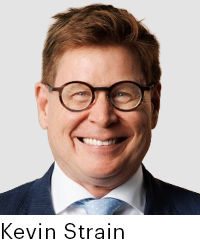
Sun Life’s president and CEO, Kevin Strain says Canada is a foundational business for the company, its Asian businesses are growing quickly, and asset management will drive growth going forward. He also says the company’s U.S. business, although there are still aspects that need work, will contribute to future growth as well.
The comments were part of his presentation to investors and asset managers at the Scotiabank Financials Summit, held September 9.
In Canada, he says getting holistic planning right with the company’s advisor base, coupled with its growing wealth management and benefits businesses will help the company hit the six per cent growth they are expecting from the segment. “I think our commitment to digital should also help to grow both the top and bottom line,” he told those gathered for the presentation.
To that end, two years ago, the company hired Jessica Tan, executive vice-president and president of Sun Life Canada, who Strain says brings a new energy to the team. Strain adds that Tan, an MIT-trained software engineer who worked as co-CEO of Ping An as it developed its digital business, sees a lot of opportunities, particularly in the benefits space.
Meanwhile, the CEO notes that the company is a big player in the United States, where the business has performed well and consistently. The exception was one quarter in 2024, when the company was surprised by claims that Strain admits it should have seen coming.
“There were some fundamental reasons why that happened, but we put new processes in,” he says. “We’ve added new capabilities around that.”
He says the consistency in that business’ earnings otherwise gives him confidence. “We do watch it. It’s a business where you have a lot of medical inflation,” he says, “but as long as we can price for it, and we’re annually repricing a lot of this, I think that’s ok.”
U.S. dental business
The U.S. dental business, he admits, has its systemic issues, not the least of which is that the states the company is working with aren’t covering the cost of claims. The company has instructed David Healy, president of dental, Sun Life U.S., to work on business in the Medicare and Medicaid state space where the company partners with states over the long term. “The margins there are already razor thin,” he says. “We’ve given David the flexibility to only take business when we think that the state understands the value they’re getting.”
Commercial dental, meanwhile, is another area the U.S. team is focused on – Healy has also been tasked with building a profitable commercial business, as well.
“The relationship with companies is about providing benefits that employees want, with good services (and) where they can trust the organization. That’s a focus we can align to,” Strain says. “The focus at the state level is something different, and so we’re emphasizing the commercial business.” The journey, he adds, is finding the right place to operate in each niche.
“I feel pretty good about the commercial side. We’re doing the right work internally on the state side. It’s not clear that pricing is going to follow. And it’s clear to me that running a business with zero margin is not what I want to do.”
Alternative asset management business
During the presentation, the company’s development of its alternative asset management business was also a topic of conversation. To build out that business, Sun Life purchased three real estate companies, a private credit company, an infrastructure company and others, as well. This year, all the acquisitions are being pulled together under the leadership of Sonny Kalsi, president and CEO of SLC Management. “This year is a transitional year.”
Sun Life Asset Management, under the leadership of president Tom Murphy was also discussed. Murphy is tasked with the job of connecting insurance and asset management. “That’s where things like our Wilton Re transaction came from. We started that process with Wilton Re probably a year ago, figuring out a way that we could be the asset manager alongside the sidecar business they were creating.” The deal is expected to give the company $10 billion (figures in U.S. dollars) in assets to manage, a large part of which are expected to be invested in the alternative space.
Future plans
Finally, Kevin Strain discussed the company’s future plans, reiterating its previous guidance on its board-approved goal of reaching a balanced mix of business. The goal is to have 50 per cent of the company’s business in insurance and 50 per cent in asset management. Today, the mix is 35 per cent asset management and 65 per cent insurance.
“That 50 per cent asset management, I would like to see it be about 50 per cent public equities and public fixed income and 50 per cent alternatives. We’re on a path to that, with the 20 per cent growth in the alternatives,” he says. “That’s why we’re putting this emphasis on the alternatives.”
In the most recent quarter, the company reported hitting a 19.1 per cent return on equity, close to its 20 per cent stated target. Strain also notes that the company has been buying back shares at the rate the company has been creating capital. “We see that as being a very sustainable buy-back program,” he says. “Consistently delivering that capital back to our investors is important to us. That part we are committed to.”