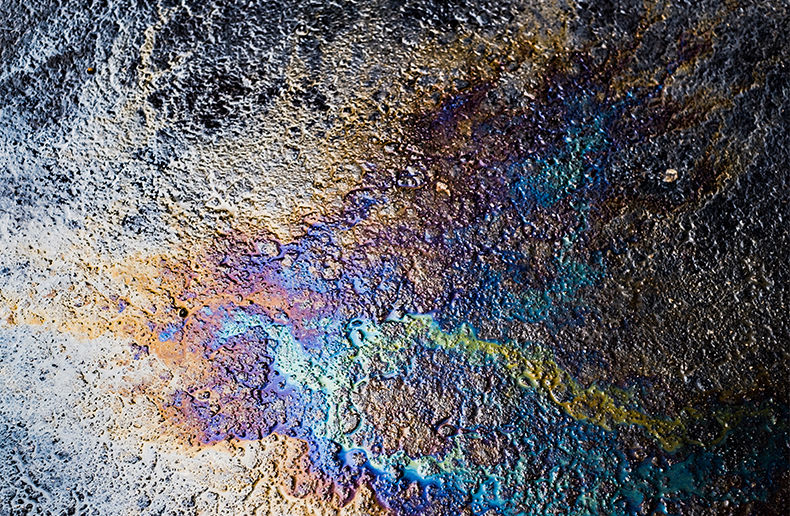
When a diesel fuel leak from an Irving gas station outside Woodstock, New Brunswick forced both the station and a nearby Tim Hortons restaurant to shut down last December, initial estimates were of a 5,000 litre leak. Four months later, by April 2025, it was clear the damage was much more widespread in the local community, with the provincial government stating that approximately 174,000 litres had been recovered.
The environmental damage created by that diesel spill provides an excellent example of the importance of pollution coverage and why brokers need to make sure that they are providing it, says Brett McGregor, president-elect of the Insurance Brokers Association of Canada (IBAC).

Tyson Peel, regional vice-president and managing director of Burns & Wilcox Canada in Toronto, says a business like a service station should consider two types of insurance policies.
First is a Storage Tank Pollution policy to protect from tank leaks that occur. This could cover either a sudden, accidental type of leak incident that might damage the tank, or more gradual leaks that occur as a result of a pre-existing condition.
“But a better and more enhanced policy would be a Premises Pollution liability policy, which can also provide coverage for the tanks,” adds Peel. “It also covers the insured for any other pollution on their site. That could be caused by others, so if a leak came from a neighbouring property, the site Premises Pollution policy would pick up that coverage as well. So, it's a bit more comprehensive than just straight tank coverage,” he says.
Policy details crucial

“If you walked into my office as a small business owner, pretty much where we're going to start is with a Commercial General Liability policy,” says McGregor, who is also president and CEO of Guild Insurance Group in Brandon, Manitoba.
But “I think the first thing to make sure the client understands is that the regular Commercial General Liability (CGL) policy that we most frequently sell to business owners usually doesn't provide coverage for pollution if you have any sort of pollution event,” adds McGregor.
Typically, the base CGL wording will have a pollution exclusion. In situations where a CGL contains pollution coverage, it will be for sudden and accidental pollution with a trigger of needing to discover and report that incident within a certain period of time, such as 120 hours, or five days, he notes.
Gradual coverage can only be triggered by having a more robust environmental impairment liability policy, McGregor stresses.
The best way to provide coverage for a situation where the damages continue to spread over a period of time, he says, is to have a separate Environmental Impairment Liability (EIL) policy to provide for gradual pollution incident coverage for factors such as personal health, property damage, clean-up costs, and other liabilities.
“If you are sued by a third party for bodily injury or, if [somebody has] had a business interruption, they're going to be looking for compensation for that lost revenue. That's going to get covered under the Environmental Impairment Liability policy,” says McGregor.
“Sudden and accidental coverage might be okay for something like an above ground storage tank that has a very sudden and large leak. But the tricky thing with pollution is that lots of times it isn't a huge burst of pollutant. And so that's when you would want to make sure that you have coverage for the gradual pollution event, which is going to be covered under an Environmental Impairment Liability policy, and/or a Storage Tank Pollution insurance policy,” McGregor elaborates.
Sometimes a storage tank pollution policy is just written standalone for storage tanks, and sometimes the storage tanks are covered under the EIL, he adds.
Know the site history
Many factors must be considered when purchasing a pollution policy to cover a particular site, including the pre-existing conditions at that site, says Peel, who recommends conducting a Phase One, and potentially also Phase Two Environmental Site Assessment to provide a variety of information about the site and other factors, like the soil conditions and pre-existing pollution coverage.
“Make sure you have cleanup and remediation coverage, and [legal] defense costs included in your policy as well,” Peel stresses.
Leaking might not be covered in a policy that only covers for sudden and accidental leaks if the damage isn’t caused by something like direct physical damage to a tank, he warns.
“So, you definitely want to make sure that you have that gradual trigger. That way, if there's a small leak in a tank, which [grows] and causes massive cleanup costs and bodily injury and property damage to people in the neighborhood, your policy would include all those coverages,” says Peel.
There is no “magic number” to determine the amount of insurance a policyholder needs to cover themselves financially, says McGregor.
“It's going to very much depend on the quantity of the pollutant that they're keeping on site, and what sort of risk mitigation they have in place. Are they doing regular inspections? Do they have leak detection systems in place? How close are they to a body of water? If they're next to a river, that really increases the potential risk and the potential cost of a claim,” he explains.
Those are some of the considerations that an insurance broker would take into account when recommending something to a customer, McGregor adds.
Peel agrees that it is tough for a business like a gas station to specify a dollar amount for coverage. “It all depends on the damages that it caused. If you catch the leak early on, you're going to be paying cleanup costs, and probably not the property damage or the third-party damage to others within the surrounding areas,” he says.
“But if left for a certain period of time, and then it runs off into the groundwater, depending on the direction it flows, you're going to get into a lot higher costs as the remediation cost of cleaning up the oil becomes more and more. So, I would definitely recommend at least a $5 million to $10 million policy,” he elaborates.
And then for fuel wholesalers and retailers with a massive amount of oil or gas on their sites, they should be looking at higher limits, Peel adds.
Beware personal coverage
The need for this type of coverage is not restricted to commercial businesses.
On a personal lines basis, if somebody is heating their home with oil, for example, and keeping oil tanks on their premises, they would also need to have insurance exposure for pollution. “Typically, what we would use to cover that is a Storage Tank Pollution insurance policy,” he says.
“I have heard a few horror story claims. There was one claim where the company came to fill the oil tank, and the pipe leading to the tank had a crack in it, and so when they tried to fill the tank, all of that oil went down into the ground under the foundation of the house.”
“It was a big mess and a very costly cleanup,” McGregor recalls.