
Launched in May 2025 by Quebec’s Autorité des marchés financiers (AMF), the Self-Reporting and Cooperation Program remains largely unknown, and few certified representatives have used it in connection with their activities in the insurance sector.
The Insurance Portal requested an interview with the AMF to review the Self-Reporting and Cooperation Program (SRP), which was launched a year ago.
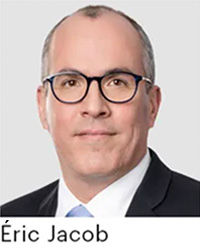
“This is a program that is important to us, and we would like to raise awareness of it. Even though we have some interesting results, we believe there is still work to be done,” noted the organization’s spokesperson, Sylvain Théberge, who was present during the interview with Éric Jacob, the AMF’s Executive Director, Enforcement, on May 25.
Jacob indicates that his team has been approached about 10 times related to the SRP. In three cases, individuals or organizations wanted to verify whether their interpretation of the compliance rules was respected or not. “The files were closed; there was no formal investigation or legal action,” Jacob explains. For at least two of these cases, the files were related to insurance practices.
“We checked if there had been any victims, and there weren’t. We told them, ‘That’s perfect; it shows that your control and compliance systems worked. And you documented the problem well.’ We encourage others to do the same; don’t hesitate to call us,” Éric Jacob emphasizes. Anyone who wants to learn more will thus be better informed about the SRP, he notes, and nothing will happen until “the person is ready to be forthcoming.”
More effective inspection
Eric Jacob acknowledges that in the cases related to insurance misconduct, the issues raised would have been noticed during a standard inspection, such as those conducted by the AMF at financial services, property and casualty insurance, or claims adjusting firms. “We’re in risk management, so it’s reassuring to see a firm raise the red flag and report deficiencies and the corrective actions taken,” he says.
A well-documented compliance file reduces the time required for the AMF’s investigators when conducting the necessary inspection of these firms. “It allows us to better target our approach during the inspection. That’s always beneficial,” says Eric Jacob.
The AMF didn’t have a specific target audience in mind when launching the Self-Reporting and Cooperation Program, but Jacob wanted it to be widely publicized so that the market would be aware of it. “Several large firms have adopted the policy elements and shared them…They’re waiting to see how we implement it; that’s fair game if we want to maintain our credibility as a regulator,” he said.
According to him, it’s important that the program brings benefits to the organization and isn’t just another tool to achieve a result that would have been obtained anyway.
Concrete results
In the seven other approaches made to the AMF, the files are still under negotiation, added Éric Jacob. This could lead to agreements between the AMF and the parties involved. “If we reach an agreement in our discussions, we can say that, from the very first year, the program was worth launching,” he says.
All agreements must be approved by the Tribunal administratif des marchés financiers (TMF). While unable to formally confirm it, Jacob believes that when the agreements are published, it will be appropriate to mention that they were made possible thanks to the existence of the SRP.
The increasing complexity of investigation files, the tightening of case law requirements, and the limited capacity of the intervention teams prompted the AMF to launch this program in May 2025, the regulator says.
Éric Jacob acknowledges that investigations in the securities sector have become more complex, particularly due to the crypto-asset market. “We’re seeing a lot of requests for restraining orders and interim measures. Behind it all is the need to protect consumers and their assets,” he explains. “It creates disruption in the market, which has a deterrent effect.”
Court rulings, particularly the Jordan and Jarvis decisions, impose rules on regulatory bodies regarding procedural timelines. The SRP specifically allows us to “shorten the time it takes for investigators, our prosecutors, and the courts,” he adds. The same principle applies to the whistleblower program.
“We need to reduce the impact of violations on market integrity and on victims. The faster we intervene, the better it is for them and for all parties involved,” he says.
“Just like with police forces, we’ll always have work to do; there will always be fraud. As you know, some of the people we investigate aren’t registered with the industry…So, with the time we can save on certain files, we can prioritize the right areas,” explains Jacob.
Have other regulators elsewhere in Canada adopted a similar policy? Éric Jacob cites Alberta as an example, which has a fairly similar “credit for co-operation” policy. “The AMF didn’t just start making agreements with people who approached us a year ago,” he points out, without elaborating further.
The policy’s launch in May 2025 allowed for the formalization of an approach that was already in place and made the AMF’s interventions more predictable. Transparency and predictability are enshrined in the AMF’s strategic plan, he underlined.
List of files
In its 2025-2026 Enforcement Report, published in French on May 28, 2026, the AMF briefly mentions the SRP in the chapter on industry compliance. “This provides for the possibility of reduced penalties for a legal entity or individual who self-reports by voluntarily disclosing information concerning offences or breaches they have committed, or who fully cooperates with an investigation.”
In the document, the AMF lists five examples where the administrative penalties and injunctions obtained “demonstrate the importance of cooperating during inspections conducted” by the AMF. These cases were covered by Insurance Portal’s French-language sister publication, Portail de l’assurance:
- Graphène Groupe financier;
- Les Assurances Robillard & Associés;
- Cabinet d’assurance de dommages Asassur;
- Groupe financier Signature et Éric Desgroseillers;
- Intégra, cabinet d’assurances et services financiers (Daniel Gauthieret Anly Charles).
Regarding standardization, the AMF cites three examples of its collaborative approach where market participants cooperate to rectify their practices and comply with the rules governing them.
One of these cases concerns extended warranties sold by cell phone providers. The other two cases concern the Société de fiducie Community, for activities carried out without authorization, and breaches of Quebec securities legislation committed by Ashoka WhiteOak Capital Pte Ltd.