

In 2024, 100,000 fewer individual life insurance policies were sold than in 2010, according to LIMRA data for Canada. How can this situation be resolved? At the Congrès de l’assurance de personnes (Life and Health Insurance Congress), organized by the Insurance Journal Publishing Group and held last November in Montreal, industry professionals and business leaders shared their best practices at a conference entitled Sales Summit: A Wealth of Advice for Your Growth.
1 — Focus on team strength

Martin Forget, president of Le Maître de l’Assurance, began his presentation with an analogy involving a restaurant. The restaurant employed only one person, who was responsible for greeting customers, taking orders, cooking, and answering the phone. Unsurprisingly, the results were less than impressive, and the restaurant remained empty, or nearly so.
What's the point of saving a few dollars on salaries if, in the end, you don't have any clients? “Even if you think you can make more money by working on a project from start to finish, sharing it with others will allow you to take on more projects, which will ultimately lead to higher profitability,” says Forget.
Don't go it alone in your practice, he insists. It's better to work as a team to go further and take advantage of everyone's strengths. For example, setting up appointments is a skill in itself. In his opinion, just because you're the one who knows the products best doesn't mean people will line up outside your office to do business with you. And newcomers will benefit from mentoring through teamwork, rather than fighting over who gets to work with which client, he believes.
2 — Optimize your storytelling

Emma is a young company that “runs on innovation,” according to its CEO, and co-founder, Félix Deschâtelets. Its mission is to revolutionize the life insurance industry by offering families a simple, fast, and 100% online life insurance solution. The challenge, according to Deschâtelets, is that life insurance is a product that is not desired by the people who need it most, unlike iPhones, for example. Hence the expression often heard in the industry: “Life insurance is not bought, it is sold.”
In this context, he believes the advisor makes all the difference. The challenge is to “give the client the feeling that if they listen to us, their family will be well protected,” summarizes Deschâtelets. He emphasizes the decisive impact of storytelling. “You have to introduce yourself, highlight your role and the value of your advice,” he says. The goal is to create a connection and a bond of trust.
The best salespeople take their time and ask prospects questions, according to Deschâtelets. They won't close the sale in 30 minutes, but the percentage of prospects or sales opportunities that turn into clients (their “closing rate”) will be higher than that of their colleagues. What should you avoid at all costs? Jumping straight into describing the products and their prices. “If you sell a price, you've missed the point,” says Deschâtelets. The idea is to sell yourself and tell your story.
3 — Protect customer trust
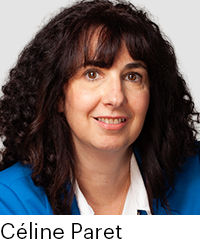
Céline Paret, President and founder of Monarque Conseil, explains how a CRM—a customer relationship management system—can become a lever for growth when used properly. “In our business, everything starts with trust,” she says. "Not a product, not a price, not a commission—it's really just one thing: trust. It's what makes a prospect open up to us, talk to us about their family, their fears, their goals.“ However, this trust is fragile and must be protected. “Technology can achieve this, as long as it remains human," she believes.
Monarque has therefore invested in an ecosystem that includes Zoho CRM to automatically send its clients a presentation of its services, Adobe Firefly artificial intelligence to write summaries of each meeting, a telephone system to record each call, and Calendly software to automate appointment scheduling. The result: each client is tracked accurately, and every interaction is noted, centralized, and shared.
“CRM has become essential to supporting Monarque's quality of service without losing our soul,” says Céline Paret. She is delighted to see that “clients feel followed up on, recognized, and considered, oversights have disappeared, follow-ups remain consistent and impeccable, communications remain coherent,” and that, ultimately, there are more reviews on Google. This system has made it possible to “structure without distorting,” she concludes. Rather than replacing humans, it supports them.
4 — Taking risks to reinvent yourself

For his part, Daniel Guillemette, President of Diversico Finances Humaines Inc., emphasizes the importance of developing a vision that goes beyond oneself, rather than simply continuing to favor the same profitable practice.
He highlights the profound difference between practicing one's profession and building one's business. “Practitioners seek to master, control, and perform, but often they remain the only real product of their business,” he explains. “Architects agree to let go: they delegate, hire, organize, and, above all, take on tasks for which they don't yet have all the answers.”
What separates them? “It's the type of risk they've agreed to take,” says Guillemette. He identifies three inevitable risks in building a business: delegating what you know, investing in what you don't yet know (automation, client experience, team culture, technology), and exposing yourself to the scrutiny of others as a leader. “Ask yourself what risk you are avoiding,” he tells the audience. Risk is not necessarily your worst enemy; what is dangerous is not taking the right risk.” He concluded by saying, “A well-chosen risk is not a leap into the void, it's a springboard to the next step!"